Motorized Bicycle Laws in Iowa are much easier to follow once you separate a low-speed electric bicycle from an Iowa motorized bicycle or moped. Iowa now gives low-speed electric bicycles a bicycle-style ruleset, but a motorized bicycle that falls into the moped lane still brings licensing, registration, plate, and insurance obligations.
Note: This Iowa guide is based on current Iowa Code sections and Iowa DOT guidance. It is informational only and not legal advice.
Last reviewed / source-checked: 2026-03-15
Local rule note: Iowa statewide law is the starting point, but posted trail, campus, park, or city rules can still matter in specific places.
Yes, but Iowa does not put every powered bike in the same legal bucket. A qualifying low-speed electric bicycle is treated as a bicycle. A motorized bicycle or moped is a different vehicle category, and Iowa DOT guidance says it can require a moped license or a regular driver’s license, county registration, a rear plate, proof of insurance, and a safety flag when used on a highway.
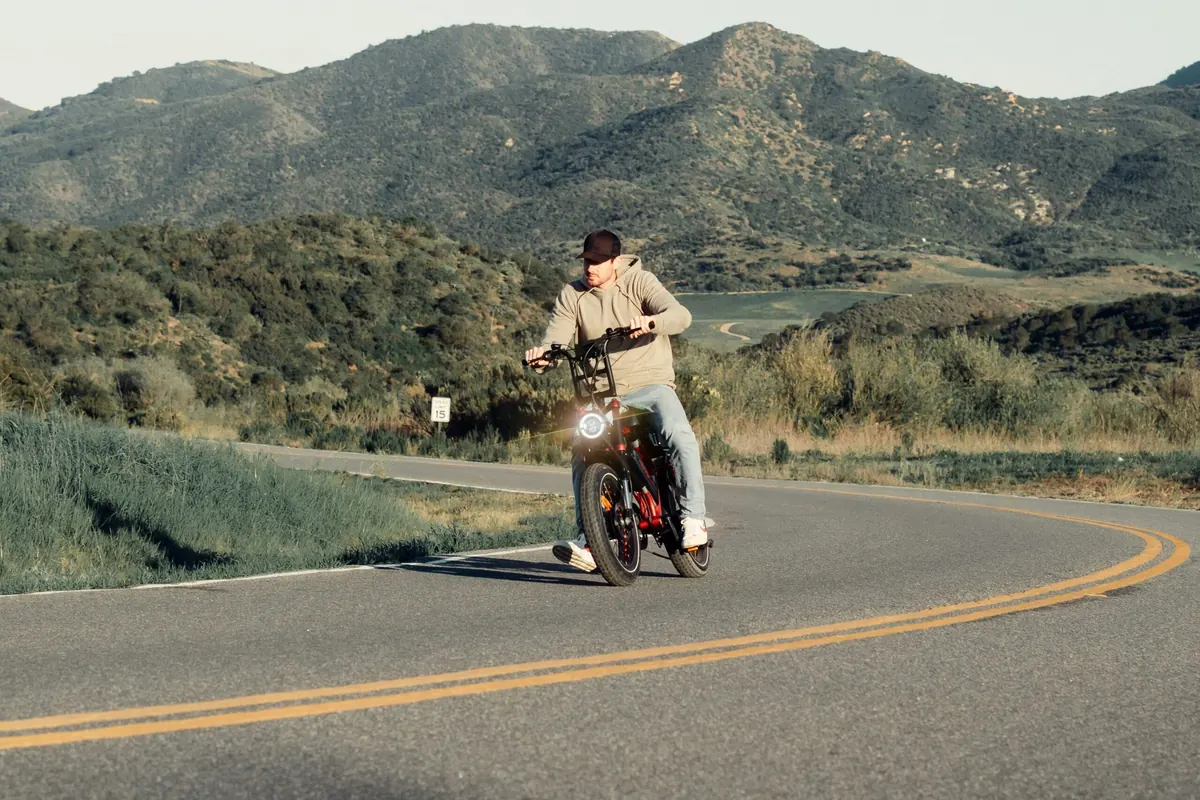
Iowa uses two very different legal lanes that older web summaries often blur together.
That separation is the key to understanding Motorized Bicycle Laws in Iowa, because Iowa gives qualifying low-speed electric bicycles a much lighter ruleset than it gives a registered moped or motorized bicycle.
If your ride truly fits Iowa’s low-speed electric bicycle definition, the law treats it much closer to a bicycle than to a moped.
Iowa Code says a person operating a low-speed electric bicycle on a highway is subject to the bicycle provisions of the chapter and has the rights and duties that apply to a bicycle rider, except where the nature of a rule makes that impossible or a specific e-bike rule says otherwise.
Iowa expressly says low-speed electric bicycles are not subject to licensure, registration, titling, inspection, proof of financial liability coverage, or possession of a driver’s license or permit. That is one of Iowa’s biggest state-specific differentiators.
Iowa says a low-speed electric bicycle may be operated in any place where a bicycle is allowed, including streets, highways, roadways, shoulders, bicycle lanes, bikeways, and bicycle or multi-use paths.
A class 3 low-speed electric bicycle must have a speedometer that shows miles per hour. A rider under 16 may not operate a class 3 low-speed electric bicycle, although Iowa allows a person under 16 to ride as a passenger on a class 3 bike in the limited circumstance referenced by the statute.
On a bicycle lane or multi-use path, a class 3 rider must stay at the posted speed limit or, if there is no posted speed limit, 20 mph. That makes Iowa more specific than many states that stop at a general path-access rule.
Manufacturers and distributors must affix a permanent label that shows the bike’s classification, top assisted speed, and motor wattage. If the bike’s speed capability is modified, the labeling must be updated as well.
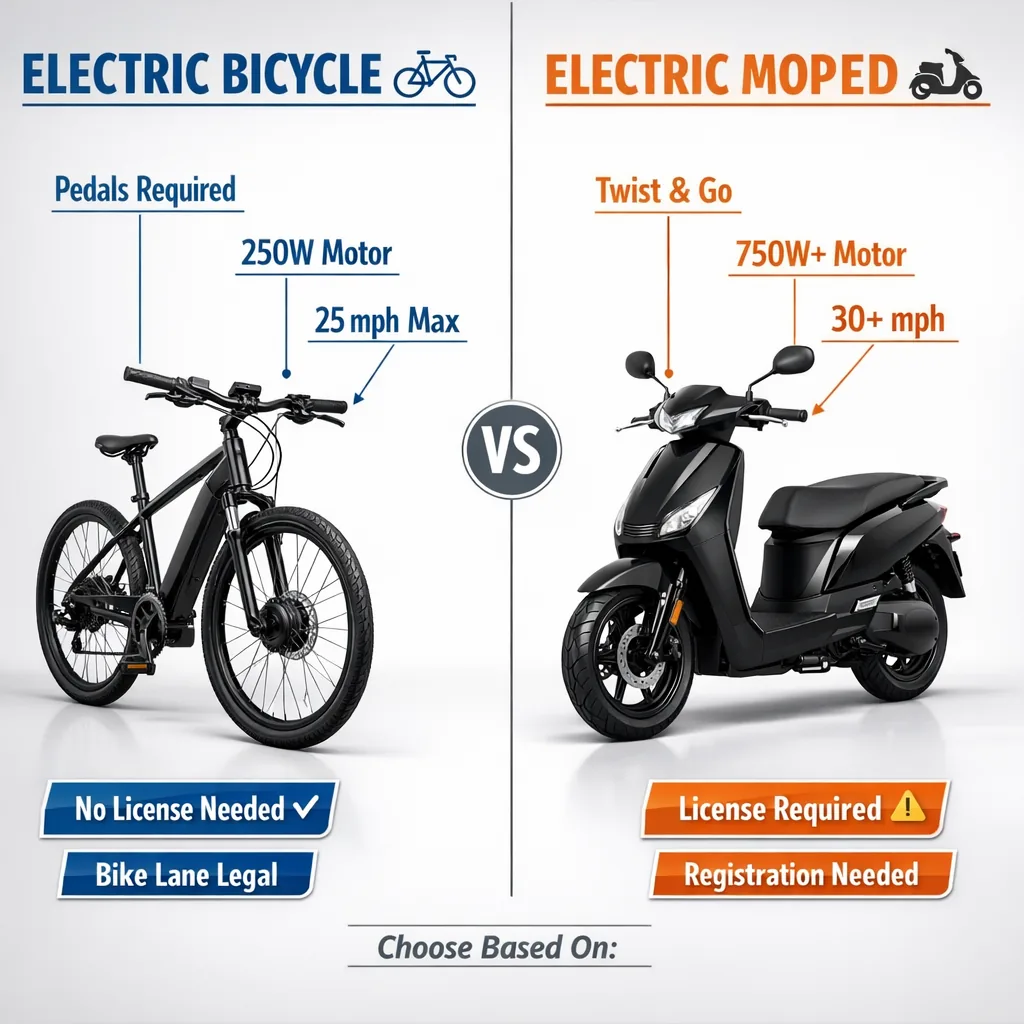
This is where older Iowa summaries often drift. Iowa’s motorized-bicycle lane is not the same as the low-speed electric bicycle lane.
Iowa Code defines a motorized bicycle as a motor vehicle with a seat or saddle, not more than three wheels, and a top speed no higher than 39 mph on level ground unassisted by human power. Iowa DOT’s registration page also uses that 39 mph ceiling as the key dividing line between a moped and a motorcycle.
Iowa DOT registration guidance uses the phrase motorized bicycle (or moped) and sends those vehicles through the county treasurer title and registration process. For readers, that means Iowa’s practical paperwork lane is the moped lane once a vehicle falls outside the low-speed-electric-bicycle category.
Iowa DOT’s moped manual says additional licensing is not required if you already possess a valid driver’s license. If you do not already have a driver’s license, Iowa has a moped licensing path instead. The Iowa DOT license page lists a moped (motorized bicycle) license only at $8 for 2 years.
Iowa DOT says you must be at least 14 to get a moped license. Riders under 18 need parental consent, and riders under 16 must pass an approved moped education course before they can get that license.
The Iowa DOT moped manual says you must register a moped with your county treasurer’s office, display the license plate on the rear, and carry proof of insurance. Iowa DOT’s registration guidance also says the vehicle needs the required federal manufacturer certification label before it can be titled or registered.
Iowa Code says a person operating a motorized bicycle on the highways may not carry a passenger. Iowa also requires a headlight, forbids carrying a package that keeps you from holding both handlebars, and requires a day-glow triangular safety flag that extends at least 5 feet above the ground when the vehicle is used on a highway.
You are usually in Iowa’s low-speed-electric-bicycle lane, not the moped lane, as long as the bike really has fully operable pedals, a motor under 750 watts, and class 1 or class 2 performance. That means no Iowa registration, title, insurance, or driver’s-license requirement under the statute.
Iowa generally allows that wherever bicycles are allowed, but you still need to watch the speed rule. On a bicycle lane or multi-use path, a class 3 rider cannot exceed the posted speed limit or 20 mph if no limit is posted.
Do not assume it still gets bicycle treatment. Once a machine falls outside Iowa’s low-speed electric bicycle definition, it can move into the motorized-bicycle or moped lane instead, where registration and licensing questions come back into play.
Iowa DOT says you can be old enough for a moped license at 14, but if you are under 16 you must complete an approved moped education course, and if you are under 18 you also need parental consent.
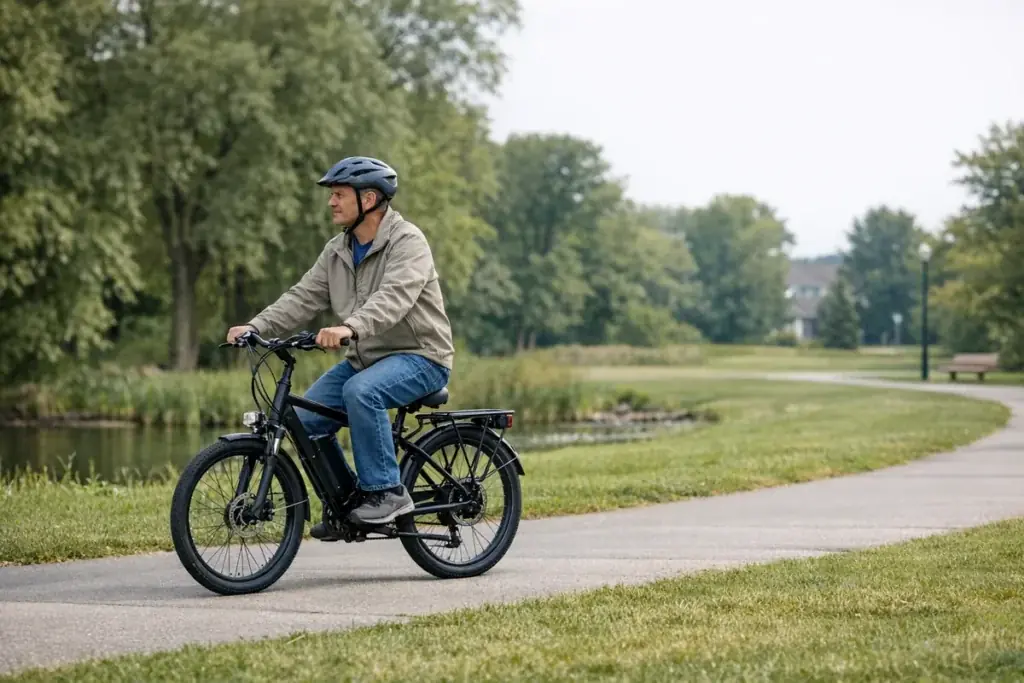
Iowa gives low-speed electric bicycles broad statewide access where bicycles are allowed, including bicycle and multi-use paths. Even so, riders should still check posted rules on municipal trails, university property, park systems, and other managed facilities before assuming every local route is open under the same conditions.
This page is for general informational purposes only and is not legal advice. Iowa statutes, Iowa DOT rules, and local restrictions can change. Verify current requirements before riding on public roads, paths, or trails.