Motorized Bicycle Laws in Indiana make the most sense once you separate a true electric bicycle from a registered motor driven cycle. Indiana now gives real e-bikes a bicycle-style ruleset with no driver’s license, title, registration, or financial-responsibility requirement, while a motor driven cycle has a different age, credential, registration, speed, and roadway-access lane.
Note: This Indiana guide is based on current Indiana Code sections, Indiana Bureau of Motor Vehicles guidance, and Indiana DNR trail rules. It is informational only, not legal advice.
Last reviewed / source-checked: 2026-03-15
Local rule warning: Indiana lets statutes, rules, local ordinances, and state or local trail managers change where a class of e-bike can ride, especially on Class 3 path access and natural-surface trails.
Yes, but Indiana does not treat every powered bike the same way. A qualifying electric bicycle is regulated as a bicycle. A qualifying motor driven cycle is a separate motor-vehicle category with registration and credential rules. If a machine falls outside Indiana’s e-bike definitions and outside the motor-driven-cycle box, it can move into the motorcycle lane instead.
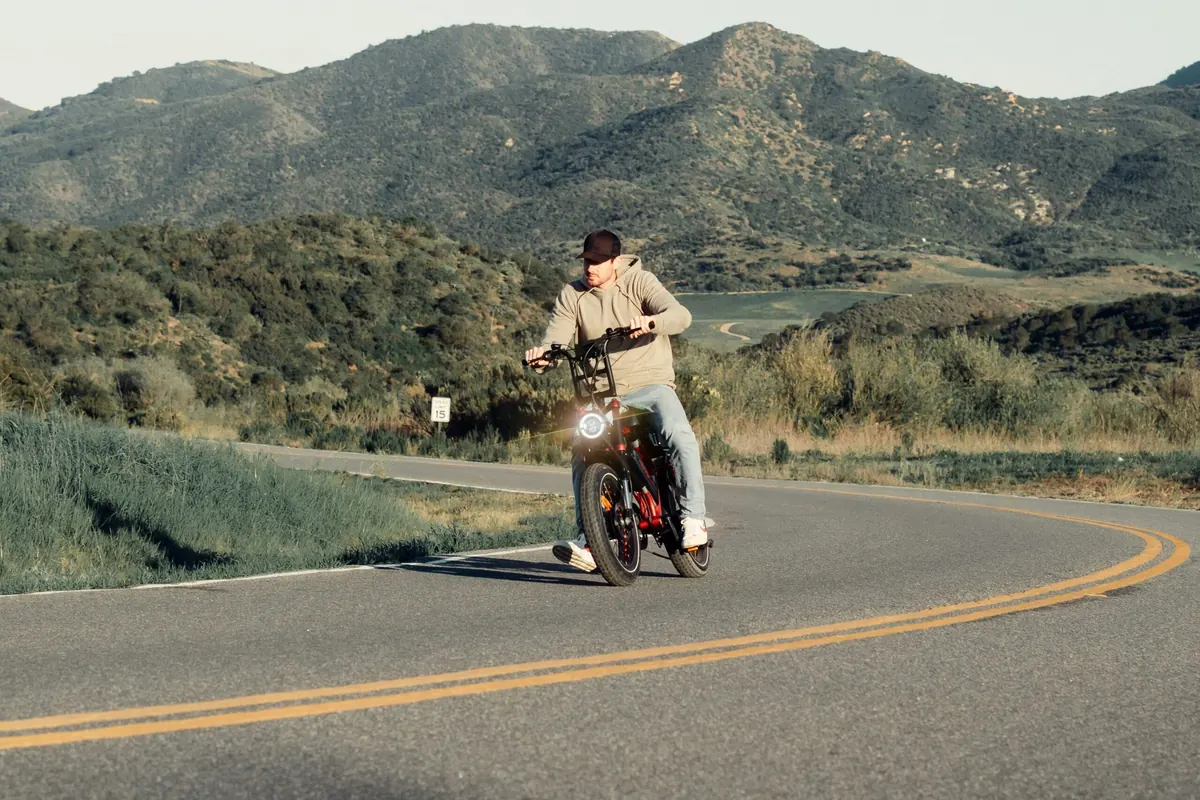
Indiana’s current code is more precise than many older summaries. The old motorized bicycle definition in IC 9-13-2-109 is repealed, and the live categories that matter most are electric bicycle and motor driven cycle.
That split is the heart of Motorized Bicycle Laws in Indiana. If your machine cleanly fits the e-bike definition, the rules are much lighter than the motor-driven-cycle lane.
Indiana Code 9-21-11-13.1 gives real e-bikes a bicycle-style framework, but it still draws important class-based limits.
That matters because Indiana also says the e-bike operator is not subject to the driver’s-license statute or the financial-responsibility statute. The e-bike itself is not subject to title, motor-vehicle registration, or off-road-vehicle statutes either.
Indiana says an e-bike operator is generally subject to the duties of a bicycle operator and gets the same rights and privileges, unless the e-bike section says otherwise.
Unless another statute, rule, or local ordinance says otherwise, Class 1 and Class 2 e-bikes may use any bicycle path or multipurpose path where bicycles are allowed.
A Class 3 e-bike may not use a bicycle path or multipurpose path unless the path is within or adjacent to a roadway or the local authority or state agency with jurisdiction specifically authorizes Class 3 use there.
A rider younger than 15 may not operate a Class 3 e-bike. A rider younger than 15 may still ride as a passenger on a Class 3 e-bike if the bike is designed for a passenger. Anyone under 18 who operates or rides as a passenger on a Class 3 e-bike must wear a properly fitted and fastened qualifying bicycle helmet.
Indiana requires a permanent and conspicuous e-bike label showing class, top assisted speed, and motor wattage. The electric motor also has to disengage when the rider stops pedaling or applies the brakes, and the bike must comply with federal bicycle equipment and manufacturing requirements.
Indiana’s e-bike statute separately addresses nonmotorized natural-surface trails. Local authorities or state agencies may regulate electric bicycles or any e-bike class on those trails. That means statewide bicycle-style treatment does not automatically settle every trail question.
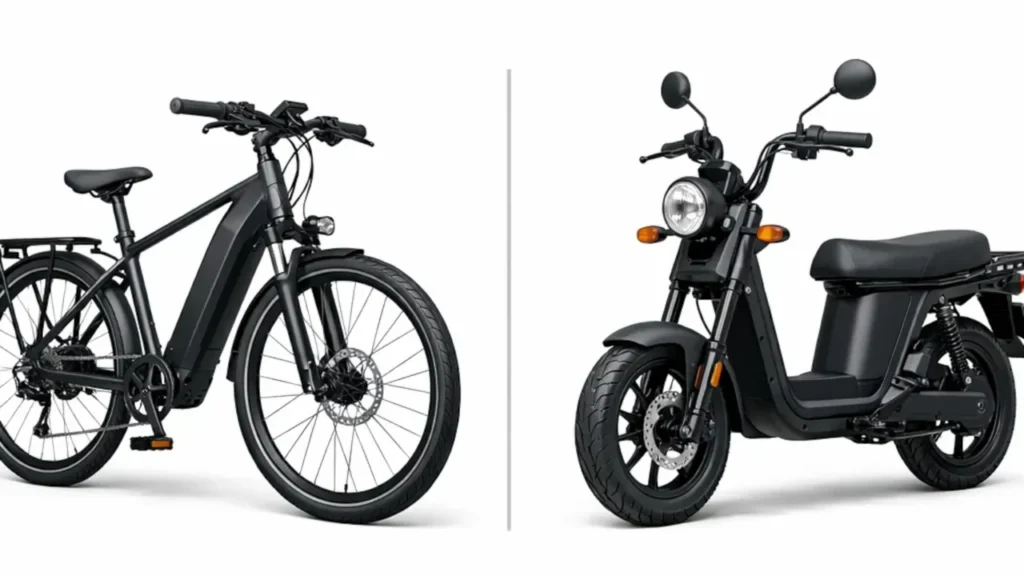
Indiana’s motor driven cycle lane is closer to a low-powered scooter or moped lane than to an e-bike lane.
Indiana Code 9-21-11-12 says a motor driven cycle may not be operated by someone who lacks an unexpired identification card with a motor driven cycle endorsement, a valid driver’s license, or a valid learner’s permit. The same section also says the vehicle may not be operated if it has not been registered as a motor driven cycle.
The current motor-driven-cycle statute does not use a 25 mph operating cap. Indiana Code 9-21-11-12 says a motor driven cycle may not be operated at a speed greater than 35 mph.
Indiana Code 9-21-11-12 bars sidewalk and interstate operation. Indiana BMV classification guidance also says passengers are not allowed on a motor driven cycle and the rider must operate near the right-hand edge of the roadway unless passing or preparing for a left turn.
Indiana BMV guidance says a motor driven cycle rider must be at least 15, under-18 riders need helmet and eye protection, and insurance is not required for a motor driven cycle. That differs from Indiana’s motorcycle classification page, which requires a motorcycle endorsement and insurance for a true motorcycle.
You are usually in Indiana’s e-bike lane as long as the bike truly fits the Class 1, 2, or 3 definitions. That generally means no driver’s license, title, registration, or insurance requirement under the statutes reviewed here.
Class 1 and Class 2 e-bikes usually have the easiest answer, because Indiana allows them on bicycle or multipurpose paths where bicycles are allowed unless another law, rule, or local ordinance changes that result. Class 3 is different and needs path-specific authorization unless the path is within or adjacent to a roadway.
Do not rely on the statewide bicycle answer alone. Indiana’s statute lets local or state authorities regulate e-bike use on nonmotorized natural-surface trails, and Indiana DNR says only Class 1 e-bikes are allowed on natural-surface trails on DNR property where regular bikes are allowed.
You may be in the motor-driven-cycle lane instead. Indiana’s official BMV guidance says a motor driven cycle needs registration, has a 35 mph operating ceiling, cannot carry passengers, and cannot be used on interstates or sidewalks.
That is where Indiana riders should slow down and verify the next category. Indiana’s motorcycle classification page shows that a true motorcycle brings an endorsement and insurance requirement, which is a very different compliance lane than a simple e-bike.
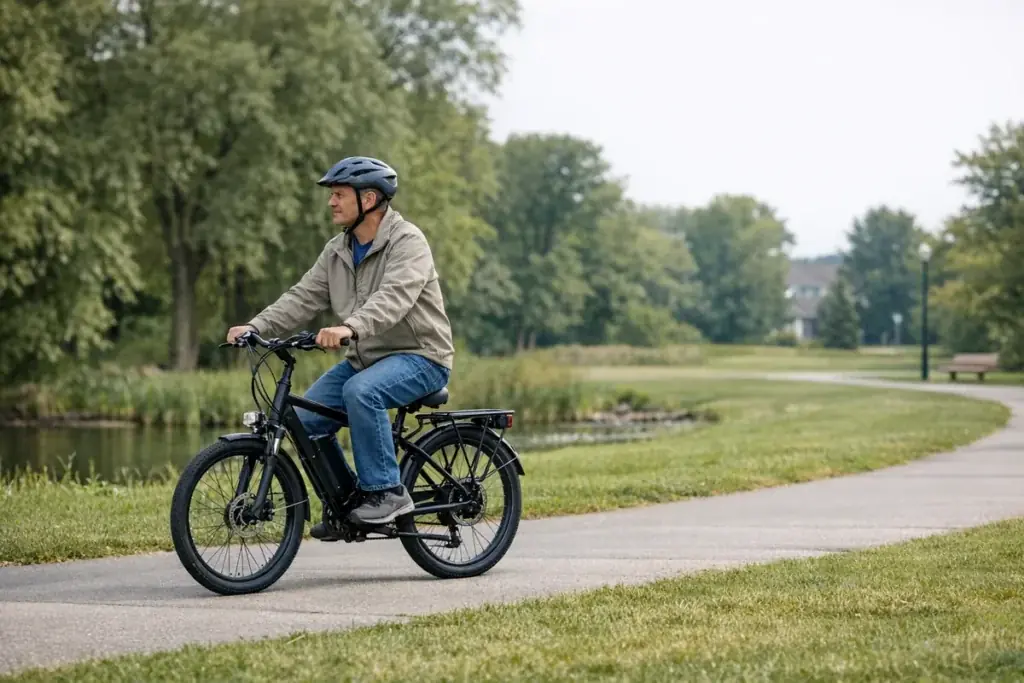
Indiana is not a state where one sentence settles every route question. Indiana Code 9-21-11-13.1 already builds in different treatment for Class 1 and 2 versus Class 3, and it also gives local authorities or state agencies room to regulate nonmotorized natural-surface trails. Indiana DNR adds another official layer on its own property:
For city greenways, local paths, or park systems, check the local operator before assuming statewide default access applies to your exact class and route.
This page is for general informational purposes only and is not legal advice. Indiana statutes, local ordinances, trail rules, and agency guidance can change. Verify the current rules before riding on public roads, paths, or trails.