Learning how to maintain an eBike at home is mostly about building a simple routine: care for the battery, keep the bike clean, check tire pressure, inspect brakes, lubricate the chain, and watch for loose or damaged parts. You do not need to become a full-time mechanic, but a few steady habits can make your eBike safer, quieter, and less expensive to own.
Quick answer: Maintain an eBike at home by charging and storing the battery carefully, wiping the bike down after wet or dirty rides, checking tire pressure, inspecting brake pads, cleaning and lubricating the chain, testing lights and controls, and looking for loose bolts. Leave motor, controller, battery, wiring, and hydraulic brake repairs to a qualified shop when you are not sure.
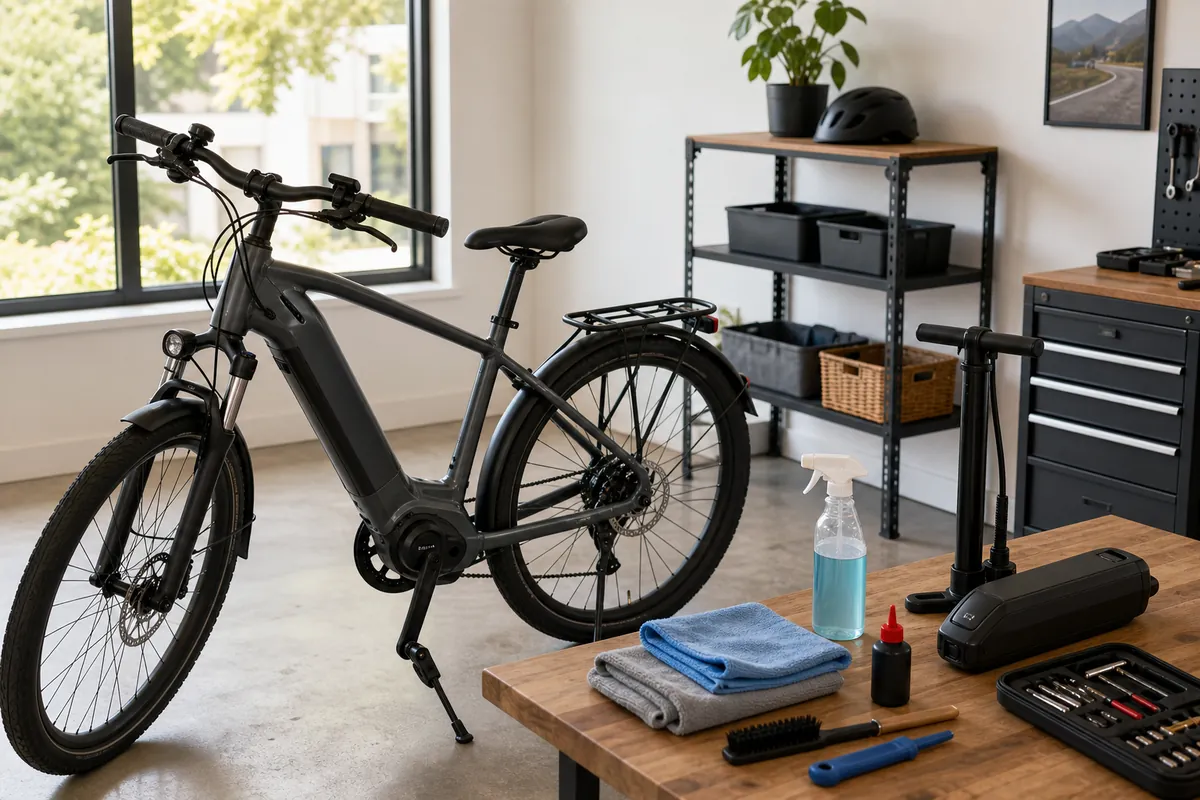
Home maintenance is prevention, not hero work. The goal is to catch low tire pressure, dirty drivetrains, worn brake pads, loose accessories, and battery-care mistakes before they become bigger problems.
A useful home routine focuses on the parts that wear, loosen, get dirty, or affect safety. That means tires, brakes, drivetrain, battery, lights, controls, and visible fasteners. You are not trying to rebuild the motor in your garage; you are trying to keep the bike safe and predictable between shop visits.
Before you work on the bike, turn the system off. If your model has a removable battery, take it out before cleaning, adjusting, or working near electrical connectors. For deeper battery care, MBHQ’s e-bike battery maintenance guide covers charging, storage, and handling habits that help protect the pack over time.
| Maintenance task | Home routine | Why it matters |
|---|---|---|
| Battery care | Charge in a dry, moderate-temperature area and follow the manual | The battery is one of the most expensive eBike components |
| Tires | Check pressure, tread, and sidewalls regularly | Low pressure can reduce range, handling, and flat protection |
| Brakes | Inspect pad wear, lever feel, rotor condition, and noise | eBikes are heavier and often faster than standard bicycles |
| Chain and drivetrain | Clean grime and apply bike chain lubricant as needed | A dirty drivetrain wears faster and shifts worse |
| Bolts and accessories | Check racks, fenders, lights, kickstand, and obvious fasteners | Vibration can loosen parts over time |
| Electronics | Inspect connectors, display, lights, and controls without opening sealed parts | Small issues are easier to catch before a ride |
The battery deserves careful treatment because it is expensive, sensitive to temperature, and central to the whole bike. Use the charger recommended for your eBike, charge on a stable surface, and avoid covering the charger while it is working.
Keep the battery away from standing water, extreme heat, and freezing storage when possible. If the bike uses a removable pack, inspect the case and contacts for obvious damage before reinstalling it. Do not open the battery case or attempt cell-level repairs at home.
Charging habits should feel boring and deliberate: dry area, correct charger, stable surface, normal temperature, and no damaged cords. If the battery looks swollen, cracked, wet inside, or unusually hot, stop using it and get professional guidance.
Keeping an eBike clean is not about making it spotless. Dirt hides wear, grit accelerates drivetrain damage, and road grime can make brake or cable issues harder to spot. A soft brush, microfiber cloth, mild bike cleaner, and gentle rinse are usually enough.
Avoid pressure washing. High-pressure water can push moisture past seals and into bearings, connectors, displays, and motor-adjacent areas. If the bike is muddy, loosen grime gently, wipe the frame, clean the drivetrain, and dry the bike before storage.
For a more detailed cleaning walkthrough, use MBHQ’s guide on how to wash an eBike. The key idea is simple: clean the bike, but do not attack it with water pressure.
Practical home rule: if a maintenance task requires opening sealed electronics, bleeding hydraulic brakes, diagnosing motor faults, or repairing a damaged battery, stop and use a qualified shop. Home care should reduce risk, not create it.
Tire pressure affects range, comfort, handling, and flat resistance. A soft tire can make the bike feel sluggish, drain the battery faster, and increase the chance of pinch flats or rim damage. Use a gauge instead of guessing by feel.
Follow the pressure range printed on the tire sidewall and adjust within that range for rider weight, cargo, road surface, and comfort. Do not exceed the tire’s listed maximum. While you are there, inspect the tread for embedded glass, cuts, worn spots, bulges, or exposed casing.
eBikes tend to be heavier than standard bicycles, and many riders use them at higher average speeds. That puts real work on the brakes. Before rides, squeeze both levers and make sure they feel firm and consistent. Listen for scraping, grinding, pulsing, or sudden changes in noise.
Look at the brake pads if they are visible. If the pad material is very thin, uneven, contaminated, or making metal-on-metal noise, do not ignore it. Brake issues are safety issues, not comfort quirks.
For more detail on wear timing, see MBHQ’s guide on how often to replace eBike brake pads. If your bike has hydraulic brakes and the lever pulls too close to the handlebar, or if braking power suddenly drops, get professional help before riding hard again.
The chain is one of the easiest parts to maintain at home. Wipe off grime with a rag, clean heavier buildup with bike-safe drivetrain cleaner, let the chain dry, then apply a small amount of bicycle chain lubricant to the rollers. Wipe off excess lube after it has worked in.
Too much lubricant attracts dirt, and dirt turns into grinding paste. A lightly lubricated clean chain is better than a wet, sticky chain covered in grit. If your eBike has a belt drive, follow the manufacturer’s belt-care guidance instead of treating it like a chain.
Vibration can loosen parts over time. Check obvious fasteners on racks, fenders, kickstands, bottle cages, lights, baskets, mirrors, and cargo accessories. Use the right tool and do not overtighten; small bolts can strip, especially on lightweight mounts.
If your bike carries cargo, pay extra attention to rack bolts and mounting points. A loose rack can damage the frame, rub the tire, or shift weight unexpectedly. If you regularly carry bags or groceries, inspect those mounts more often than you think you need to.
Before a ride, turn the system on and check the display, assist controls, throttle if equipped, lights, brake cutoffs if your model has them, and any error messages. You are not trying to diagnose the whole electrical system at home; you are looking for obvious changes.
If the display flickers, the bike cuts power randomly, connectors look damaged, or the motor behaves unpredictably, stop treating it as a simple home tune-up. Electrical issues can be minor, but guessing around battery and controller systems is not worth it.
A schedule makes maintenance easier because you do not have to remember everything at once. Treat it like a quick scan before rides, then a deeper check every week or month depending on how often you ride.
A basic home kit does not need to be elaborate. Start with a tire pump with a gauge, microfiber cloths, bike-safe cleaner, chain lubricant, a small brush, tire levers, spare tubes or plugs if your tire system supports them, and the correct hex keys for your accessories. A repair stand is helpful, but it is not required for light owner maintenance.
If you are building a small eBike maintenance kit, choose tools around the tasks you will actually do: inflation, cleaning, lubrication, simple accessory checks, and flat preparation. Leave battery internals, motor faults, hydraulic brake bleeding, and wiring diagnosis to qualified service.
The best home eBike maintenance routine is steady, simple, and realistic. Keep the battery healthy, clean the bike gently, check tires and brakes, lubricate the drivetrain, and pay attention when the bike starts sounding or feeling different.
You do not need to fix everything yourself. In fact, knowing when to stop is part of good ownership. Handle the routine care at home, and bring in a shop when the work touches safety-critical systems or sealed electronics.
* We may earn a commission when you buy through our links.