Ebike battery charging best practices are mostly about avoiding unnecessary stress: use the correct charger, charge in a dry moderate-temperature space, avoid heat and freezing conditions, and do not store the battery completely full or completely empty for long periods.
For everyday riding, charge your ebike battery with the manufacturer-approved charger in a dry, room-temperature area. Unplug it after charging, let a cold or hot battery return closer to room temperature before plugging it in, and store the battery partially charged when you will not ride for a while. Charge to 100% when you need the range, but avoid letting the battery sit full for days or weeks if you can help it.
The battery is one of the most expensive parts of an electric bike, so your charging routine matters. Good habits can lower avoidable safety risks, reduce cell stress, and help your bike deliver more dependable range over time. Bad habits usually look ordinary: charging in a hot garage, using a mystery charger, storing the bike dead all winter, or plugging in a battery while it is still ice cold.
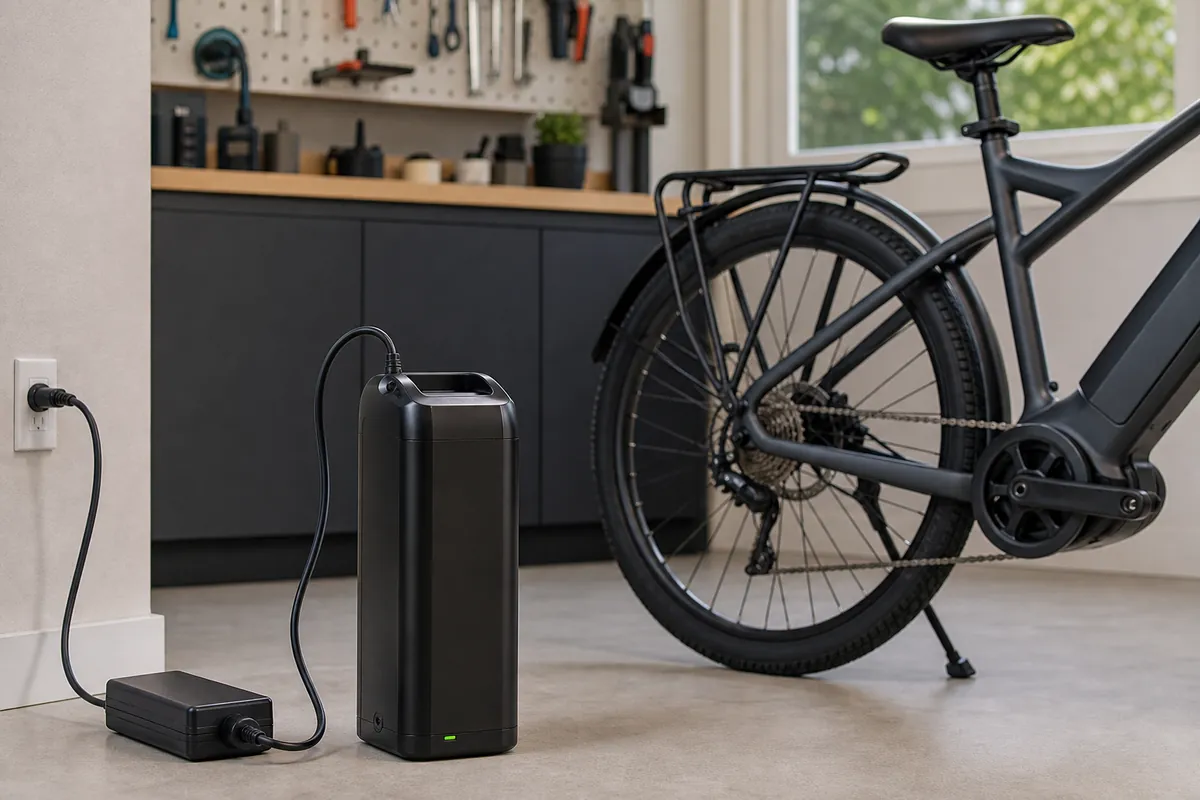
The best charging routine is boring in the right way. It should be consistent, dry, cool, and matched to the battery maker’s instructions. Your owner’s manual wins over any general guide, especially for unusual batteries, smart chargers, or long-term storage modes.
Start with the charger. Use the charger that came with the bike or one approved by the bike or battery manufacturer. Voltage, connector shape, and plug fit are not enough by themselves; the charger also needs the correct charging profile for that pack. A cheap replacement charger can turn a simple maintenance habit into an expensive mistake.
Temperature matters too. Lithium-ion ebike batteries generally prefer moderate conditions. Charging in a very hot shed or freezing garage adds stress, and charging a battery while it is below freezing can be especially hard on the cells. If you rode in cold weather, bring the battery inside and let it return closer to room temperature before plugging it in. For seasonal context, see our guide to e-bike range in cold weather.
Best default habit: charge in a dry, visible, room-temperature spot on a stable surface, then unplug the charger once the battery is done. Do not bury the charger under clothing, cardboard, bags, or anything that traps heat.
Charging to 100% is fine when you need the range. If you have a long ride tomorrow, topping off the battery is normal. The bigger issue is letting the battery sit fully charged for days or weeks when you do not need it.
For regular short rides, a partial charge can be gentler. Many riders try to stay in the middle of the battery range most of the time, then charge to full before longer trips. You do not need to obsess over exact percentages; the useful habit is avoiding long storage at the extremes.
The same idea applies at the low end. Do not run the battery flat and then leave it that way. If the bike is going into storage, give the battery a partial charge first and check it occasionally. For broader ownership care, our e-bike battery maintenance guide covers storage, cleaning, and inspection habits beyond charging.
| Situation | Best Practice | Why It Helps |
|---|---|---|
| Daily short rides | Use partial charges when full range is not needed | Reduces time spent at the top of the charge range |
| Long ride tomorrow | Charge to 100% shortly before the ride | Gives maximum usable range without long full-charge storage |
| Cold-weather ride | Let the battery warm indoors before charging | Avoids charging the pack while it is too cold |
| Summer garage storage | Keep the battery out of extreme heat | Heat can accelerate battery wear |
| Long-term storage | Store partially charged and check periodically | Helps avoid deep discharge or long full-charge storage |
A good charging location is dry, stable, and easy to check. A utility room, garage workbench, or clear indoor floor area can work if the space is not too hot or too cold. Avoid charging on beds, couches, carpet piles, or cluttered shelves where heat can build up.
If your battery is removable, indoor charging is often more practical than charging the whole bike outside. Apartment rules, building policies, and manufacturer guidance may vary, though. If indoor charging is your main concern, read can you charge an e-bike battery indoors? for a more focused safety breakdown.
Outdoor charging is not automatically wrong, but it adds more variables: rain, humidity, temperature swings, extension cords, and theft risk. If you must charge outside, keep every connection dry and follow the charger’s rating and the bike maker’s instructions. Do not improvise around wet plugs or damaged cables.
The most common battery mistakes are not dramatic. They are repeated small stresses. A battery left empty for months, charged in heat all summer, or topped off every night when you only ride a few miles may age faster than one handled with a little more care.
This is the mistake to take seriously. A charger that “fits” is not automatically safe or correct. Match the charger to the battery system, and be cautious with used bikes that arrive without the original charger. If the charger looks damaged, runs unusually hot, buzzes, smells odd, or has questionable labeling, stop using it and verify compatibility before the next charge.
Heat is rough on batteries. A hot garage, car trunk, or sunny shed can push the pack into conditions it does not like, especially during summer storage. If your storage area gets hot, remove the battery and keep it somewhere cooler when possible.
Do not charge a battery that is swollen, cracked, leaking, smells unusual, or has been damaged in a crash. Stop using it and contact the bike maker, battery maker, or a qualified shop. A questionable battery is not a “wait and see” part.
If your battery suddenly loses range, cuts out under load, gets unusually hot, or takes much longer than normal to charge, treat it as a diagnostic issue. Check the charger, inspect the battery case and contacts, and ask the manufacturer or a qualified ebike shop before continuing to ride hard or charge repeatedly.
Most modern ebike battery systems are designed to stop active charging once the pack reaches full charge, but that does not make “leave it plugged in forever” a good default. The cleaner habit is to charge, let the charger finish, then unplug it.
Overnight charging is common, but it is not always ideal. If you do it, use a safe charging spot, avoid damaged batteries or chargers, and make sure the charger has ventilation. A timer can help if your routine causes the battery to sit full for long periods, though you should only use electrical accessories that are properly rated and in good condition.
For many riders, the best rhythm is simple: charge after a ride when the battery is not hot, or charge the night before if you need a full pack in the morning. If you ride short trips, you may not need to charge after every ride.
If you are parking the ebike for a few weeks or a season, storage matters more than daily charging. Do not store the battery dead. Do not store it fully charged for months if the manufacturer recommends a storage range.
A partial charge is usually the safer middle ground. Store the battery in a cool, dry place, away from direct sun and freezing conditions. Check the charge level periodically because batteries can slowly self-discharge over time, even when the bike is off.
If the battery has a storage mode, use it. Some smart chargers and battery systems are built to handle this better than guesswork. When the manual gives a specific storage percentage or maintenance interval, follow that instead of a general rule of thumb.
Charging discipline helps, but batteries are wear items. Age, cycles, heat exposure, cell quality, and how hard the bike is used all matter. If the battery no longer gives practical range, shuts off early, or shows fault codes, it may be near replacement even if you did everything reasonably well.
At that point, compare the cost of a genuine replacement battery against the value of the bike. Avoid bargain packs with unclear compatibility or weak support. For replacement planning, see our guide to ebike battery replacement.
The best ebike battery charging routine is not complicated. Use the correct charger, charge in a dry and moderate-temperature place, avoid charging a freezing or damaged battery, and do not store the pack empty or full for long periods when you can avoid it.
Think of charging as battery care, not just refueling. A few small habits can make your ebike easier to live with, especially through hot summers, cold mornings, and long gaps between rides.