Quick answer: these e-bike buying tips help first-time buyers narrow the field before comparing individual models.
Shortlist checklist
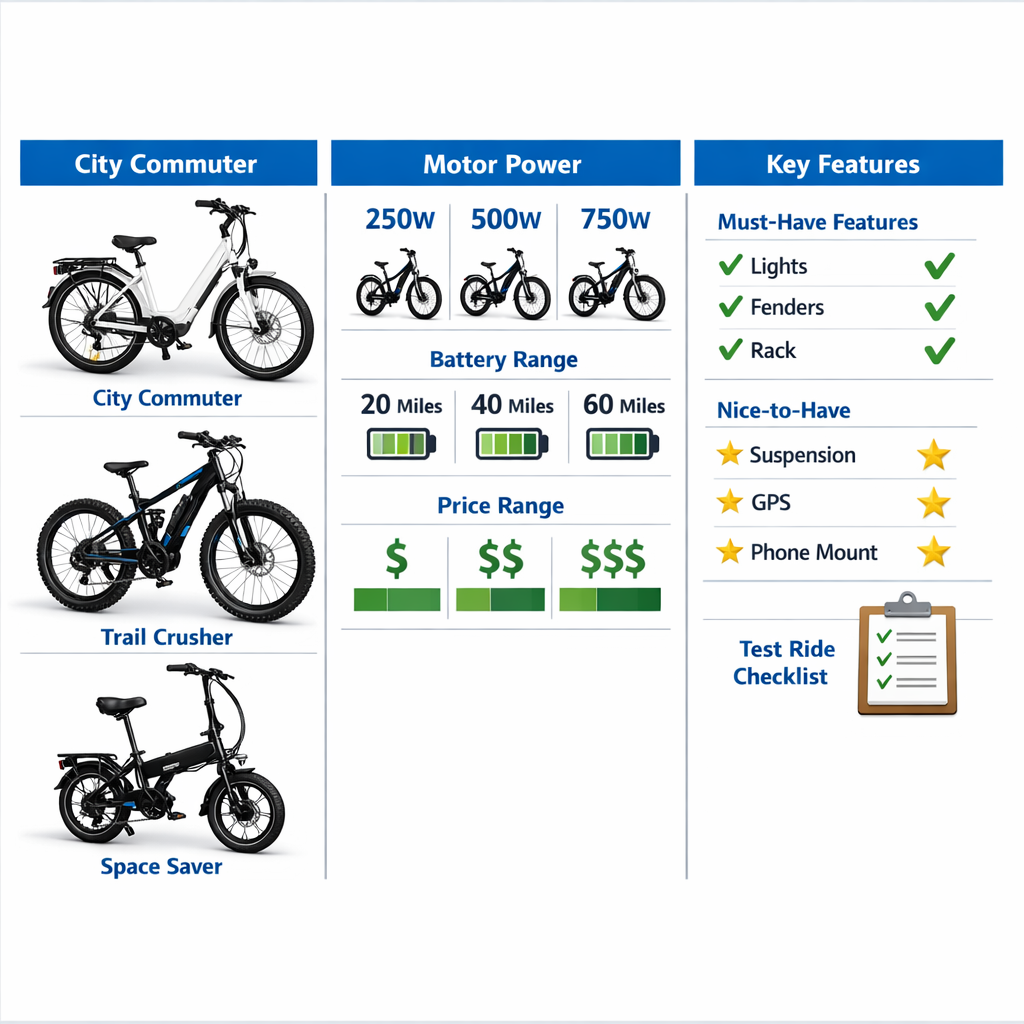
These e-bike buying tips are built for shoppers who want to narrow the field before spending real money. The goal is not to chase the single biggest battery or motor claim. It is to choose an electric bike that fits your routes, your storage situation, and your support expectations. If you want a broader starting point first, browse our E-Bike Buying Guides hub before comparing the 10 decision points below. If you start with realistic use, you can rule out a lot of bad matches early.
Before you compare specs, decide what kind of rides matter most:
If you cannot define the bike's main job first, every later spec comparison gets noisier and less useful.
Your motor layout shapes how the bike feels on climbs, starts, and everyday rides. If you want the deeper breakdown, read our electric bike motors explained guide after you decide what kind of terrain you ride most.
Hub motors are often easier to find on value-oriented bikes and usually make sense for flatter routes, casual riding, and buyers who want a simpler ownership proposition.
Mid-drive motors are often a better fit for riders who expect more climbing, want a more natural pedal feel, or care more about how the bike handles under changing terrain.
Range is easiest to misunderstand because real-world results change with terrain, rider input, cargo, temperature, and assist level. Instead of shopping for the biggest battery on paper, think about your longest typical ride and how much margin would make you comfortable.
If battery ownership is a major concern, our e-bike battery maintenance guide and removable battery guide are the best next reads.
The purchase price is only part of the decision. A realistic budget should cover the bike, a helmet, a serious lock, and any accessories you already know you will need for commuting or storage. If you are price-sensitive, use our best electric bikes under $2,000 guide to understand the kinds of tradeoffs that usually show up lower in the market.
That full-budget check helps you decide whether an entry-level model is enough, whether you should wait for a sale, or whether spending more up front could save you from support or feature compromises later.
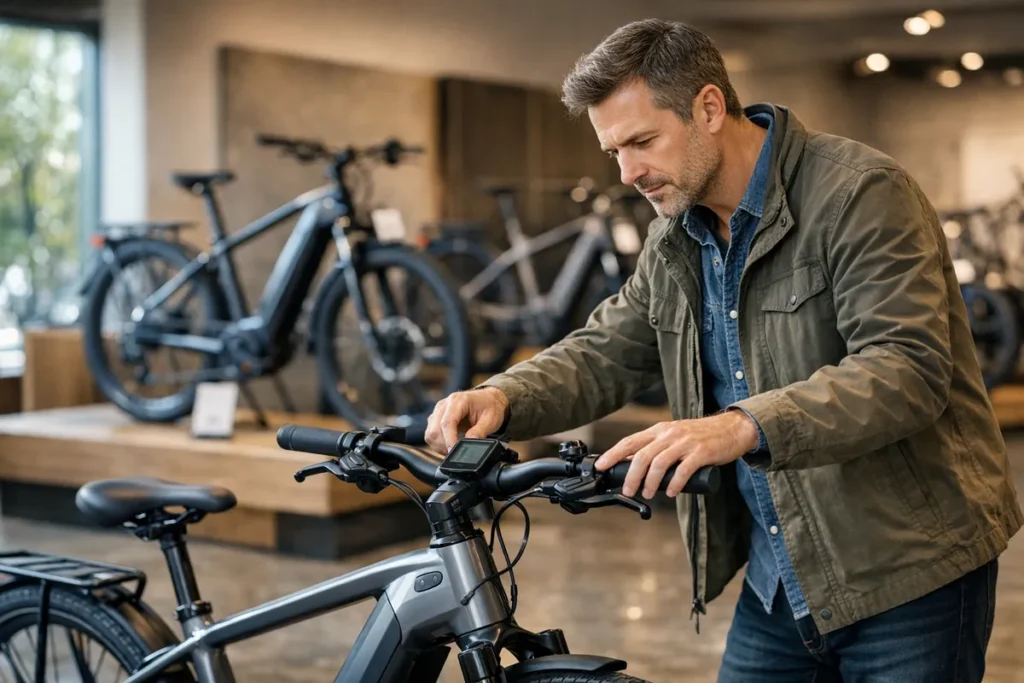
If you can test ride before you buy, do it. Fit problems show up quickly in the saddle, at low-speed turns, and when you stop and restart. If you cannot test ride, pay even more attention to frame sizing, standover, reach, and the brand's return or support process.
Many weak buying decisions happen after the spec sheet stage. Before you buy, look for answers to practical questions:
The CPSC micromobility safety guidance is also a useful reminder to review brakes, lights, tires, charging practices, and approved replacement batteries before and after purchase.
An e-bike that looks perfect online can become frustrating if it is awkward to store, difficult to lift, or inconvenient to haul. Think about whether you need to carry it upstairs, load it on a rack, or remove the battery for charging.
A warranty matters most when the support process is clear. Read how the brand handles claims, replacement parts, and service coordination rather than assuming all coverage language means the same thing.
Even direct-to-consumer bikes are easier to own when you already know who can help with assembly, brake work, firmware questions, or replacement parts. A strong support path can be a better tiebreaker than a modest spec advantage.
Most buyers end up needing more than the bike itself. Common add-ons include a helmet, lock, lights, fenders, racks, and bags. Treat those as part of the buying decision, not an afterthought.
The smartest e-bike purchase usually comes from matching the bike to your routine, not from chasing the boldest product card. If you use these e-bike buying tips to narrow your options by use case, support, fit, and ownership needs, you will be in a much better position when it is time to compare actual models.
* We may earn a commission when you buy through our links


