Quick answer
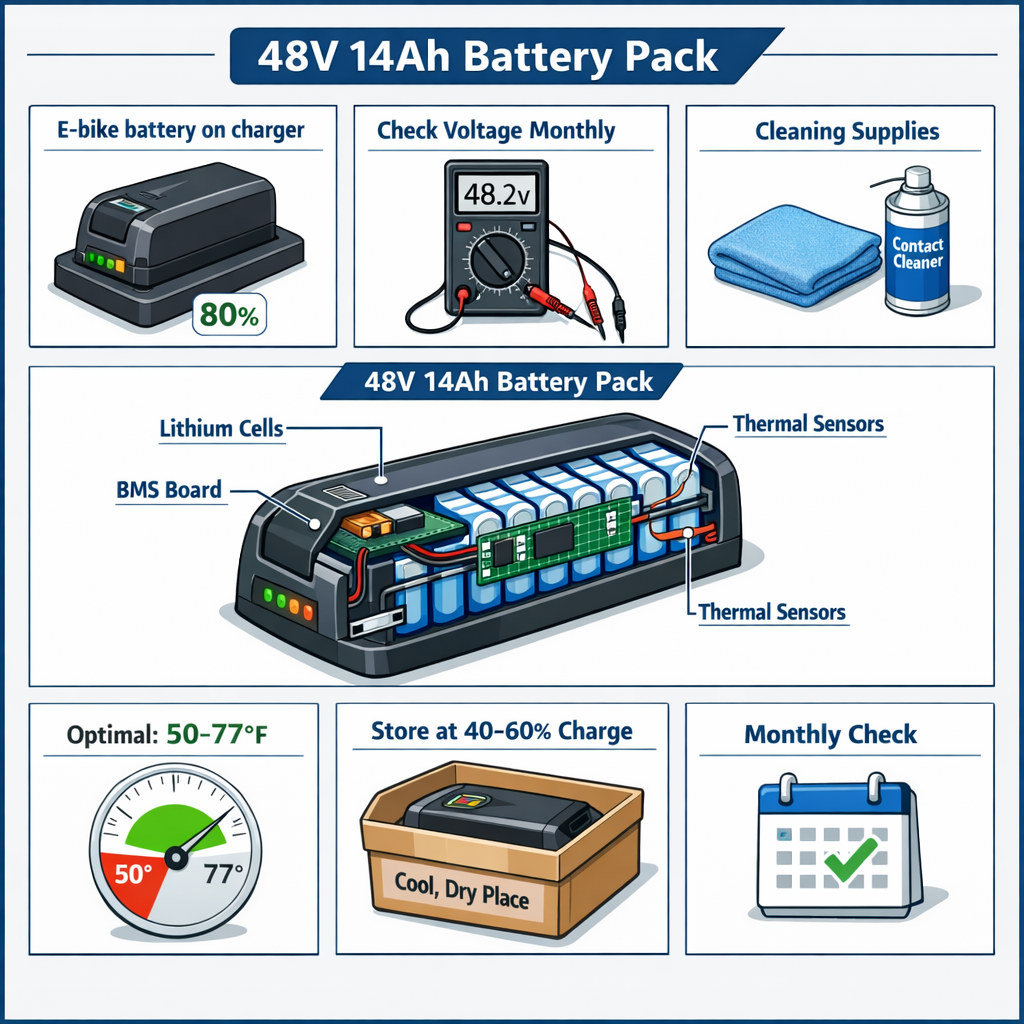
If you want practical e-bike battery maintenance advice rather than a spec-sheet deep dive, start here. This guide focuses on everyday charging, storage, temperature, and inspection habits that help reduce avoidable battery stress and keep your bike ready to ride.
If you are still narrowing down complete-bike options, our e-bike buying tips can help you weigh battery size, motor setup, and overall value before you buy.
Most modern e-bikes use lithium-ion battery packs managed by a Battery Management System (BMS). That system helps protect the pack from overcharging, over-discharging, and overheating, but good day-to-day habits still matter.
Modern lithium-ion packs do not need full discharge cycles. Bosch recommends avoiding regularly draining the battery to zero, and notes that interrupting the charging process will not damage the battery. Trek also notes that frequent top-offs are normal for modern e-bike batteries. See Bosch battery care guidance and Trek's e-bike battery care article.
Practical takeaway: recharge after regular rides when convenient, instead of waiting until the battery is nearly empty.
For longer periods off the bike, manufacturer guidance is more useful than old battery folklore. Bosch recommends storing the battery at 30% to 60% charge, and Trek recommends about 40% to 60% if the battery will sit for more than 30 days.
Always use the charger intended for your battery system. Bosch specifically advises using the original charger, and mixing chargers across systems can create charging, safety, or warranty problems.
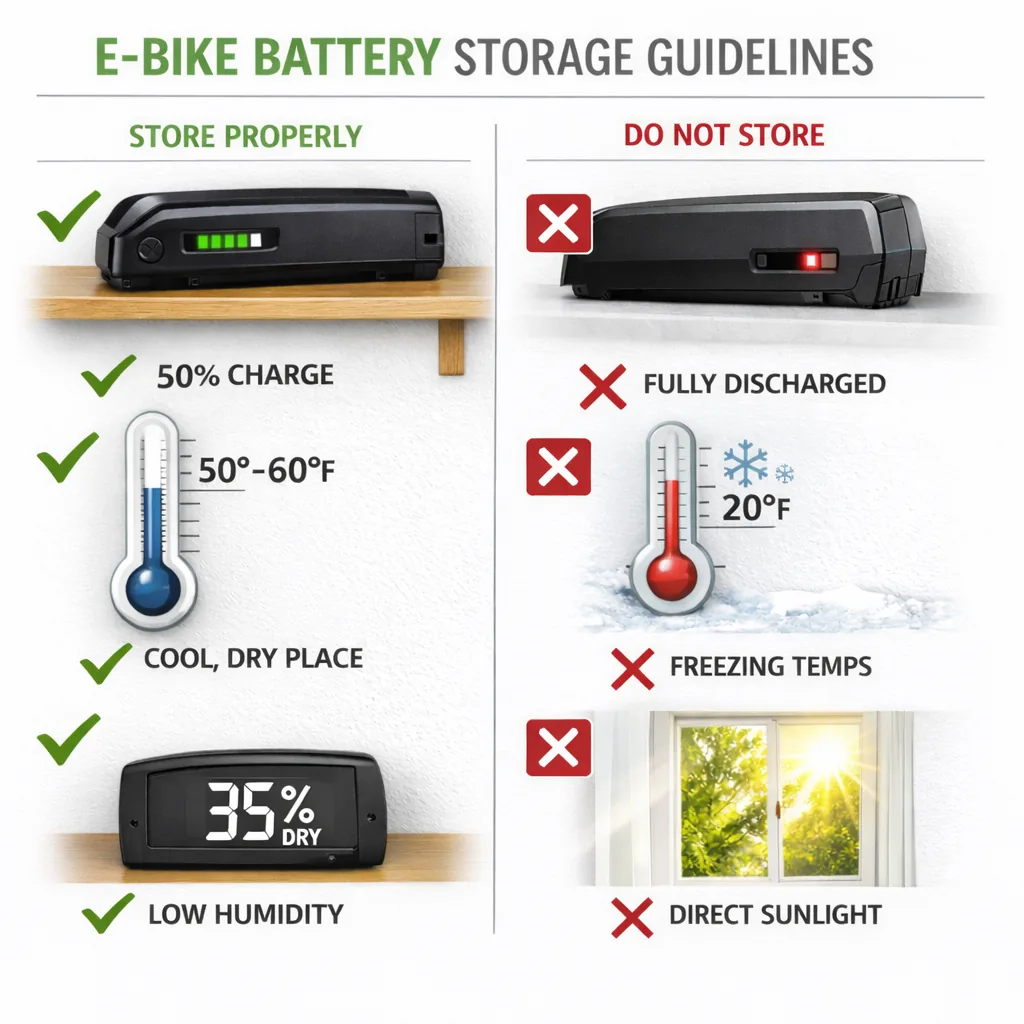
Temperature has a major effect on charging behavior and short-term performance. Bosch says its batteries only charge between 32°F and 104°F and recommends charging at room temperature when possible. Trek says e-bike batteries perform best around room temperature, roughly 60°F to 80°F, even though short-term cold weather use can still be safe with the right system protections.
Manufacturer references: Bosch battery care and maintenance, Trek e-bike battery care.
If you will not ride for a while, storage habits matter more than squeezing in one last full charge.
If the bike has to live outdoors, follow our guide to storing an e-bike outside so weather, moisture, and theft risks do not undo good battery care habits.
Bosch recommends occasional cleaning of the plug poles and keeping the mount area clean so moisture can drain and contacts can dry properly.
If the case is cracked, swollen, or otherwise damaged, stop using the battery and follow the manufacturer or dealer replacement path. Bosch explicitly warns against opening or repairing the battery housing.
All lithium-ion batteries gradually lose capacity over time, even when they are not in use. What matters is spotting the difference between normal aging and signs that call for service.
Common signs of normal aging:
Signs you should stop and inspect further:
References: Bosch battery care and maintenance, Trek e-bike battery care.
There is no single universal replacement date for every e-bike battery. Replacement depends on how the pack was used, how often it was charged, how much heat it saw, and whether the battery still fits your real-world riding needs.
If replacement math starts looking better than keeping an older bike on the road, compare current value-focused options in our best electric bikes under $2,000 roundup.
Good e-bike battery maintenance comes down to consistent basics: use the correct charger, avoid extreme temperatures, store the battery partially charged during long breaks, and stop using damaged packs immediately.
If you build those habits into your routine, you'll give your battery the best chance of delivering reliable range, safer operation, and better long-term value.
* We may earn a commission when you buy through our links


