If you are trying to decide whether your car rack can carry an e-bike, start with the boring numbers before you start lifting. A rack that works for a light acoustic bike can fail the moment an e-bike adds battery weight, a longer wheelbase, wider tires, or frame shapes that do not sit cleanly in the trays. This checklist helps you confirm weight limits, fit, and loading practicality before you leave the driveway.
Quick answer
Your car rack can carry an e-bike only if the rack's per-bike capacity, the hitch rating, the tray or clamp fit, and the real loaded bike weight all line up at the same time. Remove the battery and loose cargo when the manufacturer allows it, then verify wheelbase, tire width, frame contact points, and how you will actually load the bike.
Compatibility checklist before you buy or load
| Check | What to compare | Why it matters |
|---|---|---|
| Weight | Rack per-bike limit vs real e-bike weight | Too much weight overloads trays, clamps, and hitch hardware. |
| Fit | Wheelbase, tire width, fenders, and frame shape | A bike can be light enough but still sit badly or rub in the wrong places. |
| Loading | Lift height, ramp access, and tie-down points | A setup that is awkward to load is the one riders rush and damage. |
Weight limit is the first gate, but it is not the only one. Look for the rack's per-bike capacity instead of assuming the total rack rating tells the whole story. Then compare that number to the e-bike as it will sit on the rack in real life. That means including heavy accessories unless you will consistently remove them before every trip.
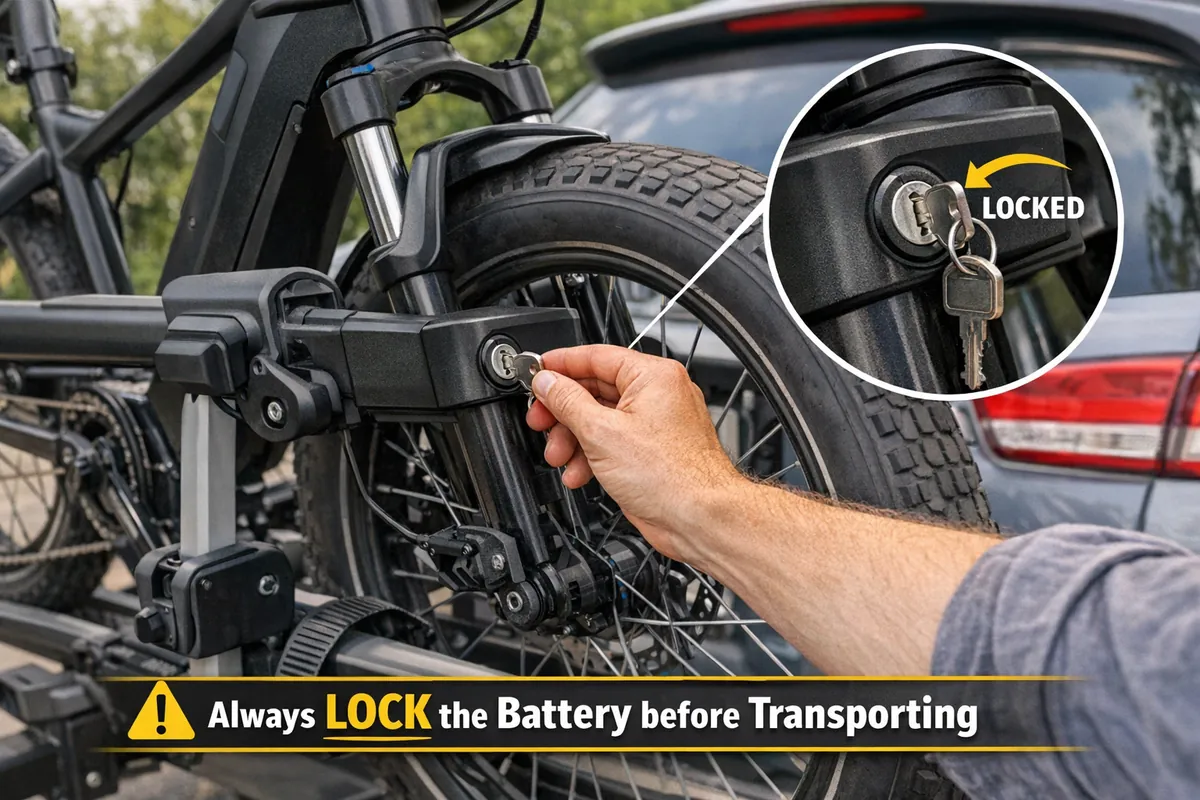
Many riders create a safer margin by removing the battery, panniers, child seats, or baskets before loading. That can make a previously marginal setup workable, but only if the bike maker allows battery removal for transport and only if the rack still supports the remaining bike correctly. A lower transport weight helps, yet it does not fix poor tray fit or weak frame contact.
Also look one level deeper than the rack itself. Hitch capacity, vehicle limitations, and how far the rack extends behind the vehicle all affect how the setup behaves over bumps. If the numbers are close, treat that as a warning instead of a green light.
A rack can be strong enough and still be a bad match. Long wheelbase e-bikes, fat tires, front fenders, step-through frames, and unusual frame shapes all create compatibility issues that a simple weight check will miss. Compare the rack's maximum wheelbase and tire-width limits to your bike before you assume the trays will hold it securely.
Frame-contact racks deserve extra caution with e-bikes. Integrated batteries, delicate paint, display wires, and non-round tubing can make clamp placement awkward. Tray-style racks with wheel retention usually make compatibility easier, but even those need the correct spacing and strap length for the tires and fenders on the bike.
If your bike has fenders, rear racks, or wide tires, check whether any part of the retention system presses on a component that was never meant to carry transport load. A setup that technically fits but bends a fender stay or pinches a brake hose is not really compatible.
Loading matters because the safest rack on paper can still become a bad transport setup if the bike is too awkward to lift into place. Think through the whole loading motion before you buy. How high do you have to lift? Can one person do it without twisting the bike sideways? Is a ramp available? Where will the second hand go once the first wheel is in the tray?
That short re-check is where many problems show up: a wheel strap settles, a frame hook rotates, or an accessory shifts. Catching that early prevents the classic "it looked fine in the driveway" failure.
Walk away from the setup if the bike only fits with improvised padding, partial tray contact, over-tightened frame hooks, or straps routed around hoses and wires. Those are not minor compromises. They are signs that the rack and bike are asking different things from each other.
Another bad sign is a loading process that feels barely manageable. If lifting the bike feels unstable, a ramp-capable rack or a second person is the safer answer. Compatibility is not just about whether the bike stays on the rack once. It is about whether you can repeat the process without guessing, straining, or damaging parts.
Practical callout: If you have to talk yourself into the setup because the bike is almost light enough or almost fits the trays, treat that as a no. E-bike rack compatibility should feel repeatable and boring, not borderline.
For broader loading and transport background, review REI's bike transport overview and basic load-security reminders from the National Park Service.


