Can you ride an e-bike in the rain? Yes, in normal wet-weather conditions you usually can, as long as you treat it like a traction and visibility problem instead of a casual dry-road ride. Slow down, brake earlier, keep lights on, and dry the bike properly afterward so moisture does not become a battery-care or corrosion problem.
If you want more MBHQ safety basics first, start with the E-Bike Safety hub.
You can ride an e-bike in the rain safely when the rain is moderate, your route still gives you traction, and you adjust your speed and stopping distance. Guidance from Rad Power Bikes recommends slowing down, braking earlier, and staying alert for slick surfaces such as wet metal and leaves. That lines up with the practical reality that wet-weather crashes usually come from loss of grip or visibility, not from the idea that a little rain instantly ruins the bike.
The better question is not whether the bike can survive a rainy commute. It is whether the route, weather, and your setup still make sense that day. Heavy storms, flooding, standing water, and poor visibility push the answer toward no even if the bike itself is technically weather resistant.
| Check | Why it matters |
|---|---|
| Front and rear lights | Rain cuts visibility for both you and drivers, so lights matter before you roll out. |
| Tire condition and pressure | Predictable grip matters more in wet turns and painted intersections. |
| Brakes | You need consistent stopping power because wet roads increase braking distance. |
| Fenders or splash plan | They help keep water and road grime off you and off the bike. |
| Battery fit and charge plan | You want the battery secure on the ride and a dry place ready for charging later. |
Visibility gear deserves extra attention. The E-Bike Helmet Guide is the right follow-up if your current helmet, lighting, or reflective setup is weak for traffic and dark conditions.
Make smoother inputs than usual. Corner slower, leave more room to stop, and keep a little more distance from traffic. Wet conditions punish sudden braking and sharp steering corrections. If a route is full of steel plates, painted lane markers, leaves, or puddles that hide potholes, the safer choice is often to detour or skip the ride.
If the bike has been living outside between rides, pair this topic with How to Store an E-Bike Outside. Rain exposure is much easier to manage when parking, covers, and battery routine are already handled well.
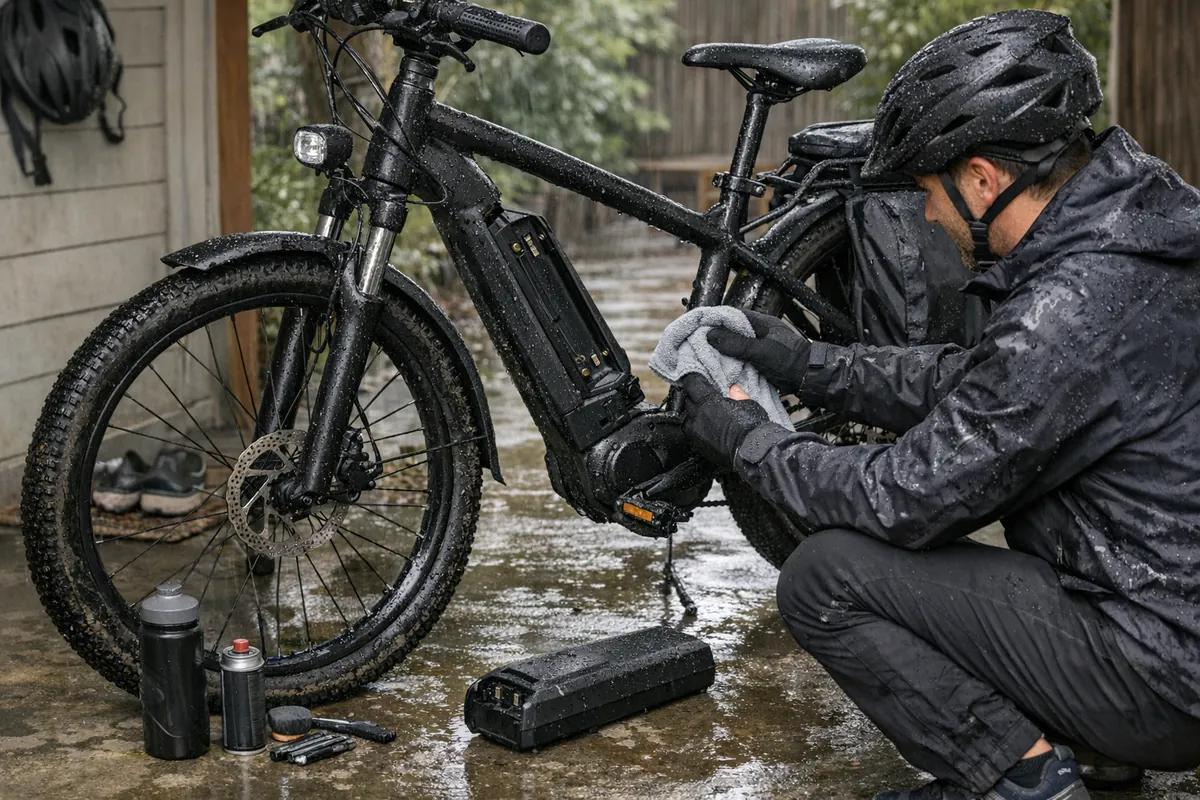
Post-ride care is where most riders save themselves trouble. Bosch says the battery should be charged only in a dry area and cleaned with a damp cloth rather than pressure washing, and its battery-care guidance also notes that the battery mount is designed so water can drain and contacts can dry when the area is kept clean. That practical takeaway is simple: do not blast the bike with water, do not leave grime packed around the battery area, and do not bring a wet battery straight into a careless charging setup.
Wipe down the frame, battery shell, and contact area if needed, then let the bike dry under cover. If the chain picked up road spray, follow up with the kind of routine you would already want for general battery and drivetrain longevity. The E-Bike Battery Maintenance Guide is the next step if your concern is long-term battery care rather than day-of rain riding.
For the official maintenance reference, Bosch battery care guidance is here: Bosch battery care and maintenance.
The answer should be no when water is deep enough to hide hazards, storms are strong enough to crush visibility, or you know your route becomes slick and chaotic when wet. This is also a skip-the-ride day if your lights are weak, your brakes need attention, or your battery fit is questionable. An e-bike that is fine in light rain is not the same thing as an e-bike that should be ridden through flooding or neglected maintenance.
You can ride an e-bike in the rain when the bike is in good shape, the weather is reasonable, and you change the way you ride. The practical formula is simple: see better, be seen, slow down, avoid sketchy surfaces, and dry the bike properly after. If any part of that chain breaks, the safer move is to wait for better conditions.


