Can an ebike go on sidewalks? Sometimes, but you should treat the answer as local-law first. In many places, e-bikes are allowed on roads and bike lanes but restricted or banned on sidewalks, especially in dense downtown areas, business districts, parks, and pedestrian-heavy zones.
Quick answer: An e-bike can go on sidewalks only where state law and local rules allow it. Some states treat e-bikes much like regular bicycles, while some cities ban sidewalk riding or limit it to younger riders, slower speeds, or specific areas. If you are unsure, use the street, bike lane, or multi-use path instead of the sidewalk.
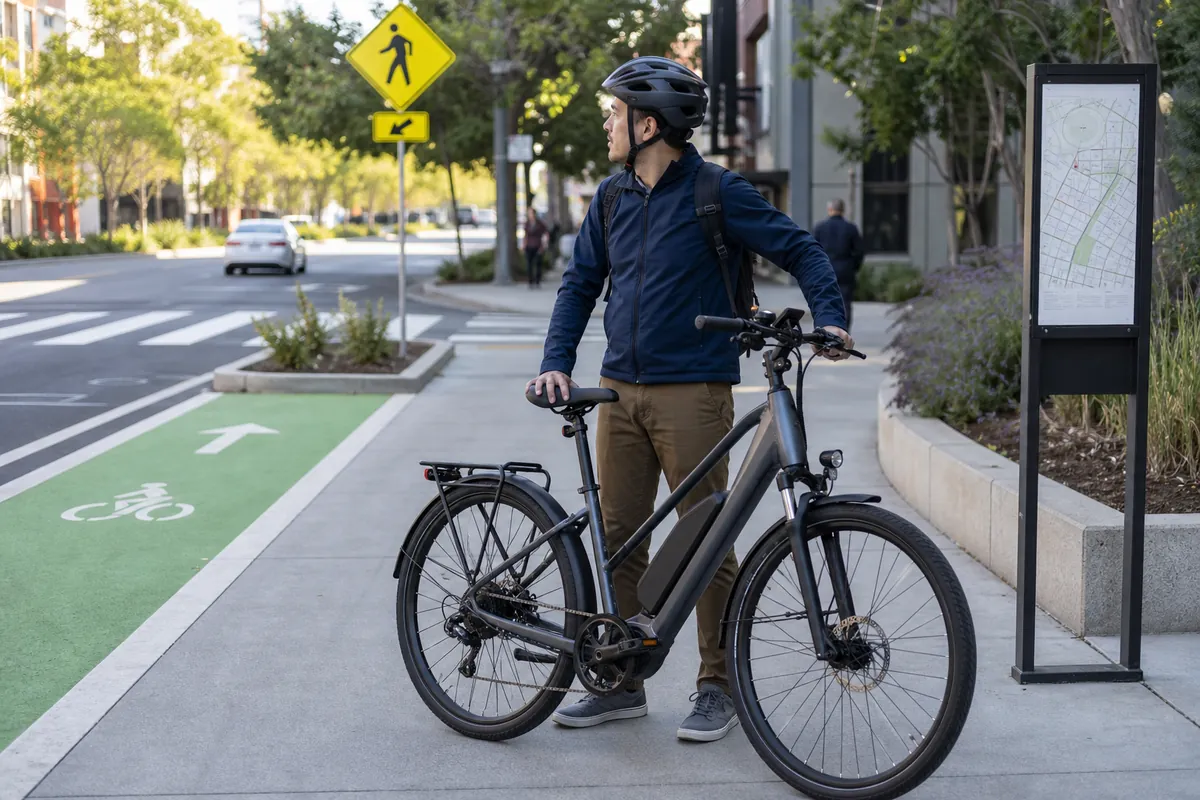
The tricky part is that “sidewalk” rules are rarely controlled by one simple national standard. E-bike access can change by state, city, park district, campus, trail system, or private property rule. A street-legal Class 1 or Class 2 e-bike may still be banned from a sidewalk a block away from where another city allows it.
That is why the safest rule is simple: if pedestrians are the main users, slow down, yield, and look for a bike lane or legal road route. If signs say no bikes, no motorized vehicles, or no e-bikes, follow the posted rule.
There is no single U.S. answer. E-bike sidewalk rules are set through a mix of state vehicle codes and local ordinances. Some places let bicycles use sidewalks unless local law says otherwise. Others specifically exclude e-bikes from sidewalks because they are heavier and faster than regular bikes.
For example, the New York City Department of Transportation tells e-bike and e-scooter riders to stay off sidewalks. Oregon’s bicycle manual says people riding e-bikes may use bike lanes and paths, but not sidewalks. Florida is more permissive in some situations, but the state also notes that local governments may adopt more restrictive rules for e-bike operation.
Those examples point to the real answer: your city matters as much as your state. A rule that works in one town can be wrong in the next one.
Best default behavior: Ride your e-bike in the bike lane or roadway when you can do so safely and legally. Use sidewalks only when local rules allow it, your speed is very low, and you can give pedestrians full priority.
Sidewalks are built for walking speed. E-bikes can move much faster, even when the rider feels under control. That speed difference creates problems near driveways, storefront doors, bus stops, crosswalks, and blind corners.
Local governments also have different street designs. A suburban road with no shoulder creates a different risk than a downtown block with heavy foot traffic. Because of that, some cities allow sidewalk riding outside business districts but ban it downtown. Others allow children on sidewalks but not adults. Some permit regular bicycles but restrict e-bikes.
If you are trying to understand where your e-bike fits legally, start with the vehicle category. Our guide to whether motorized bikes can be driven on the road helps explain how roadway access and vehicle classification can shape the answer.
| Situation | What usually matters | Safer choice |
|---|---|---|
| Residential sidewalk | Local bike and e-bike ordinances, pedestrian traffic, posted signs | Ride slowly only if allowed, or use the street when safe |
| Downtown or business district | Many cities restrict sidewalk riding in pedestrian-heavy areas | Use bike lanes, signed bike routes, or walk the e-bike |
| Crosswalk | Some places treat sidewalk or crosswalk riders like pedestrians only at low speed | Slow to walking speed; dismount if visibility is poor |
| Multi-use path | Path rules may allow Class 1 and Class 2 e-bikes but restrict faster models | Check posted signs and yield to walkers |
| Park, campus, or private property | Property rules can be stricter than city rules | Follow posted rules or walk the bike |
E-bike class can affect sidewalk access. Class 1 e-bikes provide pedal assist up to 20 mph. Class 2 e-bikes can use throttle power up to 20 mph. Class 3 e-bikes provide pedal assist up to 28 mph and are often treated more strictly.
Sidewalk rules are not always written cleanly around these classes, but higher-speed e-bikes tend to face more limits. If a local rule allows “bicycles” on sidewalks but says nothing about e-bikes, do not assume every e-bike class is covered. Check the city code, transportation department page, or posted local guidance.
If you are comparing e-bike types before buying, the broader e-bike buying tips guide can help you match speed, motor style, and use case before you get stuck with a bike that does not fit your local riding rules.
Even when sidewalk riding is technically allowed, there are times when walking the bike is the better move. A legal ride can still be a bad ride if it surprises pedestrians or puts you in a driver’s blind spot at a driveway.
The heavier the bike, the more this matters. Cargo e-bikes, fat-tire e-bikes, and high-speed commuter models can feel stable to the rider but intimidating to people walking nearby.
Practical sidewalk check: Before riding on a sidewalk, ask three questions: Is it legal here? Are pedestrians likely to be surprised? Can I stop before every driveway, doorway, and crosswalk? If any answer is no, walk the e-bike or choose another route.
Start with your state’s e-bike law, then narrow it down to your city or county. State law may define e-bike classes, helmet rules, and roadway rights. Local law often decides sidewalk access, downtown restrictions, park rules, and speed limits.
Look for official sources first. City transportation departments, state DMV pages, state DOT bicycle manuals, and municipal code pages are better than old forum threads. Search for phrases like “electric bicycle sidewalk,” “e-bike ordinance,” “bicycle sidewalk riding,” and your city name.
If your state has a motorized bicycle article on MBHQ, use it as a starting point for classification and road-use context. For example, riders in Nevada can begin with Nevada motorized bicycle laws, while riders elsewhere should check the state-specific legal guide that matches where they ride.
If sidewalk riding is legal where you are, ride as if you are a guest in pedestrian space. Keep your speed close to walking pace. Cover the brakes. Make eye contact at driveways and crosswalks. Avoid passing close behind people, especially older pedestrians, children, and anyone walking a pet or pushing a stroller.
Use pedal assist lightly. A low assist setting gives you better control and less sudden acceleration. Throttle-only riding on a sidewalk is a poor fit in most real-world situations, even if your local rule does not clearly ban it.
A helmet is still worth wearing, especially around cars turning across sidewalks and crosswalks. If you are unsure what to buy or when helmet rules apply, see our e-bike helmet guide.
Bike paths and multi-use trails are not the same as sidewalks. Many are designed for bicycles, but e-bike access still depends on the rule for that specific path. Some allow Class 1 e-bikes only. Some allow Class 1 and Class 2. Some ban motor-assisted devices entirely.
On shared trails, the best riding style is predictable and boring in the best way: stay right, pass left, announce passes, slow near families, and do not use high assist around walkers. Trail conflicts are often less about the bike and more about speed.
An e-bike can go on sidewalks only where the law allows it, and the law can change from one city to the next. When in doubt, do not treat the sidewalk as your default route. Check local rules, watch for signs, and choose the bike lane, roadway, or a legal multi-use path when possible.
The practical rule is easy to remember: sidewalks belong to pedestrians first. If riding there would make walking less safe or less comfortable, walk the e-bike until you reach a better place to ride.