The best class 3 fat tire electric bike should give you more than speed and big tires. A strong choice should feel stable, climb well, stop confidently, offer usable battery range, and match the roads, trails, weather, and local rules you actually ride under.
Quick answer: Look for a Class 3 fat tire eBike with controlled pedal assist, strong brakes, a battery with real-world range margin, a comfortable frame fit, and tires that match your terrain. Fat tires can add comfort and grip, but they also add weight and rolling resistance, so the full bike matters more than tire size alone.
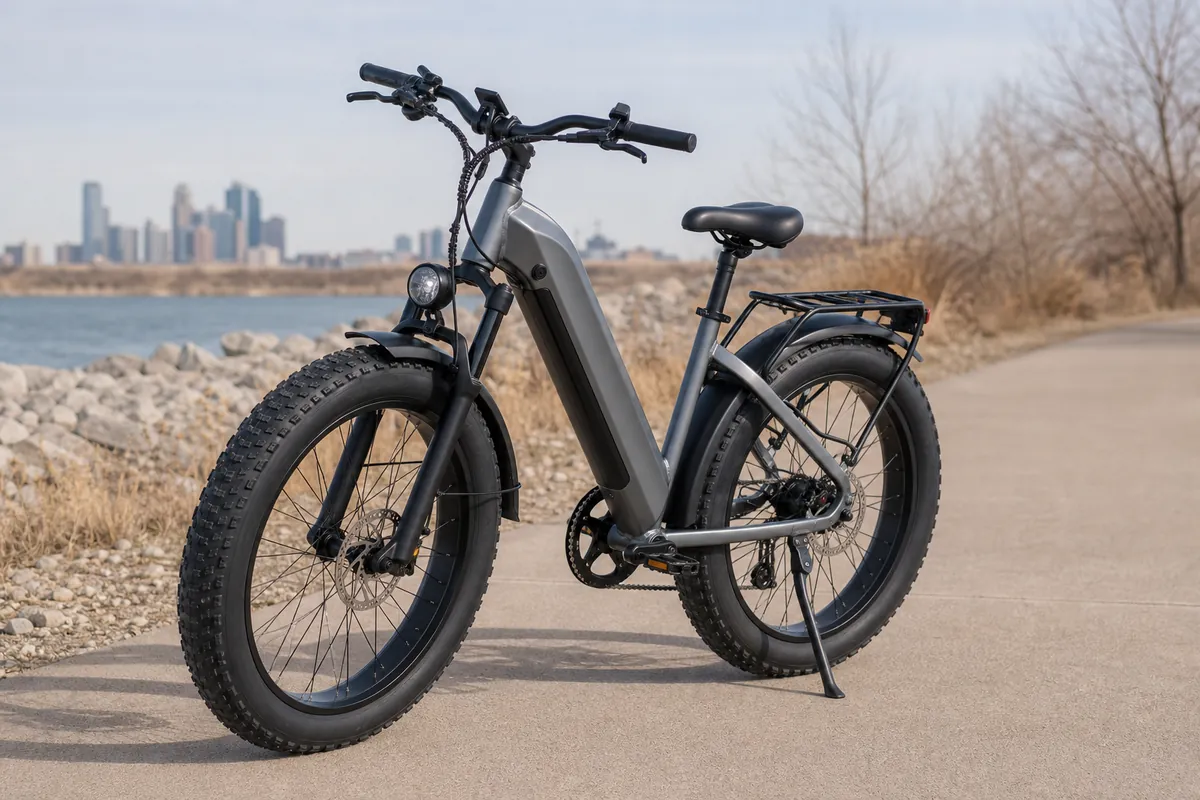
A good Class 3 fat tire eBike should feel controlled, not just fast. Speed, weight, tire grip, braking, and local access rules all need to work together.
A Class 3 eBike is commonly understood as a pedal-assist electric bike that can assist up to 28 mph, though details can vary by state and local rules. Fat tire eBikes add wider tires for extra grip, comfort, and mixed-surface confidence. Put those together, and you get a bike that can be powerful and versatile, but also heavier and more demanding to manage.
That combination makes careful buying more important. You are not just shopping for a fast eBike. You are choosing a bike that needs enough battery, strong brakes, stable handling, and a frame that still feels manageable when parked, stored, or ridden slowly. If you are still learning how eBike categories work, start with e-bike buying tips before comparing individual models.
| Feature | Why it matters | What to look for |
|---|---|---|
| Class 3 assist | Supports higher assisted speeds where legal | Smooth pedal assist and clear class labeling |
| Fat tires | Add grip, comfort, and surface versatility | Tire width suited to your roads, paths, or light trails |
| Brakes | Higher speed and weight demand stronger stopping | Confident braking with predictable lever feel |
| Battery capacity | Fat tires and speed can drain range faster | Enough range for your route with a real buffer |
| Motor behavior | Changes climbing, acceleration, and ride feel | Controlled support instead of jumpy power |
| Weight and fit | Affects storage, loading, and low-speed handling | A frame size and weight you can realistically manage |
Start with your riding use case. A rider who wants a fast commuter for rough pavement needs a different setup than someone who wants weekend gravel paths, beach-town cruising, or winter traction. Fat tires can help in many conditions, but they are not magic. The bike still needs the right motor, brakes, battery, geometry, and fit.
The best choice is the one that feels stable at speed and practical at low speed. A heavy fat tire eBike can feel great once rolling but awkward in tight storage, stairs, racks, or crowded parking areas. Think about the full ownership experience, not just the ride photo.
Class 3 speed can be helpful for commuting and longer rides, especially on roads where faster assisted cruising feels appropriate. But Class 3 bikes may face different helmet, age, road, path, or trail restrictions depending on location.
Before buying, check how your state and local routes treat Class 3 eBikes. A bike that looks perfect online may be less useful if your favorite path does not allow it. If you need a plain-English starting point, read can you drive a motorized bike on the road for broader road-use context.
Fat tires can smooth out rough pavement, packed dirt, gravel, sandier surfaces, and uneven roads. They also give many riders a more planted feeling. That can be reassuring on a faster Class 3 eBike.
The tradeoff is weight and rolling resistance. Wide tires can reduce efficiency, especially at higher speeds or lower pressures. That means battery range may be lower than a similar bike with narrower tires. More tire is not always better; the right tire is better.
A Class 3 fat tire eBike can be heavy and fast, so braking should not be treated as an afterthought. Look for stopping power that feels predictable, especially if you ride hills, traffic, or wet roads. Brake maintenance will also matter over time.
Battery range deserves the same attention. Higher assist levels, fat tires, rider weight, wind, cold, hills, and cargo can all reduce real-world range. If battery care is a concern, our e-bike battery maintenance guide can help you protect long-term performance.
Practical tip: before buying, write down your usual route, steepest hill, storage situation, and where Class 3 eBikes are allowed near you. Those details will narrow the field faster than comparing motor numbers alone.
A Class 3 fat tire eBike can make sense for riders who want higher assisted speed, rough-road comfort, and a more stable feel over mixed surfaces. It can be especially appealing for commuting on imperfect pavement, riding in windy areas, or covering longer distances where extra support matters.
It may not be the best fit for everyone. If you need a lightweight bike for stairs, a narrow bike for tight storage, or the longest possible range, a fat tire Class 3 model may feel like too much bike. Riders comparing broad eBike options may want to review best electric bikes before committing to a fat tire setup.
If you are ready to compare current options, start broad. Look at price, battery size, brakes, weight, tire width, motor type, frame style, and whether the bike is clearly presented as Class 3. Use shopping listings for research, then verify the details with the seller or manufacturer before buying.
Be careful with vague listings that do not clearly explain class, top assisted speed, battery specs, brake type, or warranty support. Also be cautious with bikes that promise extreme performance without explaining how they handle braking, range, weight, and legal classification.
A good fat tire eBike should not make you guess about basic ownership details. If the listing is unclear, ask questions before buying. That is especially important with Class 3 claims, because speed and access rules can affect how useful the bike really is.
The best class 3 fat tire electric bike is the one that balances speed, control, comfort, range, and legal practicality. Fat tires can add confidence and versatility, while Class 3 assist can make commuting and longer rides easier, but both features bring tradeoffs.
Focus on how the bike fits your real roads, storage, range needs, and local rules. When those pieces line up, a Class 3 fat tire eBike can be a powerful and practical ride instead of just an impressive spec sheet.
* We may earn a commission when you buy through our links.