How long an electric bike battery lasts in a day depends mostly on battery size, assist level, terrain, rider weight, weather, and how much you use the throttle. For many everyday riders, a full e-bike battery can cover a normal day of commuting, errands, or recreational riding, but heavy throttle use or long hills can drain it much faster.
Quick answer: A typical electric bike battery often lasts about 20 to 60 miles of riding in a day on one full charge. In time, that may feel like roughly 1.5 to 6 hours of actual riding, depending on speed, assist level, terrain, stops, and battery capacity.
If you are using low pedal assist on flat roads, the battery can last much longer. If you ride fast, climb hills, carry cargo, face cold weather, or rely on throttle power, expect the lower end of the range.
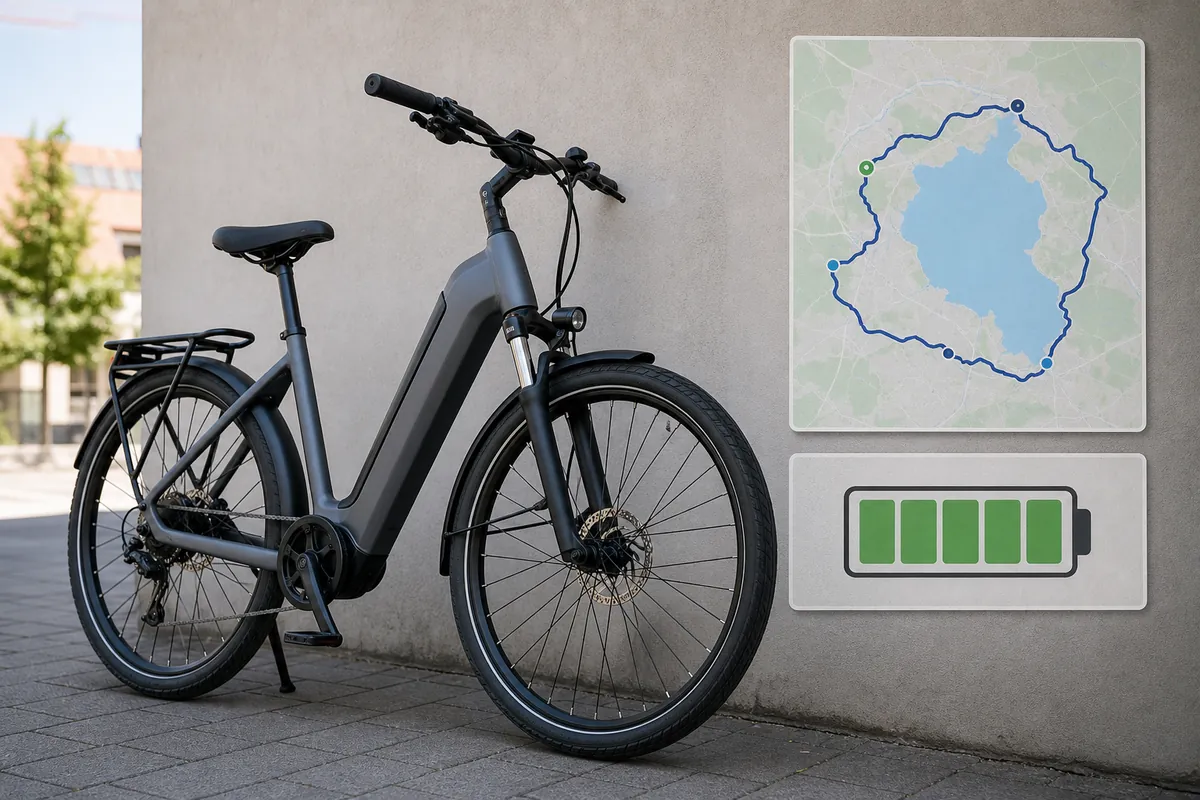
For a normal day, the useful answer is not “how many hours can the battery sit there?” It is how much riding the battery can support before it needs charging.
Most riders should think in miles first. A full battery may handle a short round-trip commute with plenty left over, or it may be nearly empty after a long, fast ride with hills. The same battery can feel generous on Monday and barely enough on Saturday if the route changes.
As a practical planning range, many e-bikes fall into these broad day-use patterns:
If you are shopping for an e-bike and range matters, battery capacity should be part of the buying decision, not an afterthought. MBHQ’s e-bike buying tips can help you weigh range against motor power, frame style, and everyday fit.
The main thing to know: Manufacturer range estimates are usually best-case or mixed-condition numbers. Your real day-to-day range is shaped by how you ride. Assist level is often the biggest lever you control.
An e-bike battery drains whenever the motor helps move the bike. The harder the motor works, the faster the battery drops. That sounds obvious, but it explains most range surprises.
Low assist asks you to do more of the work, so the battery lasts longer. High assist feels easier and faster, but it spends energy at a much higher rate.
Throttle use, when the bike has one, can drain the battery faster than gentle pedal assist because the motor may be doing most of the work. If you want a battery to last all day, use high assist only when it actually helps: hills, traffic starts, headwinds, or tired legs.
Battery capacity is usually listed in watt-hours, often written as Wh. A higher Wh rating generally means more stored energy, though the final range still depends on the bike, motor, route, rider, and conditions.
A small battery can be fine for short trips. A larger battery is better for riders who commute farther, carry weight, ride in hilly areas, or do not want to charge every day.
Hills are expensive. So are fast speeds, frequent starts, rough surfaces, soft tires, and heavy loads. A relaxed ride on smooth pavement uses far less energy than a windy climb with cargo on the rear rack.
If you often ride in poor weather, it is also worth reading about e-bike range in cold weather. Cold temperatures can make a healthy battery feel weaker for the day, especially on longer rides.
| Riding situation | Battery impact | What to expect |
|---|---|---|
| Flat route, low assist | Low drain | Best chance of stretching one charge across the day |
| Mixed commute, medium assist | Moderate drain | Often realistic for daily commuting and errands |
| High assist or throttle-heavy riding | High drain | Range can fall quickly, especially at higher speeds |
| Hills, cargo, headwind, or cold | High to very high drain | Plan extra battery margin or charge mid-day |
The easiest way is to compare your expected miles with your real battery behavior, not just the range printed on the sales page.
If your bike has a range estimate on the display, treat it as a rough guide. It can change as you shift assist levels, climb, slow down, or speed up. The battery percentage is often more useful once you learn your usual route.
For a rough planning method, use this simple approach:
That last point matters. Running the battery nearly empty on purpose is stressful, and it leaves no room for detours, wind, hills, or a missed turn. For daily use, a battery that technically can finish the route is not the same as a battery that feels comfortable.
Yes, often. If your commute is short to moderate and you use pedal assist wisely, one battery can handle work, errands, and a ride home. The key is matching the bike to the day you actually ride.
A rider with a 6-mile round-trip commute may have plenty of battery left for errands. A rider with a 28-mile commute, hills, and high assist may need a larger battery, workplace charging, or a second charger.
If you are deciding between battery styles, a removable pack can make daily charging much easier. MBHQ’s guide to removable e-bike batteries explains when that feature is worth prioritizing.
Practical planning tip: Plan your day around using no more than about 70% to 80% of your real-world battery range. That gives you room for wind, hills, detours, battery age, and a heavier-than-usual load.
You do not need to ride like you are conserving fuel every second. Small habits make a real difference without ruining the ride.
Battery care also affects how dependable the bike feels over time. For longer-term ownership, see MBHQ’s e-bike battery maintenance guide.
A new battery usually holds more usable energy than an older one. Over time, lithium-ion batteries lose capacity through normal charge cycles, heat exposure, storage habits, and age.
That does not mean an older e-bike becomes useless. It means the same route may use more of the battery than it once did. If your bike used to finish the day with 40% left and now finishes with 15%, the route did not change; your usable battery margin did.
Watch for patterns rather than one bad day. Cold weather, low tire pressure, a new route, or more high-assist riding can all mimic battery decline. If range keeps falling in normal conditions, the battery may be aging.
Charge during the day if your route uses most of the battery, if the ride home includes hills, or if you cannot afford a low-battery surprise. Workplace charging, cafe charging, or topping up between errands can turn a borderline route into an easy one.
Indoor charging is common, but you should use the correct charger, avoid damaged packs, and charge in a sensible location. If a battery looks swollen, has been dropped hard, smells unusual, gets abnormally hot, or shows visible damage, do not treat it like a normal top-up situation.
If you regularly need mid-day charging, that may be a sign you need a larger battery, a second battery, a different assist strategy, or a bike better matched to your route.
An electric bike battery can last a full day for many riders, but “all day” usually means enough range for your actual miles, not continuous motor use from sunrise to sunset. For most people, the realistic question is whether one charge can cover the commute, errands, hills, weather, and safety margin.
If you want the battery to last longer in a day, ride in lower assist when you can, keep the bike maintained, avoid constant throttle use, and leave a buffer. The best setup is simple: enough battery that you can enjoy the ride without watching the percentage every mile.