A motorized bicycle maintenance checklist keeps your bike safer, easier to diagnose, and less likely to strand you with a loose mount, weak brake, dry chain, or power system problem. Start with the parts that affect control first: tires, brakes, chain, throttle, fasteners, fuel or battery connections, and anything that changed since your last ride.
Quick answer: Before every ride, check tire pressure, brake feel, chain tension, throttle return, lights, fuel or battery level, and obvious loose parts. Each week, inspect the engine or motor mount, drivetrain, cables, wheels, spokes, brake pads, and power connections. Once a month, clean the bike, tighten key fasteners, inspect wear items, and look for leaks, cracks, rubbing wires, heat damage, or unusual noise.
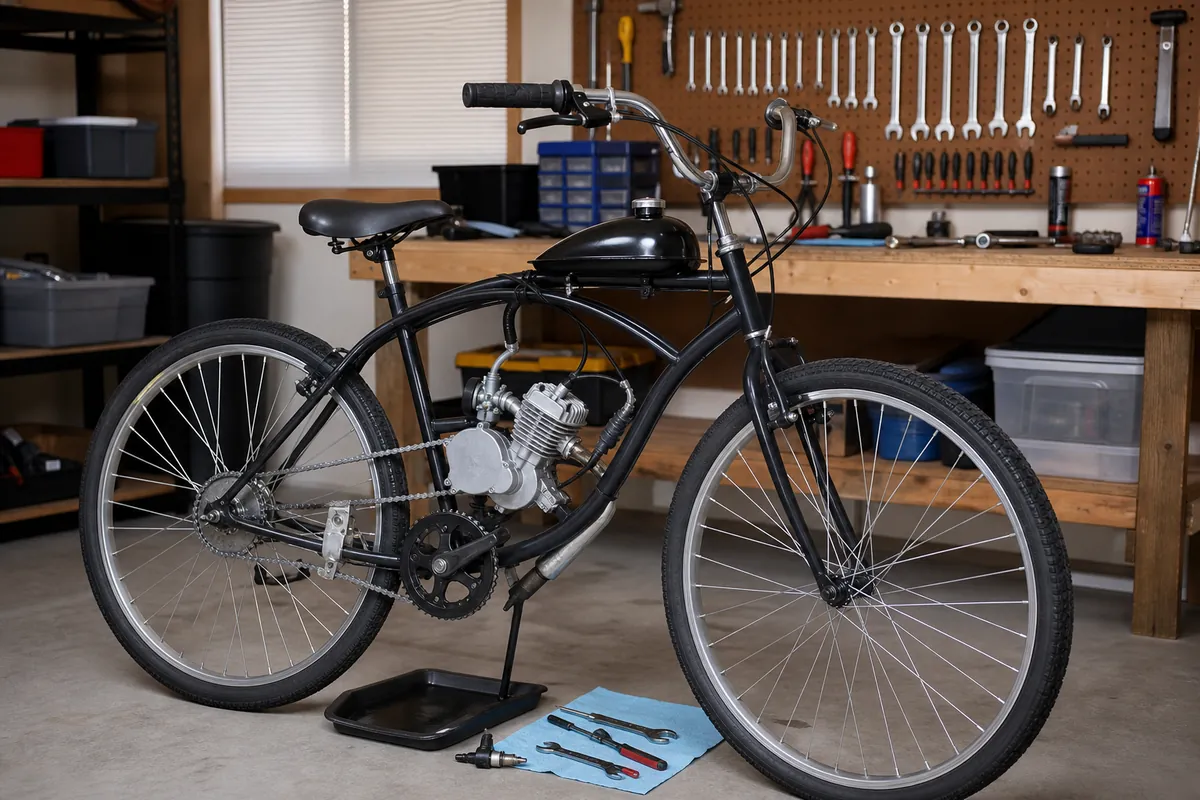
Motorized bicycles ask more from the base bike than casual pedaling does. Extra speed, vibration, weight, and heat can loosen hardware faster and make small problems matter more. The point is not to turn every ride into a teardown. It is to build a simple rhythm that catches wear while the fix is still easy.
This guide applies to common gas engine bicycle kits, electric conversion setups, and e-bike-style powered bicycles. Your exact parts may differ, so use your kit manual for torque specs, fuel mix, battery care, and service intervals. If your setup uses a removable pack or electric assist system, MBHQ’s guide to e-bike battery maintenance is a useful companion.
Best rule: if the bike suddenly sounds, smells, vibrates, heats up, or stops differently than usual, pause the ride and inspect it. Motorized bicycle problems often announce themselves early through loose hardware, rough power delivery, weak braking, heat, or new noise.
The easiest way to maintain a motorized bike is to split the work by interval. Some checks take less than a minute. Others belong in a weekly or monthly routine when the bike is cool, clean, and parked where you can see what you are doing.
| Interval | What to Check | Why It Matters |
|---|---|---|
| Before every ride | Tires, brakes, chain, throttle, lights, fuel or battery level, loose parts | Catches common safety issues before you are moving |
| Weekly | Engine or motor mount, chain alignment, cables, wheels, spokes, brake pads | Finds vibration-related loosening and early wear |
| Monthly | Deep clean, fastener check, drivetrain inspection, leak check, wiring or fuel line review | Prevents small maintenance issues from stacking up |
| Seasonally | Tires, tubes, bearings, brake system, spark plug or battery health, storage condition | Prepares the bike for weather, longer rides, or downtime |
Before you start the motor or roll into traffic, give the bike a short walk-around. This part of the checklist should become automatic.
Brake condition deserves extra attention because motorized bicycles may be heavier and faster than the base bike was designed for. If your pads are thin, glazed, noisy, or slow to stop the bike, MBHQ’s brake wear guide on how often to replace e-bike brake pads offers a practical reference point for powered bikes.
A weekly check is where you catch vibration, alignment, and wear. You do not need to strip the bike down. You do need to look closely at the parts carrying the extra load.
Check the mount points first. A loose engine or motor can create chain alignment problems, odd vibration, damaged frame paint, and unsafe handling. Look for shifting brackets, crushed frame tubing, missing washers, cracked plates, or hardware that has backed out.
If anything has moved, stop and fix the mount before riding again. A motorized bicycle should feel like one machine, not a bicycle with a heavy part fighting the frame.
Inspect both the pedal chain and drive chain if your setup uses two. Look for dry rollers, tight links, hooked sprocket teeth, chain rub, and uneven tension. Chain problems can make the bike noisy, reduce efficiency, and damage nearby parts.
Lubricate the chain when it looks dry or sounds rough, but do not soak it until it attracts grit. Wipe away excess lube after it has worked into the rollers. A clean, lightly lubricated chain usually outlasts one that is neglected or over-oiled.
Spin each wheel and watch for wobble, rubbing, or hops in the tire. Squeeze pairs of spokes lightly to feel for any that are much looser than the rest. Motorized bikes can put extra stress through the rear wheel, especially if a sprocket adapter or hub motor is part of the build.
For longer rides, carry a flat-tire kit that matches your wheel and tire setup. MBHQ’s guide on what to carry for an e-bike flat tire also applies well to many motorized bicycle owners because the roadside problems are similar.
The power system depends on your build. A gas kit, electric conversion, and factory e-bike-style setup all need different care. The common theme is simple: keep the system clean, secure, and free from leaks, chafing, corrosion, and heat damage.
If the engine starts poorly, bogs under load, or smells unusually rich, do not tune at random. Work through air, fuel, spark, and compression in a clean order. Random adjustments can hide the real problem and make the bike harder to fix later.
If you ride in wet weather, be conservative with cleaning and storage. Avoid forcing water into connectors, bearings, displays, or motor housings. Water problems often start quietly, then show up later as corrosion, rough bearings, or unreliable power delivery.
Practical callout: Do not pressure wash a motorized bicycle. Use low-pressure water, a damp cloth, brushes, and mild cleaner instead. High-pressure spray can push water into bearings, cables, connectors, engine parts, and places that are hard to dry.
Once a month, give the bike a more patient inspection. Clean bikes are easier to diagnose, so start by removing dirt, old lube, and road grime. If the bike has electric parts, keep water away from the battery, display, controller, and open connectors.
Check the frame, fork, handlebar, stem, seatpost, rack mounts, brake mounts, motor brackets, and axle hardware. Look for cracks, rust, dents, ovalized holes, or paint lines that suggest movement. Use proper tools and manufacturer torque specs where available.
Pay close attention to clamp-on motor mounts. If a clamp keeps slipping, adding more force may not be the right fix. The frame shape, bracket fit, or mount design may be wrong for the load.
Test brake levers, throttle, shifter, clutch lever if fitted, and any kill switch. Cables should move smoothly without fraying or sharp bends. Replace damaged cables before they fail, especially brake and throttle cables.
A sticky throttle or weak brake lever is not a “ride it once more” problem. It changes how the bike responds when you need control most.
Inspect pad thickness, rotor condition, rim brake tracks, cable tension, hydraulic hose routing, and lever feel. Powered bikes need brakes that feel boringly consistent. Squealing, pulsing, grinding, or sudden lever travel deserves attention before the next ride.
Cleaning is maintenance, not just cosmetic work. Dirt hides cracks, worn cables, leaking fuel, loose bolts, and chain wear. It also speeds up corrosion if the bike is stored damp.
For electric builds, cleaning technique matters even more. Keep spray gentle, remove the battery if the maker recommends it, and let the bike dry before charging or storing it in a tight indoor space.
Season changes are a good time to reset the bike. Heat, cold, rain, dust, and storage all change what wears fastest.
Some issues should pause the ride until you know what is wrong. A motorized bicycle gives you less room for “probably fine” than a casual pedal bike.
Stop early when something feels wrong. That choice is usually cheaper than finishing the ride and turning one loose part into several damaged ones.
You do not need a professional shop in your backpack. Still, a small tool kit can save a ride when a minor problem shows up away from home.
If you ride on public roads, also keep your legal setup in mind. Equipment rules can vary by state and local area, so MBHQ’s guide to driving a motorized bike on the road is a useful next stop after the mechanical checklist.
Use this condensed list as your repeatable routine. Save the deeper inspections for days when the bike is clean, cool, and parked securely.
The best motorized bicycle maintenance routine is boring in a good way. Quick checks before every ride, a closer look each week, and a deeper inspection each month will catch most problems while they are still small.
Keep notes when you adjust something, replace a part, or hear a new sound. Over time, those notes make the bike easier to understand. They also help you spot patterns, which is where good ownership really starts.