If you are comparing a hub motor vs mid drive ebike, the best choice depends on how you ride. Hub motors are often simpler, more affordable, and easier to understand, while mid-drive motors usually feel more natural on hills, technical terrain, and rides where gearing matters.
Quick answer: Choose a hub motor eBike if you want simple, budget-friendly power for flatter commutes, errands, and casual riding. Choose a mid-drive eBike if you need better climbing feel, more efficient use of gears, and a more bicycle-like ride on hills or varied terrain.
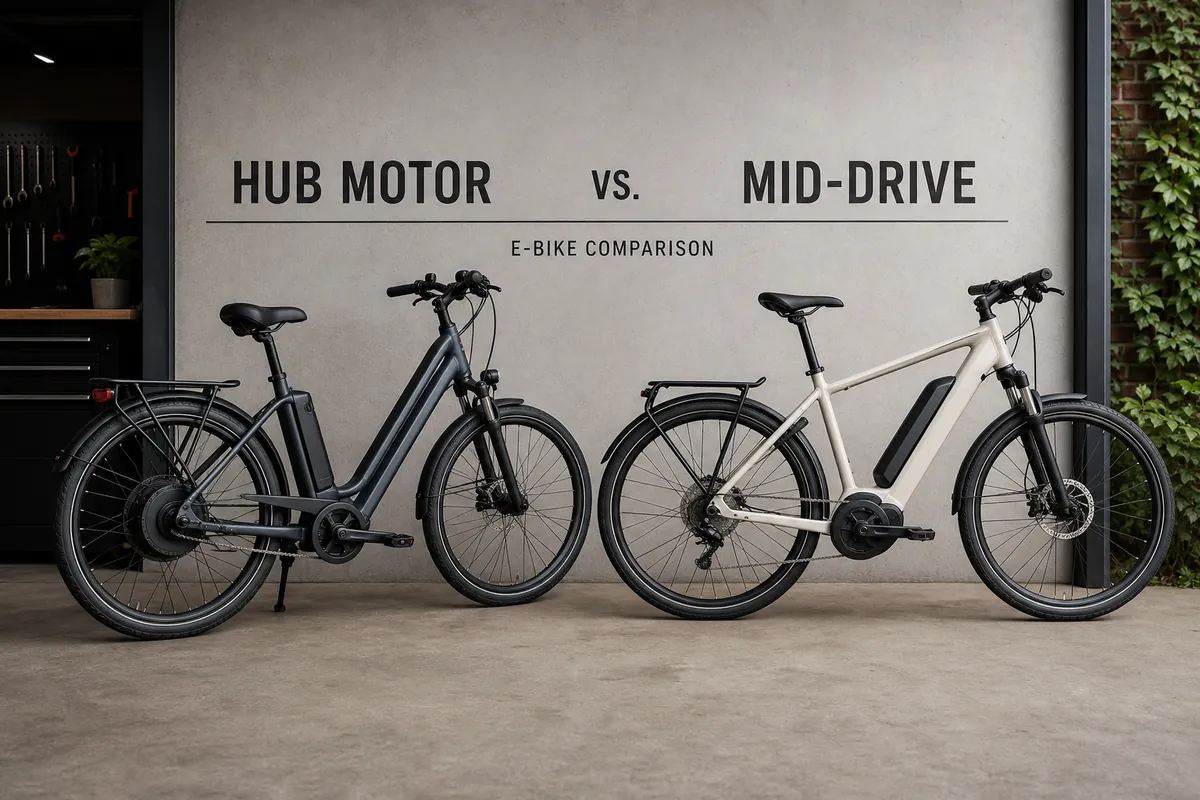
There is no universal winner. The better motor type is the one that fits your terrain, budget, maintenance comfort, and riding expectations.
A hub motor sits inside the front or rear wheel hub and pushes or pulls the wheel directly. A mid-drive motor sits near the crank and sends power through the bike’s chain and gears. That one design difference changes how the bike climbs, handles, wears parts, and feels under load.
Hub motors are common on many value-focused and commuter eBikes because they can be simpler and cost-effective. Mid-drives are common on higher-end commuter, cargo, mountain, and performance eBikes because they use the bike’s drivetrain more like a strong rider would. If you want a broader technical foundation first, our guide to electric bike motors explained is a useful companion.
| Comparison point | Hub motor eBike | Mid-drive eBike |
|---|---|---|
| Motor location | Inside the wheel hub | Near the crank and pedals |
| Ride feel | Often feels like the bike is being pushed or pulled | Often feels more natural through the pedals |
| Hill climbing | Can be fine on moderate hills, but depends on motor and bike setup | Usually better for steep or repeated climbs because it uses gears |
| Cost | Often more affordable | Often more expensive |
| Drivetrain wear | Motor power bypasses the chain on many setups | Motor power goes through the chain and gears |
| Best fit | Flat commutes, casual rides, budget buyers | Hills, cargo, varied terrain, performance-focused riders |
A hub motor eBike can be a great fit if your rides are mostly flat or gently rolling. It is also appealing if you want a simpler ownership experience and a lower purchase price. Many commuters, casual riders, and errand-focused buyers do not need the extra complexity or cost of a mid-drive system.
Because the motor drives the wheel directly, a hub motor may put less motor-related load through the chain and cassette than a mid-drive. That can be helpful for riders who want basic transportation without thinking too much about drivetrain stress. For straightforward riding, simple can be a real advantage.
The main tradeoff is climbing and efficiency under load. A hub motor does not use the bike’s gears the same way a mid-drive does, so steep climbs, heavy cargo, and repeated low-speed starts can expose its limits. Some hub motor bikes climb well, but others can feel strained when the route gets steep.
Wheel service can also be more awkward because the motor is built into the wheel. Rear flat fixes, spoke issues, and wheel removal may take more care than on a non-motorized wheel. That does not make hub motors bad; it just means the simplicity has a few practical strings attached.
A mid-drive eBike usually makes more sense if you ride hills, carry cargo, want a more natural pedaling feel, or need the motor to work efficiently across different speeds. Because the motor drives through the chain and gears, it can take advantage of lower gears when climbing.
That makes mid-drives especially useful for riders who do not have a flat, easy route. A good mid-drive can feel controlled on climbs and less awkward at low speeds. If you are comparing bikes before buying, our e-bike buying tips guide can help you weigh motor type against fit, range, brakes, and storage.
Mid-drive systems often cost more. They can also increase wear on chains, cassettes, and chainrings because motor power runs through the drivetrain. If you ride hard, shift poorly under load, or ignore chain care, the maintenance bill can climb.
That does not mean mid-drives are fragile. It means they reward better riding habits and regular drivetrain care. For riders who want stronger climbing and a premium ride feel, that tradeoff may be worth it.
Practical tip: if your route has steep hills, test or compare bikes under climbing conditions whenever possible. A motor that feels strong on flat ground may feel very different when speed drops on a grade.
For flat city commuting, a hub motor eBike is often enough. It can offer useful assist, simple operation, and better pricing. If your commute is predictable and you mainly want help with distance, wind, and stop-and-go traffic, a hub motor may be the practical choice.
For hilly commuting, a mid-drive can be worth the extra cost. It usually handles climbs more naturally and can feel more controlled when paired with good gearing. Brakes, battery range, and comfort still matter, though. A great motor cannot fix a bike that is uncomfortable, under-braked, or poorly matched to your route.
Hub motors can be easier in some ways because the motor does not usually add as much stress to the chain and cassette. But if the motor wheel needs service, it can be more awkward than a standard wheel.
Mid-drives put more importance on chain and drivetrain care. Keep the chain clean, shift sensibly, and replace wear parts before they damage more expensive components. Battery care matters for both designs, so it is worth reading e-bike battery maintenance no matter which motor type you choose.
If you are still narrowing your options, compare both motor types side by side. Look at price, range, weight, motor placement, gearing, brakes, and the kind of terrain each bike seems built for. Use the listings as a starting point, then check fit and specs carefully before buying.
Choose a hub motor eBike if your riding is mostly flat, your budget matters, and you want simple electric assist for everyday use. Choose a mid-drive eBike if your route includes serious hills, heavy cargo, or varied terrain where gearing and balance matter more.
The best answer is not about which motor sounds more advanced. It is about which design fits your real riding. A cheaper hub motor bike that fits your commute can be better than an expensive mid-drive you do not need. And a mid-drive can be the smarter buy if hills and load would make a hub motor feel underpowered.
The hub motor vs mid drive eBike decision comes down to terrain, budget, ride feel, and maintenance expectations. Hub motors are often simpler and more affordable. Mid-drives usually climb better and feel more natural when the ride gets demanding.
Before choosing, think about where you ride most, how steep your hills are, how much cargo you carry, and how much maintenance you are willing to handle. Match the motor to your real use case, and the right choice becomes much clearer.
* We may earn a commission when you buy through our links.