If you are searching for REI bike maintenance, you are probably trying to decide whether to use a shop service, handle basic upkeep at home, or understand what kind of maintenance your bike actually needs. The smartest approach is to separate routine care from repairs that deserve a mechanic, then build a simple plan around how often and how hard you ride.
Quick answer: REI bike maintenance searches usually point to one practical question: should you bring the bike to a shop or maintain it yourself? Most riders can handle simple tasks like tire pressure, cleaning, chain lubrication, and visual checks, while brake issues, drivetrain problems, wheel work, and electrical concerns are often better handled by a qualified mechanic.
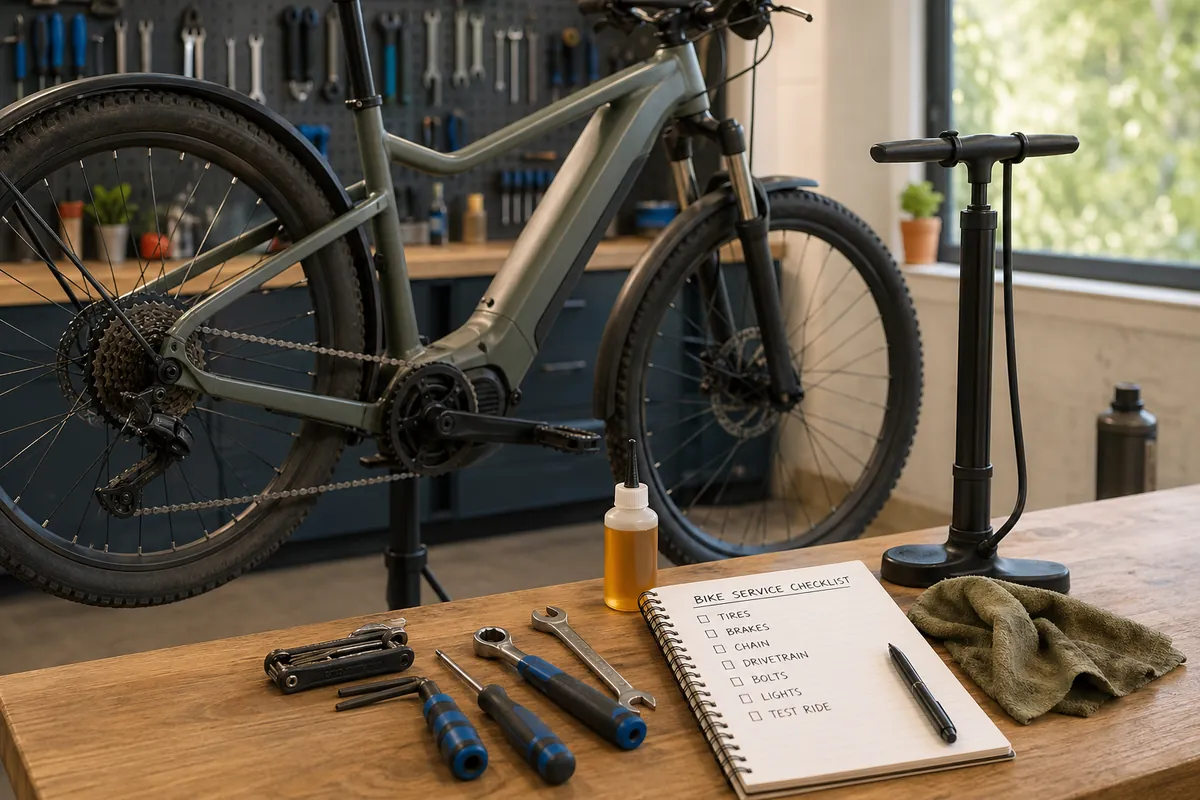
The best maintenance choice depends on the job. Small routine tasks are worth learning, but safety-related repairs should not be guessed through if you are unsure.
For many people, “REI bike maintenance” is shorthand for getting help from a known outdoor retailer or bike shop. The exact service options, pricing, and appointment process can vary by location and over time, so it is smart to check directly with the store or service provider before assuming what is included.
But the bigger decision is broader than one shop. You need to know which maintenance tasks are routine, which ones affect safety, and when paying for professional service is worth it. That matters even more if you ride an eBike, since weight, speed, battery care, and electrical components can add extra things to watch. For a wider ownership baseline, our e-bike buying tips guide is a useful starting point.
| Maintenance task | DIY-friendly? | When to use a shop |
|---|---|---|
| Tire pressure | Usually yes | If tires keep losing air or sidewalls look damaged |
| Basic cleaning | Usually yes | If grime hides deeper wear or corrosion |
| Chain lubrication | Usually yes | If shifting is rough or the drivetrain is badly worn |
| Brake adjustment | Sometimes | If stopping power is weak, noisy, or inconsistent |
| Wheel or spoke issues | Usually no | If the wheel wobbles, rubs, or feels unstable |
| eBike electrical issues | Usually no | If the bike shows errors, cuts power, or behaves strangely |
There is a good case for learning the basics. Checking tire pressure, wiping the bike down, keeping the chain clean, and noticing loose parts can save money and prevent small issues from becoming bigger repairs. These are not advanced mechanical skills; they are ownership habits.
Professional service still has a place. A trained mechanic can catch wear you may miss, adjust parts correctly, and handle jobs that require special tools or experience. The goal is not to avoid shop service forever; it is to avoid needing shop service because of preventable neglect.
Before each ride, check tires, brakes, and anything that feels loose or unusual. Every few rides, clean dirt from the frame and drivetrain, inspect the chain, and listen for new sounds. These checks do not take long, but they give you a better feel for what is normal on your bike.
If you ride an eBike, cleaning needs a little extra care around electrical areas. A gentle process matters more than force. Our guide on how to wash an e-bike explains how to clean without treating sensitive areas too aggressively.
Some jobs are worth paying for. Brake problems, wheel truing, spoke tension, worn drivetrains, headset issues, and electrical faults can all affect safety or reliability. If you are unsure what you are looking at, the cost of a professional inspection may be cheaper than damaging parts or riding an unsafe bike.
This is especially true with eBikes. A heavy electric bike asks more from brakes and tires than a lighter standard bike, and electrical symptoms can be hard to diagnose from the outside. If braking performance is changing, our article on how often to replace e-bike brake pads can help you understand why wear checks matter.
Your ideal schedule depends on mileage, weather, terrain, and how hard you ride. A casual weekend rider may need only light routine care and occasional tune-ups. A commuter, cargo rider, or eBike owner riding in wet or gritty conditions may need more frequent checks.
A practical rhythm looks like this:
This kind of schedule gives you a reason to notice small changes before they become expensive. If your bike has a battery, include charging habits and storage conditions in the routine too; our e-bike battery maintenance guide explains why those habits matter over time.
Practical tip: before booking service, write down the symptoms you notice: noises, rubbing, weak braking, skipping gears, flat frequency, or power issues. Clear notes help a mechanic diagnose the real problem faster.
Before booking any shop service, ask what is included, what is extra, and whether parts and labor are priced separately. If you have an eBike, also ask whether the shop works on your specific bike type and whether it can diagnose electrical issues or only handle standard bicycle components.
It also helps to ask what must be fixed now versus what can wait. A good service conversation should help you prioritize safety, reliability, and cost. Not every worn part is an emergency, but brakes, tires, wheels, and steering-related issues deserve quick attention.
Sometimes a repair estimate forces a bigger question. If the bike needs several parts at once, or if an older eBike also has battery concerns, maintenance may start to feel close to replacement cost. That does not automatically mean you should replace the bike, but it is worth doing the math calmly.
Look at the bike’s condition, how often you ride, and whether the repair will actually restore confidence. A well-loved bike with one clear issue may be worth fixing. A bike with several problems, poor parts support, or a weak battery may deserve a harder look before you spend more money.
REI bike maintenance searches often start with finding a service option, but the better answer is a maintenance strategy. Learn the small tasks you can do safely, use a shop for repairs that affect safety or require expertise, and keep a simple schedule so problems do not sneak up on you.
Good maintenance is not about doing everything yourself. It is about knowing what needs attention, what you can handle, and when a professional mechanic is the smarter choice.