eBike battery replacement cost usually ranges from a few hundred dollars to well over $1,000, depending on battery capacity, brand support, fitment, and whether you buy an original replacement or a compatible third-party pack. For many everyday riders, a realistic planning range is about $300 to $900, with premium or hard-to-find batteries often costing more.
Quick answer: Most eBike battery replacements are not cheap. Smaller or simpler batteries may cost less, but larger branded packs, integrated batteries, and discontinued model-specific replacements can become major ownership expenses. Always confirm voltage, capacity, connector type, mount style, charger compatibility, and warranty status before buying.
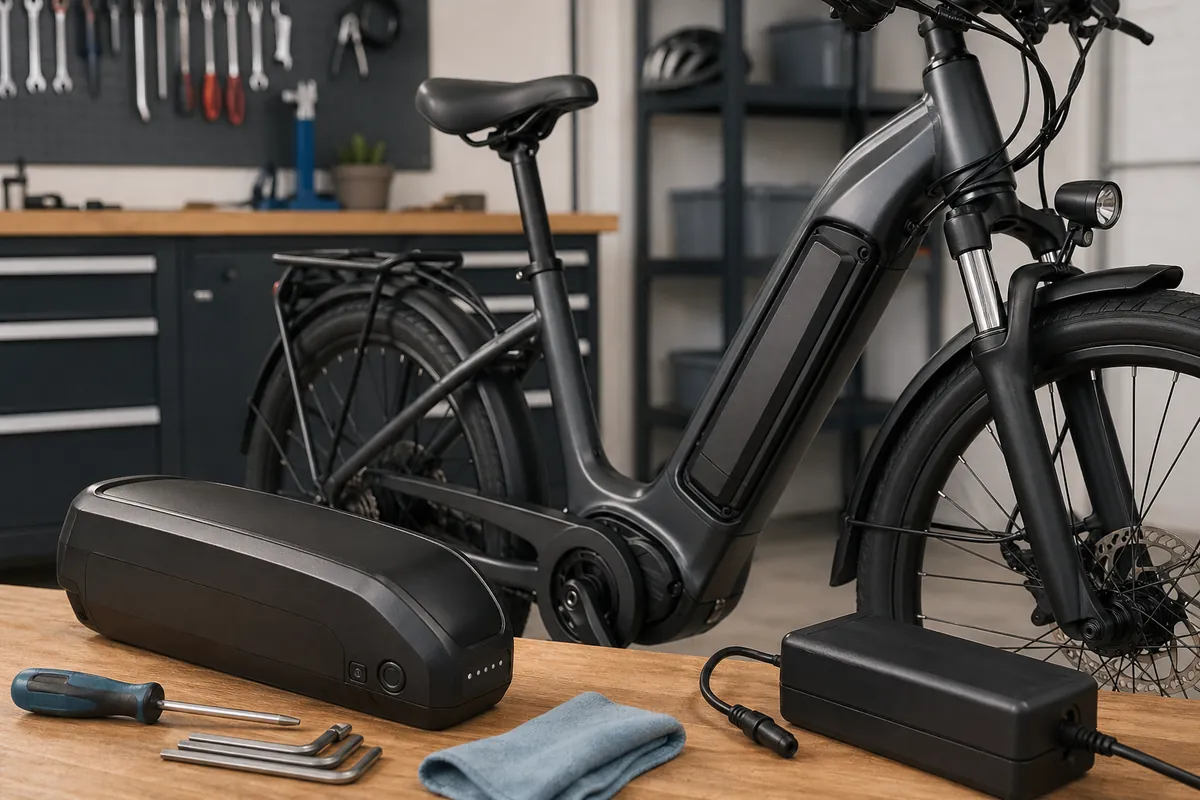
The battery is often the most expensive long-term replacement part on an eBike. That is why it should be part of the ownership math before you decide whether to repair, upgrade, or replace the bike.
Battery price changes because eBike batteries are not interchangeable in a simple, universal way. Capacity, voltage, casing shape, mounting rail, connectors, battery management electronics, and charger compatibility all matter. A battery that looks close may still be wrong for your bike.
Brand support also affects cost. Original batteries from the bike maker or an authorized supplier often cost more, but they may reduce compatibility risk. Generic or third-party options can be cheaper, yet they require more caution. If you are still learning how battery care affects lifespan, start with our e-bike battery maintenance guide before comparing replacements.
| Cost factor | How it affects price | What to check |
|---|---|---|
| Battery capacity | Larger packs usually cost more | Watt-hours, not just advertised range |
| Brand fitment | Model-specific batteries can be pricier | Mount, case shape, connector, and lock style |
| Voltage compatibility | Wrong voltage can create serious problems | Match the bike maker’s required spec |
| Cell and pack quality | Better-built packs may cost more | Warranty, supplier reputation, and safety markings |
| Availability | Scarce packs can cost more | Whether the bike or battery system is discontinued |
| Shipping and labor | Adds to the final bill | Lithium shipping rules and shop installation needs |
For a basic value eBike, the replacement battery may sit toward the lower or middle part of the range. For a commuter bike with a larger battery, the cost often climbs. Premium systems, proprietary cases, or discontinued packs can move the price higher still.
It helps to think in practical tiers:
These are planning categories, not fixed quotes. Actual prices depend on the exact bike and supplier. Still, they show why battery replacement can feel more like a major ownership decision than a normal tune-up.
An original battery is usually the safer path when compatibility is the top concern. It should be designed for the bike’s mount, controller, charger, and electrical system. That peace of mind can be worth paying for, especially if the bike is still valuable and used often.
Third-party batteries can look attractive because of price, but the risk is higher. You need to verify more than the physical fit. Voltage, connector type, battery management system behavior, charger compatibility, and warranty support all matter. A cheap battery is not a bargain if it creates safety, range, or reliability problems.
Sometimes the numbers do not work. If the bike is old, has weak parts support, or also needs tires, brakes, drivetrain service, and electrical troubleshooting, a battery replacement may not be the best use of money. The battery can become the moment when you decide whether the bike is worth keeping.
That does not mean replacement is a bad idea. If the rest of the bike is solid and it still fits your needs, a new battery can extend its useful life for far less than buying another eBike. The key is to compare the battery bill with the bike’s real condition, not just its original purchase price. For broader context on the replacement decision, see our full ebike battery replacement guide.
Practical tip: before buying a replacement battery, take photos of the label, mount, connector, charger, and lock area. Those details make it easier to confirm compatibility and avoid ordering an expensive pack that almost fits.
You cannot stop battery aging completely, but you can avoid habits that shorten useful life. Heat, long storage at extreme charge levels, poor charging routines, and rough storage conditions can all work against the battery over time.
Good habits are usually simple: store the bike and battery in reasonable temperatures, use the correct charger, avoid unnecessary moisture exposure, and do not ignore sudden range changes. If you charge indoors, it is also worth understanding basic precautions covered in can you charge an e-bike battery indoors.
A removable battery can make charging, storage, and replacement easier, especially for apartment riders or anyone who stores the bike in a garage, shed, or shared space. It may also make it simpler to protect the battery from heat or cold when the bike itself cannot come indoors.
That convenience is not automatically worth paying more for, but it can matter over several years of ownership. If you are shopping for a future bike and want to avoid battery headaches later, read should you buy an e-bike with a removable battery.
Before spending hundreds of dollars, slow down and confirm the basics. Ask whether the battery is original, compatible, warrantied, returnable, and safe to ship. Check whether the old charger can still be used or whether the replacement requires a matching charger.
It is also smart to ask whether the bike has another problem masquerading as battery failure. Poor range, power cuts, or charging issues can point to the battery, but they can also involve the charger, connectors, display, controller, or wiring. A shop diagnosis may be worth the cost if the battery is expensive and the symptoms are unclear.
eBike battery replacement cost can be surprisingly high, but the price makes more sense once you factor in capacity, compatibility, brand support, shipping rules, and the risk of buying the wrong pack. For many riders, the battery is the biggest long-term replacement item on the bike.
The smartest approach is to confirm compatibility carefully, compare the battery price against the bike’s overall condition, and think about whether replacement truly extends useful ownership. Sometimes a new battery is the right move. Other times, it is the sign that the whole bike deserves a harder look.