E-bikes can handle normal cleaning, but the safe approach is gentler than many riders expect. Remove the battery if your setup allows it, protect or remove the display, avoid high-pressure spray, and clean the bike with soft tools instead of blasting water into seals and electronics.
Quick answer
- Remove the battery before cleaning when your bike allows it.
- Remove the display too, or cover fixed controls before washing.
- Use a bucket, soft sponge, bike-safe cleaner, and a low-pressure rinse only when needed.
- Never use a pressure washer or direct high-pressure spray on the bike or battery.
- Finish by drying contact areas, checking the drivetrain, and confirming the system powers up normally.
Common mistake to avoid
Treating an e-bike like a muddy truck is the fastest way to create avoidable headaches. The goal is controlled cleaning, not maximum water force.
If battery care is already on your radar, start with our E-Bike Battery Maintenance Guide because a careful wash routine works best when it matches the way you store and charge the battery afterward.
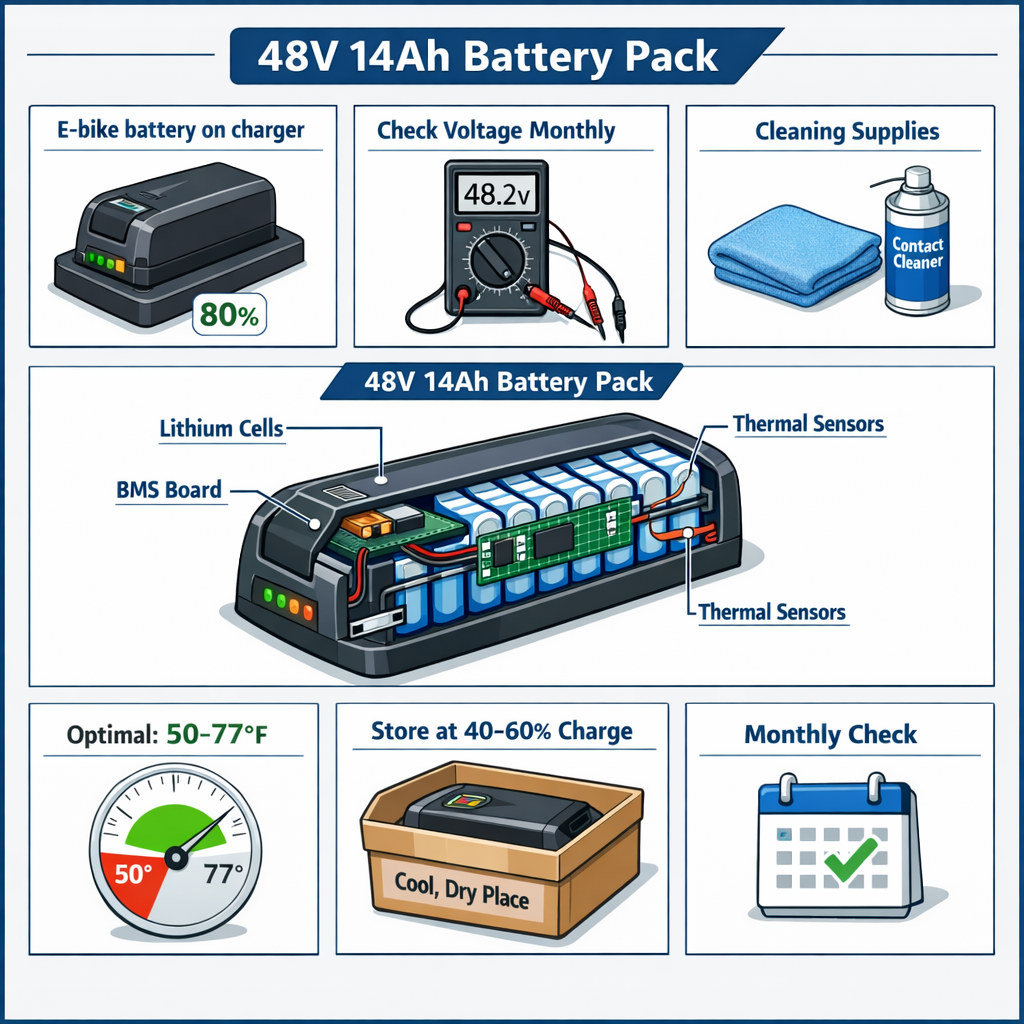
Set up the job the same way you would for any careful maintenance task: get the bike stable, gather a bucket, soft sponge, brushes, and a bike-safe cleaner, then remove anything that should not sit in the spray path. Bosch says to remove the battery and, if possible, the display before cleaning. If the controls are fixed in place, cover them rather than spraying directly at buttons and seams.
That step matters because a safe wash starts with controlling where water goes. You are cleaning dirt off the bike, not forcing water into electrical contacts, bearings, or small gaps around the controls.
A low-pressure rinse or damp-cloth approach is the safer default. Bosch specifically warns against steam cleaners and high-pressure cleaners, and its battery guidance says the battery should never be cleaned with a direct jet of water or high-pressure hose.
A practical sequence looks like this:
| Step | What to do | Why it helps |
|---|---|---|
| 1 | Knock off loose dirt with a soft brush or damp cloth | Reduces the urge to use harder spray later |
| 2 | Wipe the frame, fork, wheels, and fenders with bike-safe cleaner | Cleans visible grime without forcing water inward |
| 3 | Use a small brush around the drivetrain and tight spots | Gives better control near moving parts |
| 4 | Keep water away from battery contacts, display seams, motor area, and bearings | Protects the parts most likely to hate pressure and pooling |
| 5 | Dry the bike before reinstalling the battery or powering up | Helps contact areas and mounts shed moisture |
Bosch recommends a damp cloth for the battery itself and says the plug poles should be cleaned occasionally and kept clean. That is a good reminder that washing the bike and washing the battery are not the same task. The bike may need mud removed from the frame and tires, while the battery should get a more controlled wipe-down.
If you ride in wet weather often, pair this with our Can You Ride an E-Bike in the Rain? guide, since the same contact-drying habits matter after a stormy ride.
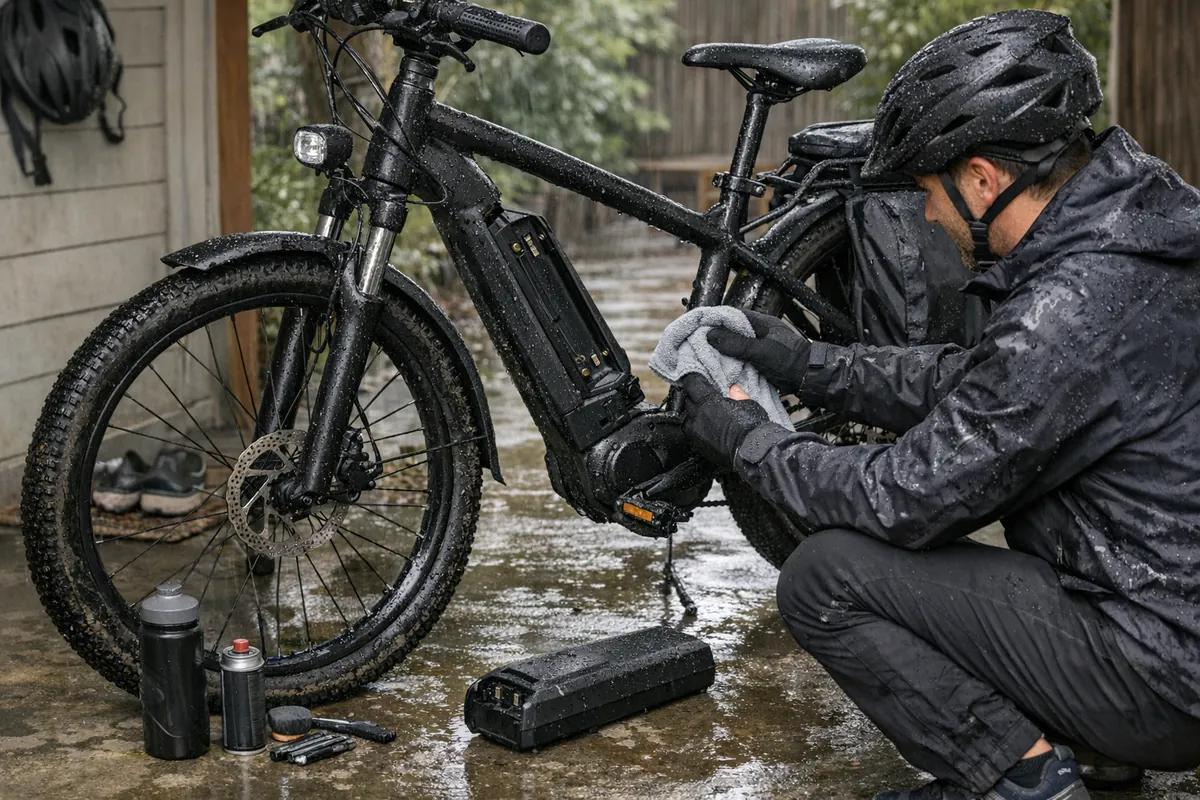
Do not rush the last five minutes. Bosch says to keep the battery mount and plug area clean so water can drain off and the contacts can dry, and it also recommends a short function check after washing. That means wiping down the bike, checking that the battery is seated correctly, and confirming the system responds normally before the next ride.
A smart post-wash checklist:
Normal cleaning is one thing. Persistent moisture warnings, contact corrosion, damaged seals, or electrical behavior that changes after cleaning are different. Trek's maintenance guidance recommends using a qualified local bike shop when you are not confident working around the electric drive system. That is the right move if the bike does not behave normally after a wash.
The safest way to wash an e-bike is gentle, controlled, and boring. Remove the battery when possible, protect the display, skip high-pressure spray, and treat the battery contacts and electronics like parts that need wiping and drying instead of blasting. Done that way, a normal wash helps the bike last longer without creating a new problem.