Hot weather does not automatically make an e-bike unsafe to own, but it does make sloppy storage habits more expensive. The simple version is this: keep the battery out of direct sun, avoid heat-soaked parking spots when you can, and treat long-term storage differently from a short stop between rides. If you want the battery and electronics to age more gracefully, heat management has to become part of the routine.
If your storage setup already leans outdoors, pair this guide with our How to Store an E-Bike Outside article so weather protection and heat control work together instead of against each other.
Bosch says the battery should be protected from heat, direct sunlight, and fire. That matters because repeated high-temperature exposure can shorten service life even when nothing looks wrong on the outside. In other words, summer storage problems are often slow problems, not dramatic ones.
Bosch also notes that storing a battery at high temperatures or at very low or very high charge levels can reduce service life. That makes hot-weather storage less about one perfect trick and more about removing the obvious stressors you can control.
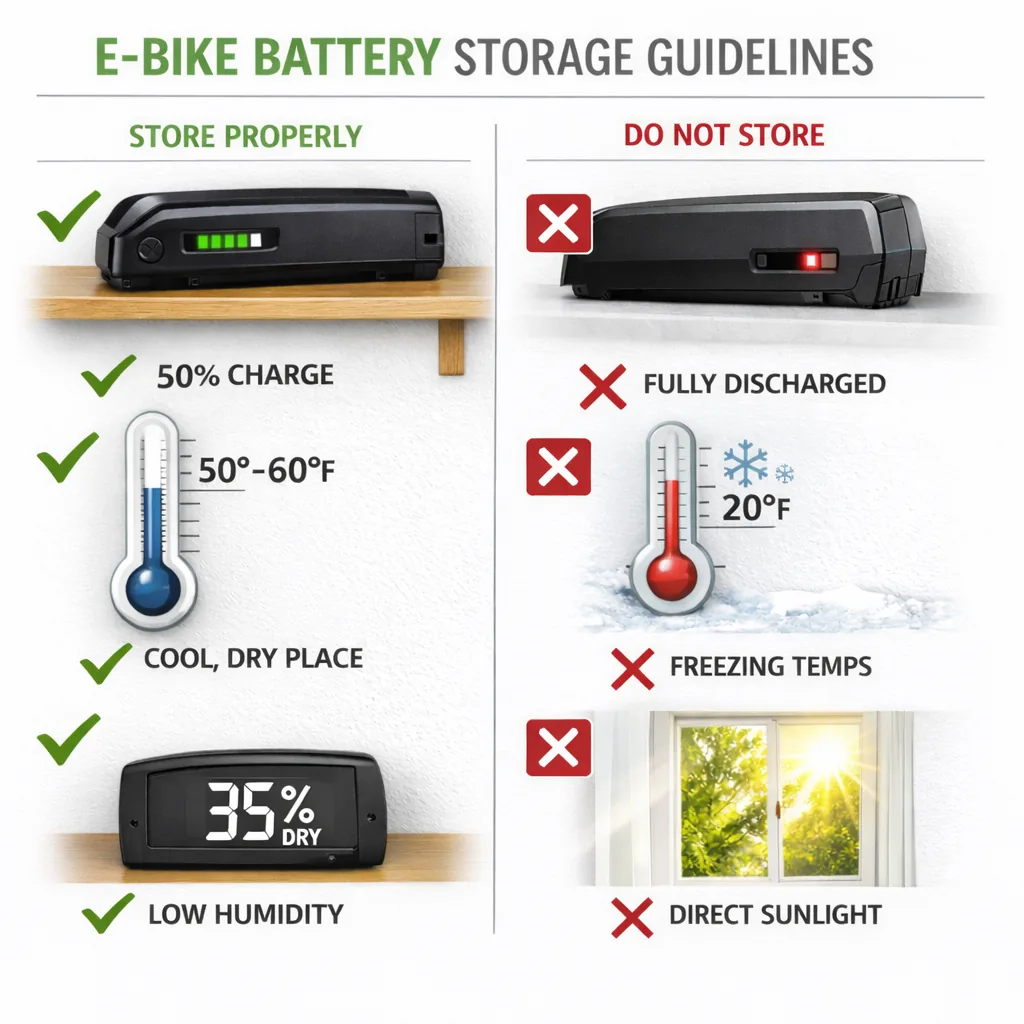
Shade beats sun. Airflow beats a sealed heat trap. A covered patio, shaded garage, or indoor room is better than a spot that gets cooked for hours. That does not mean every quick stop is a crisis. It means your default storage location should not turn heat exposure into an everyday habit.
If you cannot bring the whole bike inside, the next best move is often to remove the battery and bring that indoors. That alone cuts a large share of the heat risk while still letting the bike stay parked where space allows.
| Checkpoint | What good looks like |
|---|---|
| Daily parking | Bike is kept out of direct afternoon sun when practical. |
| Battery handling | Battery comes indoors for longer storage or harsh heat. |
| Charging timing | Battery is allowed to cool before charging if it feels hot after use. |
| Long-term storage | Battery is stored around 30 to 60 percent charge in a dry, ventilated space. |
| General environment | Storage area stays away from heat sources, flammable materials, and direct sun. |
A quick errand stop is not the same as storing the bike for days or weeks. For short parking, your job is to reduce heat exposure where you reasonably can. For long-term storage, Bosch recommends removing the battery if possible and storing it at roughly 30 to 60 percent charge in a dry, ventilated area away from heat sources and flammable materials.
That is where a lot of riders go wrong. They use the same setup for every situation. A bike left outside during a grocery stop is one thing. A battery left in an overly hot spot every day for weeks is something else.
Bosch says charging should happen in a dry, well-ventilated environment and at temperatures between 32 °F and 104 °F, ideally around room temperature. The practical takeaway is simple: if the battery has been sitting in hot sun or feels hot after a ride, let it settle before plugging it in.
That lines up with the same boring-but-useful battery habits we cover in our E-Bike Battery Maintenance Guide and our Can You Charge an E-Bike Battery Indoors? guide. Heat changes the urgency, but not the logic: cooler, drier, better-controlled charging conditions are safer than casual charging wherever the bike happened to stop.
E-bike storage in hot weather is mostly a battery-discipline problem. Keep the battery out of direct sun, treat long-term storage differently from a quick stop, and charge only after the battery is back in a normal, controlled environment. Those habits are simple, but they do more for summer battery life than any last-minute fix.