Motorized bicycle laws in Tennessee split gas motorized bicycles, larger scooters, and electric bicycles into different buckets. Based on the official Tennessee sources reviewed for this draft, a sub-50cc gas motorized bicycle can be operated with a valid driver license and no motorcycle endorsement, while class 1, 2, and 3 electric bicycles are handled under a separate e-bike law with their own access and helmet rules. Because county-clerk paperwork can change when a vehicle is treated as a moped instead of a motorized bicycle, verify your exact classification before you ride.
Note: This page is for general information only, not legal advice. Tennessee rules can change, and local agencies can set additional path, sidewalk, and trail restrictions. Last checked: 2026-03-16.
| Gas motorized bicycle | Tennessee's official motorcycle manual treats a motorized bicycle as the under-50cc category. The manual says no motorcycle endorsement is required, but you still need a valid driver license. |
|---|---|
| Helmet rule | The Tennessee motorcycle manual says crash helmets are required for motorized bicycles regardless of age. |
| Registration / title | The same manual says a motorized bicycle does not have to be registered or titled. But Tennessee Revenue separately says a moped being titled and registered through the county clerk needs ownership documents, so classification matters. |
| Electric bicycles | Tennessee's e-bike act says class 1, 2, and 3 electric bicycles are not subject to the driver-license, title, registration, and motor-vehicle financial responsibility laws listed in the act. |
| Where you can ride | Class 1 and 2 e-bikes can generally go where bicycles are allowed unless a local government restricts them. Class 3 access is tighter and depends more on local permission. |

Tennessee does not treat every small two-wheel machine the same way. That is the most important thing to understand before you worry about licensing, tags, or path access.
If your build or purchase sits near the line between these categories, do not assume the rules are interchangeable. Tennessee's official materials show that the label attached to the vehicle category changes the paperwork and access rules.
This is where Tennessee riders get tripped up. Tennessee Revenue's county-clerk article says a moped being titled and registered needs ownership documents. That means you should not rely on the under-50cc motorized bicycle guidance if your vehicle paperwork, seller documents, or county clerk places it into the moped or motorscooter lane instead.
Tennessee's electric bicycle law is clearer than its gas-bike classification split. The law creates three e-bike classes and keeps them out of the normal driver-license and registration system named in the act.
The 2016 act says electric bicycles are not subject to the driver-license, title, registration, and motor-vehicle financial responsibility chapters listed in that law.
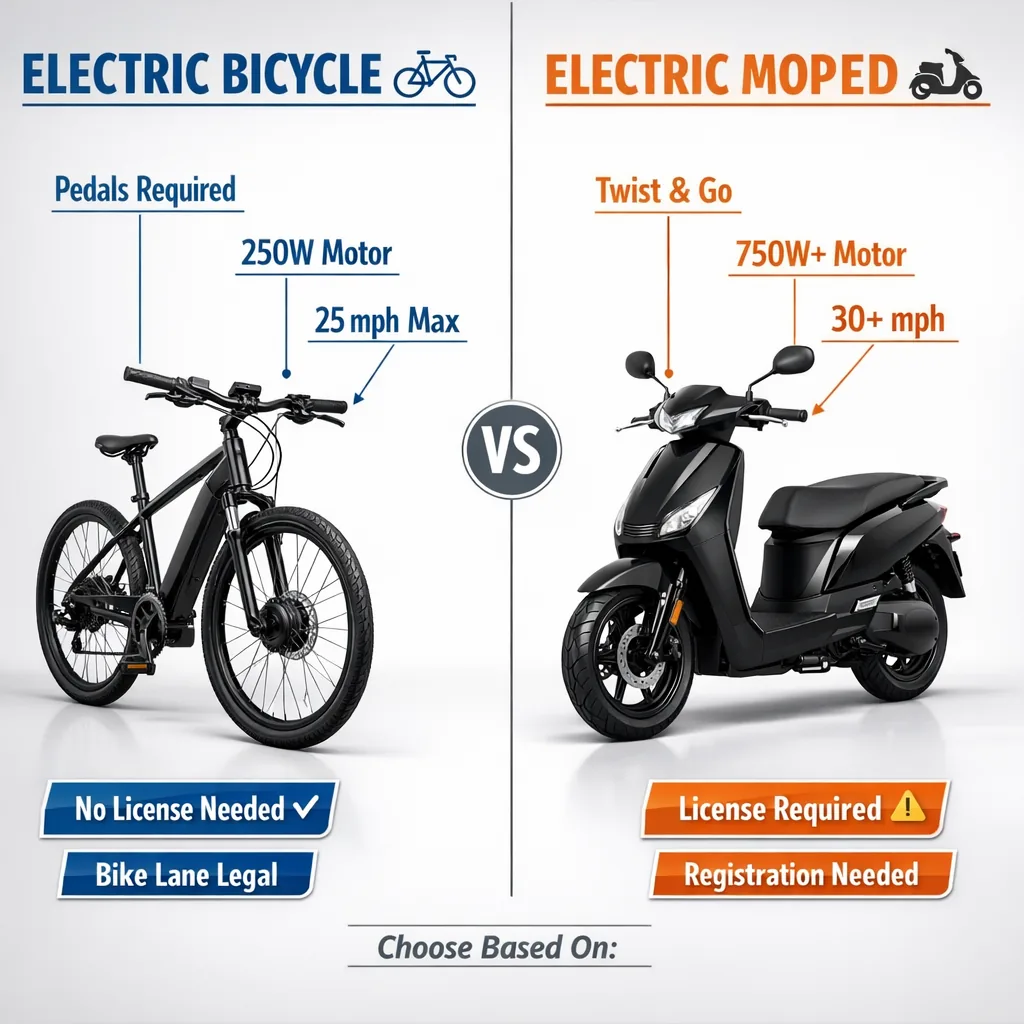
For daily riders, this is one of the biggest Tennessee-specific differentiators.
If it fits Tennessee's motorized bicycle category, the official motorcycle manual points you toward the valid-driver-license route rather than a motorcycle endorsement. Helmet use still matters, and the safest next step is to confirm with the county clerk that your particular machine is not going to be handled as a moped for titling or registration purposes.
Tennessee is relatively friendly here. The state law starts from the position that class 1 and class 2 e-bikes can go where bicycles are allowed. But that is not a blanket promise for every local trail system, park, or city path, so check the local agency rules before assuming access.
Tennessee allows class 3 e-bikes, but the rules are tighter. A speedometer is required, local path access is more limited, and riders under 14 cannot operate a class 3 e-bike on a street or highway. Operators and passengers on class 3 e-bikes also need helmets.
Do not lump them together. Tennessee's current materials show a meaningful difference between the under-50cc motorized bicycle category in the motorcycle manual and the larger automatic-scooter / motorscooter category used elsewhere in Title 55. That classification difference can change your licensing and paperwork expectations.
Even when Tennessee state law is fairly clear, your ride location can change the answer. Counties, cities, park systems, and trail managers may set their own rules for shared-use paths, greenways, sidewalks, and local bicycle facilities. If a route matters to your commute, verify the local rule before you count on statewide bicycle access language.
If your bike is unusual, modified, or close to the line between categories, verify the classification before riding on public roads in Tennessee.