Motorized Bicycle Laws in Ohio make more sense once you separate two different legal lanes: electric bicycles and motorized bicycles / mopeds. Ohio now gives electric bicycles their own class 1, class 2, and class 3 definitions, path rules, equipment rules, and class 3 helmet rules. A true motorized bicycle or moped still sits in a different lane with its own age, license, registration, rear-plate, passenger, and roadway rules.
Note: This Ohio guide is based on current Ohio Revised Code definitions plus current Ohio BMV licensing, registration, and title guidance. It is informational only and not legal advice.
Last reviewed / source-checked: 2026-03-16
Ohio-specific caution: Older Ohio summaries often blur e-bikes and mopeds together. Current Ohio law does not do that. Ohio specifically says a motorized bicycle or moped does not include an electric bicycle, so riders should make sure they are using the right rule set.
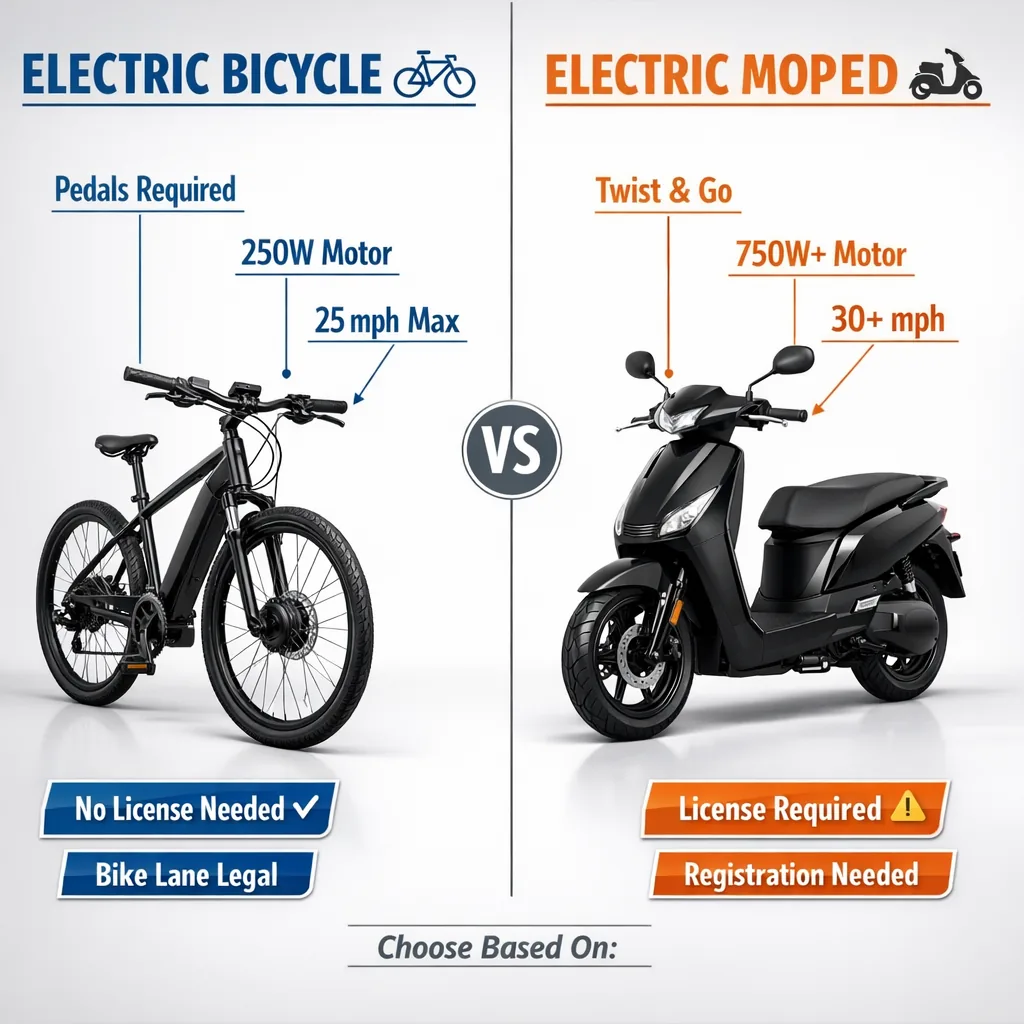
Ohio now uses two different legal buckets that older articles often mixed together.
That split is the center of Motorized Bicycle Laws in Ohio. Ohio uses it in both the traffic definitions and the broader motor-vehicle definitions. In both places, Ohio expressly says a motorized bicycle or moped does not include an electric bicycle.
Ohio no longer forces riders to guess whether an e-bike is really just a moped. The state has formal class 1, class 2, and class 3 definitions, and the legal treatment depends on which class the bike fits.
Ohio requires manufacturers and distributors to place a permanent label on each electric bicycle showing the class, the top assisted speed, and the motor wattage. The law also requires the electric motor to disengage correctly: class 1 and class 3 assistance must stop when the rider stops pedaling, and class 2 assistance must stop when the rider brakes or activates the cutoff control. A class 3 e-bike also must have a speedometer.
Ohio allows class 1 and class 2 electric bicycles on paths set aside for the exclusive use of bicycles and on shared-use paths unless the local authority or state agency with jurisdiction prohibits them. Class 3 is different. A class 3 e-bike may not use those paths unless the path is within or adjacent to a highway or the controlling local authority or state agency authorizes it.
Ohio also draws a separate line for mountain-bike trails, hiking trails, equestrian trails, single-track trails, and natural-surface trails that historically were reserved for nonmotorized use. No class of e-bike may use those routes unless the authority with jurisdiction expressly authorizes it.
Ohio says no person under 16 may operate a class 3 electric bicycle, though a person under 16 may ride as a passenger on a class 3 e-bike built to carry passengers. Ohio also says no person may operate or ride as a passenger on a class 3 e-bike without a qualifying protective helmet. That is broader than a simple “under-18 only” rule.
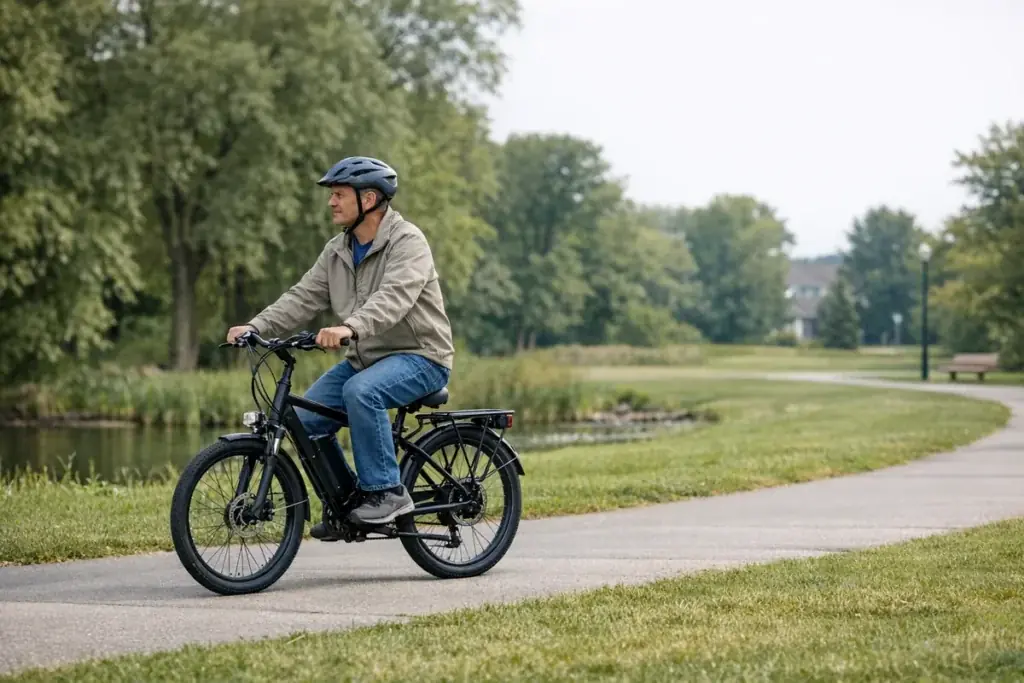
Ohio's sidewalk statute says no person may drive any vehicle on a sidewalk except a bicycle, or an electric bicycle if the motor is not engaged, at a lawful driveway crossing. That means an e-bike does not get full powered-sidewalk freedom. Once the motor is engaged, the sidewalk exception disappears.
Ohio Revised Code section 4511.521 lays out the state's motorized-bicycle operating rules. If a rider is 14 or 15 years old, the rider must hold a valid probationary motorized-bicycle license. If the rider is 16 or older, the rider must hold a valid driver's license, commercial driver's license, or motorized-bicycle license.
Ohio BMV says operators must obtain and display a rear license plate for a moped or motorized bicycle. The agency also says registration is handled through a deputy registrar license agency using the Motorized Bicycle - Moped Registration Application, form BMV 4510.
This is a useful correction to a lot of fuzzy internet summaries. Ohio BMV's title guidance specifically says mopeds are not titled in Ohio. That makes a moped different from categories such as motorcycles or motor scooters that move through the title system.
For motorized bicycles, Ohio requires a rider under 18 to wear a protective helmet with the chin strap properly fastened. The same operating section also requires the motorized bicycle to be equipped with a rear-view mirror when ridden under those conditions. Ohio BMV guidance likewise says mopeds must be equipped with at least one rear-view mirror.
Ohio requires the motorized-bicycle rider, when practicable, to operate within three feet of the right edge of the roadway while obeying the traffic rules that apply to vehicles. Ohio also says no person operating a motorized bicycle may carry another person on it.
Ohio's sidewalk statute gives a narrow exception to bicycles and to electric bicycles when the motor is not engaged. A motorized bicycle is not included in that exception. As a practical result, a moped-style motorized bicycle should be treated as off-limits on sidewalks.
Your first question is whether it fits class 1, 2, or 3. If it does, Ohio treats it under the electric-bicycle statutes instead of the moped statutes.
Do not assume a throttle automatically makes it a moped. In Ohio, a class 2 electric bicycle can provide assistance without pedaling and still remain an e-bike if it fits the wattage and speed limits.
You are likely in the motorized-bicycle lane, not the e-bike lane. That means you should think about the Ohio motorized-bicycle license rules, registration, rear plate, no-passenger rule, and roadway-position rule.
Ohio allows you to ride a qualifying motorized bicycle, but only if you hold the probationary motorized-bicycle license. For a class 3 e-bike, the answer is stricter: no one under 16 may operate one.
Class 1 and class 2 e-bikes usually have the easiest answer unless the local path authority prohibits them. Class 3 needs a closer look, and mopeds belong in the road-vehicle lane rather than the bicycle-path lane.
That is a bad place to guess. A motorized bicycle does not get the sidewalk exception. An electric bicycle only gets limited sidewalk treatment when the motor is not engaged.
This page is for general informational purposes only and is not legal advice. Ohio statutes, BMV procedures, local path rules, and local enforcement practices can change. Verify the current rules before riding on public roads, bicycle paths, shared-use paths, sidewalks, or trails.