Enjoy FREE shipping anywhere within the US!

Motorized Bicycle Laws in Iowa

Motorized Bicycle Laws in Iowa are much easier to follow once you separate a low-speed electric bicycle from an Iowa motorized bicycle or moped. Iowa now gives low-speed electric bicycles a bicycle-style ruleset, but a motorized bicycle that falls into the moped lane still brings licensing, registration, plate, and insurance obligations.

Note: This Iowa guide is based on current Iowa Code sections and Iowa DOT guidance. It is informational only and not legal advice.

Last reviewed / source-checked: 2026-03-15

Local rule note: Iowa statewide law is the starting point, but posted trail, campus, park, or city rules can still matter in specific places.

Quick answer: are motorized bicycles legal in Iowa?

Yes, but Iowa does not put every powered bike in the same legal bucket. A qualifying low-speed electric bicycle is treated as a bicycle. A motorized bicycle or moped is a different vehicle category, and Iowa DOT guidance says it can require a moped license or a regular driver’s license, county registration, a rear plate, proof of insurance, and a safety flag when used on a highway.
  • Low-speed electric bicycle definition: Seat or saddle, two or three wheels, fully operable pedals, motor under 750 watts, and class 1, 2, or 3 treatment.
  • E-bike paperwork: Iowa law says low-speed electric bicycles are not subject to licensure, registration, titling, inspection, proof of financial liability coverage, or possession of a driver’s license or permit.
  • E-bike access: Iowa allows low-speed electric bicycles anywhere bicycles are allowed, including streets, highways, shoulders, bicycle lanes, bikeways, and bicycle or multi-use paths.
  • Class 3 rule: Riders under 16 cannot operate a class 3 low-speed electric bicycle, and class 3 bikes must have a speedometer.
  • Class 3 path speed rule: On a bicycle lane or multi-use path, a class 3 rider must stay at the posted speed limit or 20 mph if no speed limit is posted.
  • Motorized bicycle / moped definition: Seat or saddle, not more than three wheels, and not capable of more than 39 mph on level ground unassisted by human power.
  • Moped licensing: Iowa DOT says additional licensing is not required if you already hold a valid driver’s license. Otherwise, Iowa has a moped-license path, with a separate moped-only license listed at $8 for 2 years.
  • Moped highway rules: No passengers, a day-glow safety flag, and other motorcycle-style operating rules apply.
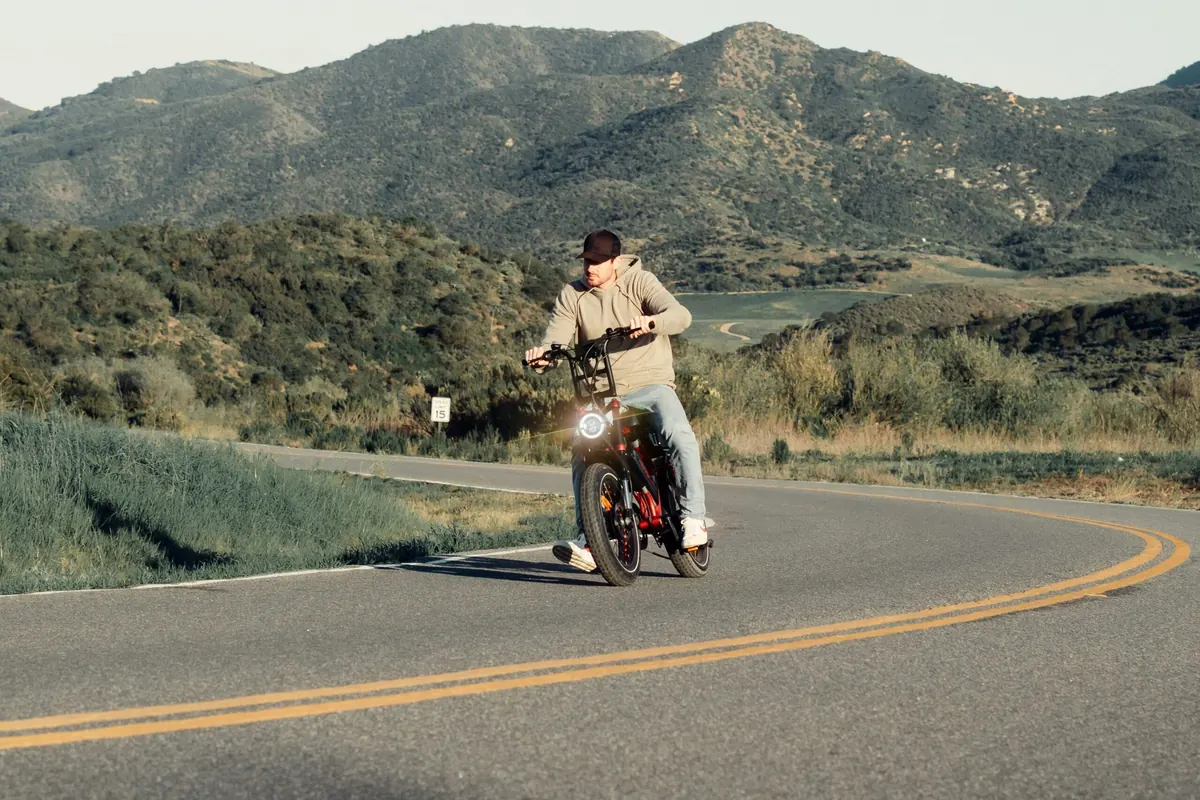
Motorized bicycle laws in Iowa road riding example
In Iowa, the first legal question is whether your ride is a low-speed electric bicycle or a motorized bicycle that belongs in the moped lane.

How Iowa classifies powered bikes

Iowa uses two very different legal lanes that older web summaries often blur together.

  • Low-speed electric bicycle: A device with a seat or saddle, two or three wheels, fully operable pedals, and an electric motor of less than 750 watts that fits class 1, class 2, or class 3.
  • Motorized bicycle: A motor vehicle with a seat or saddle, designed to travel on not more than three wheels, and not capable of more than 39 mph on level ground unassisted by human power. Iowa DOT registration guidance treats this as the same lane as a moped.
  • Bicycle: Iowa’s bicycle definition expressly includes a low-speed electric bicycle.

That separation is the key to understanding Motorized Bicycle Laws in Iowa, because Iowa gives qualifying low-speed electric bicycles a much lighter ruleset than it gives a registered moped or motorized bicycle.

Motorized Bicycle Laws in Iowa for low-speed electric bicycles

If your ride truly fits Iowa’s low-speed electric bicycle definition, the law treats it much closer to a bicycle than to a moped.

1) Iowa uses a true 3-class e-bike framework

  • Class 1: pedal-assist only, with assistance stopping at 20 mph.
  • Class 2: the motor may propel the bike, but assistance stops at 20 mph.
  • Class 3: pedal-assist only, with assistance stopping at 28 mph.

2) Iowa gives low-speed electric bicycles bicycle rights and duties on highways

Iowa Code says a person operating a low-speed electric bicycle on a highway is subject to the bicycle provisions of the chapter and has the rights and duties that apply to a bicycle rider, except where the nature of a rule makes that impossible or a specific e-bike rule says otherwise.

3) Iowa strips out the usual motor-vehicle paperwork

Iowa expressly says low-speed electric bicycles are not subject to licensure, registration, titling, inspection, proof of financial liability coverage, or possession of a driver’s license or permit. That is one of Iowa’s biggest state-specific differentiators.

4) Iowa allows low-speed electric bicycles where bicycles are allowed

Iowa says a low-speed electric bicycle may be operated in any place where a bicycle is allowed, including streets, highways, roadways, shoulders, bicycle lanes, bikeways, and bicycle or multi-use paths.

5) Iowa adds a few class 3-specific rules

A class 3 low-speed electric bicycle must have a speedometer that shows miles per hour. A rider under 16 may not operate a class 3 low-speed electric bicycle, although Iowa allows a person under 16 to ride as a passenger on a class 3 bike in the limited circumstance referenced by the statute.

6) Iowa limits class 3 speed on bicycle lanes and multi-use paths

On a bicycle lane or multi-use path, a class 3 rider must stay at the posted speed limit or, if there is no posted speed limit, 20 mph. That makes Iowa more specific than many states that stop at a general path-access rule.

7) Iowa requires permanent e-bike class labeling

Manufacturers and distributors must affix a permanent label that shows the bike’s classification, top assisted speed, and motor wattage. If the bike’s speed capability is modified, the labeling must be updated as well.
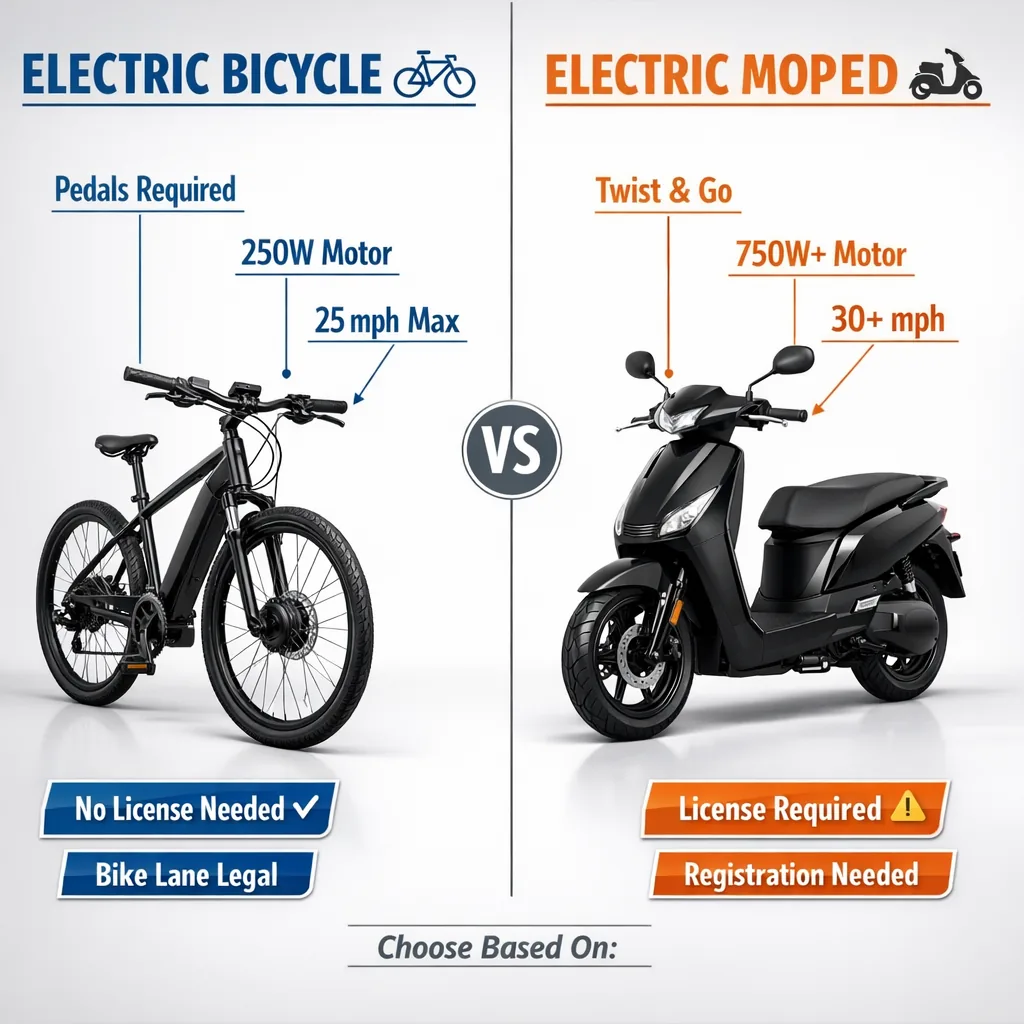
Motorized bicycle laws in Iowa e-bike versus moped comparison
Iowa treats a low-speed electric bicycle and a motorized bicycle very differently, even if both are used for short in-town trips.

Motorized Bicycle Laws in Iowa for mopeds and motorized bicycles

This is where older Iowa summaries often drift. Iowa’s motorized-bicycle lane is not the same as the low-speed electric bicycle lane.

Iowa caps a motorized bicycle at 39 mph

Iowa Code defines a motorized bicycle as a motor vehicle with a seat or saddle, not more than three wheels, and a top speed no higher than 39 mph on level ground unassisted by human power. Iowa DOT’s registration page also uses that 39 mph ceiling as the key dividing line between a moped and a motorcycle.

Iowa DOT treats “motorized bicycle” and “moped” together in practice

Iowa DOT registration guidance uses the phrase motorized bicycle (or moped) and sends those vehicles through the county treasurer title and registration process. For readers, that means Iowa’s practical paperwork lane is the moped lane once a vehicle falls outside the low-speed-electric-bicycle category.

Iowa licensing depends on whether you already hold a driver’s license

Iowa DOT’s moped manual says additional licensing is not required if you already possess a valid driver’s license. If you do not already have a driver’s license, Iowa has a moped licensing path instead. The Iowa DOT license page lists a moped (motorized bicycle) license only at $8 for 2 years.

You can be young enough for a moped license but still face extra steps

Iowa DOT says you must be at least 14 to get a moped license. Riders under 18 need parental consent, and riders under 16 must pass an approved moped education course before they can get that license.

Iowa expects registration, a rear plate, and insurance for a moped

The Iowa DOT moped manual says you must register a moped with your county treasurer’s office, display the license plate on the rear, and carry proof of insurance. Iowa DOT’s registration guidance also says the vehicle needs the required federal manufacturer certification label before it can be titled or registered.

Iowa adds highway-use rules beyond the usual traffic laws

Iowa Code says a person operating a motorized bicycle on the highways may not carry a passenger. Iowa also requires a headlight, forbids carrying a package that keeps you from holding both handlebars, and requires a day-glow triangular safety flag that extends at least 5 feet above the ground when the vehicle is used on a highway.

What is different in Iowa?

  • Iowa’s bicycle definition expressly includes a low-speed electric bicycle.
  • Iowa law expressly removes licensing, registration, title, inspection, driver’s-license, and proof-of-insurance requirements for qualifying low-speed electric bicycles.
  • Iowa allows low-speed electric bicycles in a broad set of bicycle-authorized places, including bicycle and multi-use paths.
  • Iowa gives class 3 riders a specific 20 mph default speed cap on bicycle lanes and multi-use paths when no posted limit exists.
  • Iowa bars riders under 16 from operating a class 3 e-bike.
  • Iowa’s motorized-bicycle definition uses a 39 mph ceiling, not the lower speeds some older summaries still repeat.
  • Iowa DOT says a rider with a valid driver’s license does not need extra moped licensing, while riders without one use the moped-license path.
  • Iowa requires a rear plate, proof of insurance, no passengers, and a day-glow safety flag for highway-operated mopeds.

Common rider situations under Motorized Bicycle Laws in Iowa

If you ride a normal class 1 or class 2 e-bike to work

You are usually in Iowa’s low-speed-electric-bicycle lane, not the moped lane, as long as the bike really has fully operable pedals, a motor under 750 watts, and class 1 or class 2 performance. That means no Iowa registration, title, insurance, or driver’s-license requirement under the statute.

If you want to ride a class 3 e-bike on a paved trail

Iowa generally allows that wherever bicycles are allowed, but you still need to watch the speed rule. On a bicycle lane or multi-use path, a class 3 rider cannot exceed the posted speed limit or 20 mph if no limit is posted.

If your machine looks like an e-bike but can run faster than the low-speed e-bike classes allow

Do not assume it still gets bicycle treatment. Once a machine falls outside Iowa’s low-speed electric bicycle definition, it can move into the motorized-bicycle or moped lane instead, where registration and licensing questions come back into play.

If you are 15 and want to ride a moped in Iowa

Iowa DOT says you can be old enough for a moped license at 14, but if you are under 16 you must complete an approved moped education course, and if you are under 18 you also need parental consent.
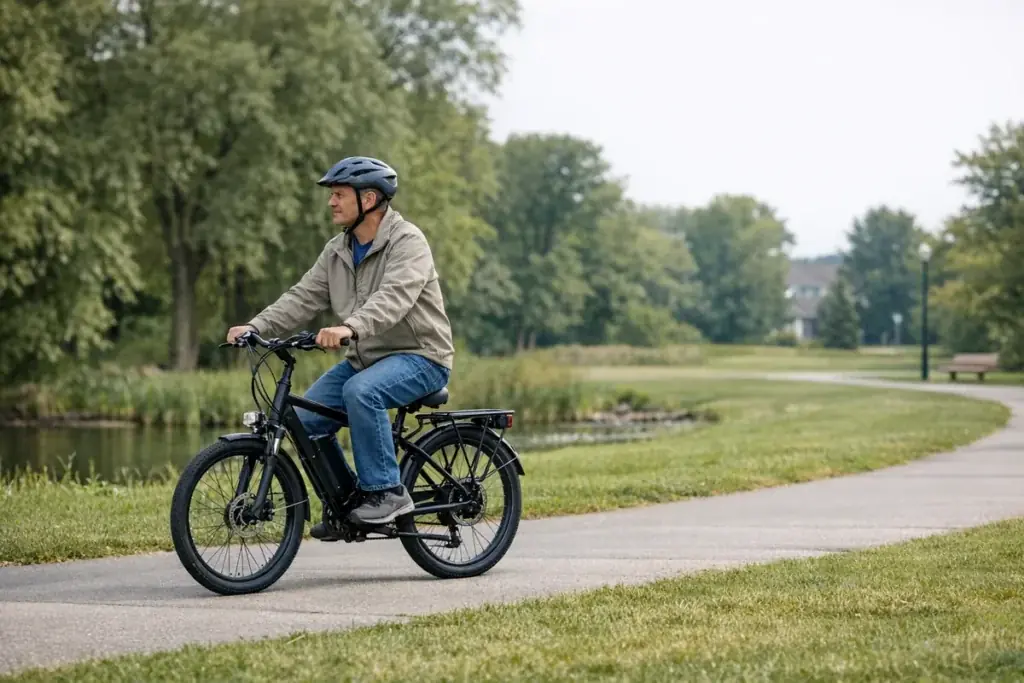
Adult riding an electric bicycle on a shared-use path in West Virginia
Iowa gives low-speed electric bicycles broad access where bicycles are allowed, but riders still need to obey posted trail limits and any site-specific restrictions.

License, registration, and insurance in Iowa

Low-speed electric bicycles

  • License: Not required under Iowa Code §321.235B.
  • Registration / title: Not required under Iowa Code §321.235B.
  • Insurance: Proof of financial liability coverage is not required under Iowa Code §321.235B.

Mopeds / motorized bicycles

  • License: Iowa DOT says extra moped licensing is not required if you already have a valid driver’s license. Otherwise, use the moped-license path.
  • Moped-only license fee: Iowa DOT lists $8 for 2 years.
  • Registration / title: Iowa DOT sends these vehicles through the county treasurer title and registration process.
  • Insurance: The Iowa DOT moped manual says operators must carry proof of insurance.
  • Equipment / highway-use rules: Rear plate, headlight, day-glow safety flag, and no passengers.

Local ordinance and path-access caveat

Iowa gives low-speed electric bicycles broad statewide access where bicycles are allowed, including bicycle and multi-use paths. Even so, riders should still check posted rules on municipal trails, university property, park systems, and other managed facilities before assuming every local route is open under the same conditions.

Official Iowa sources

Related reading

Disclaimer

This page is for general informational purposes only and is not legal advice. Iowa statutes, Iowa DOT rules, and local restrictions can change. Verify current requirements before riding on public roads, paths, or trails.

Warranty Protection

Have a problem? Bike repairs and replacement parts are covered through our manufacturer warranty for up to two years after purchase.

Verified Secure Checkout

Your information is kept 100% protected and private. Payments are handled through trusted third-party providers and never stored on our servers.
Copyright © 2026 Motorized Bicycle HQ. All rights reserved.
linkedin facebook pinterest youtube rss twitter instagram facebook-blank rss-blank linkedin-blank pinterest youtube twitter instagram