Motorized Bicycle Laws in Idaho are easier to understand once you split your ride into the right legal bucket. Idaho treats a true electric-assisted bicycle very differently from a moped or a motor-driven cycle, so your rules on licensing, titling, registration, path access, and equipment depend on what the state would call the machine you are riding.
Note: This Idaho guide is based on current Idaho Code sections in Title 49. It is informational only, not legal advice.
Last reviewed / source-checked: 2026-03-15
Local rule warning: Idaho allows local ordinances and posted agency signage to limit e-bike access on some paths and trails, so statewide rules are your starting point, not your only check.
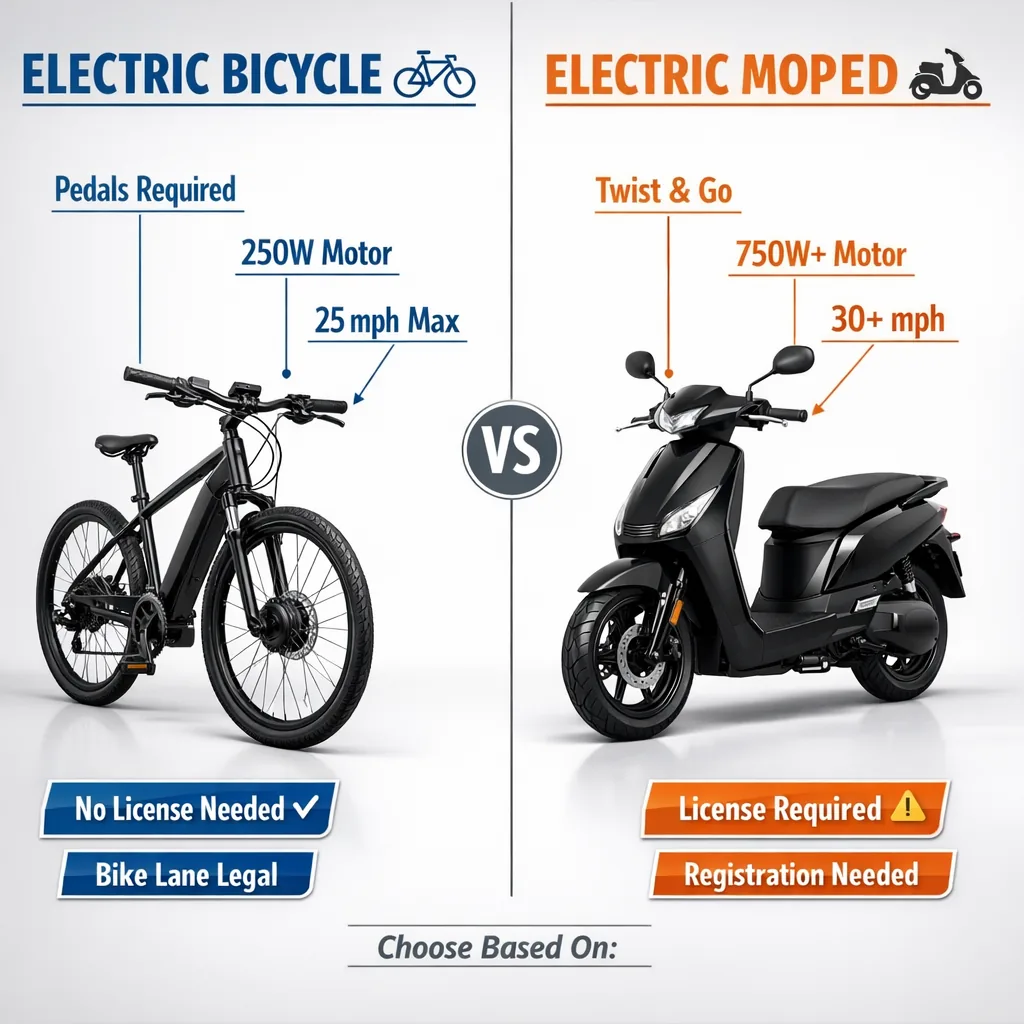
Yes, but Idaho does not use one single rule for every powered bike. A qualifying electric-assisted bicycle is broadly exempt from Idaho’s driver-license, title, registration, license-plate, and financial-responsibility rules. A qualifying moped gets lighter treatment than a motorcycle, including no title requirement and no motorcycle endorsement. But once a machine moves into motor-driven-cycle territory, Idaho requires stronger paperwork and endorsement rules.

Idaho’s statutes are much more precise than many summary articles. That is good news for riders, because the correct answer depends on the machine’s actual legal category.
That separation matters because Motorized Bicycle Laws in Idaho are much friendlier for a real e-bike than they are for a machine that crosses into motor-driven-cycle treatment.
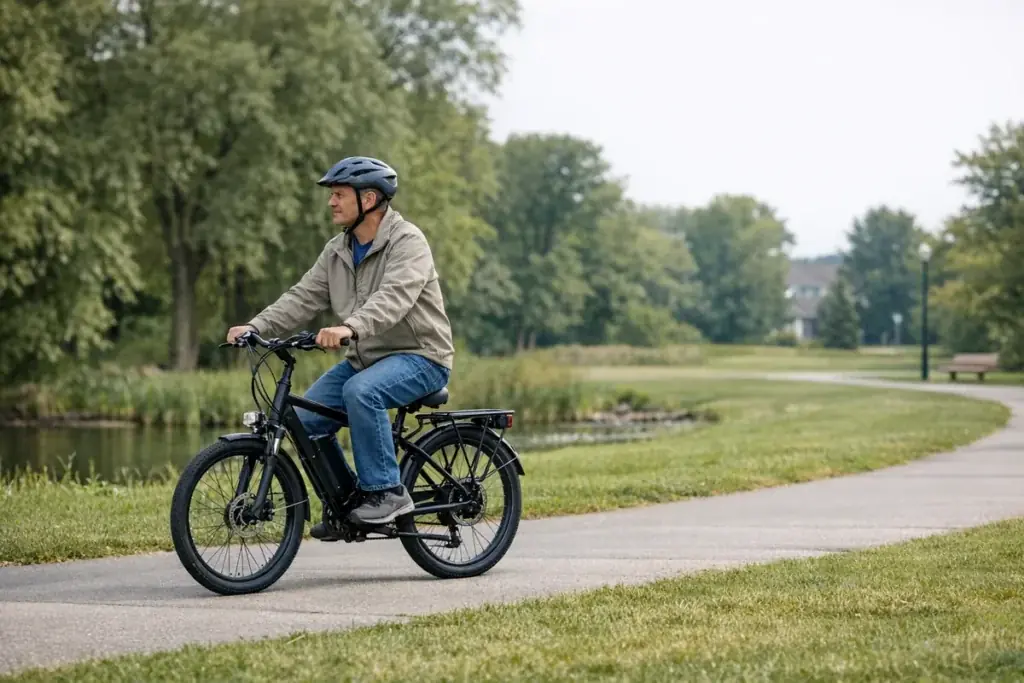
Idaho’s e-bike rules are one of the cleaner parts of this topic. If your bike actually fits the electric-assisted bicycle definition, the state gives you a much lighter compliance path.
Idaho Code section 49-726 is one of the most important statutes in this area. It says electric-assisted bicycles and the people operating them are not subject to Idaho Title 49 rules on financial responsibility, driver’s licenses, titles, registration, and license plates. That is a major Idaho-specific differentiator.
Idaho Code section 49-728 says electric-assisted bicycles may be used where bicycles are allowed, including multiuse paths. But the same statute allows exclusions through local ordinance or posted signage by the public agency with jurisdiction. So Idaho starts broad, then lets local rules narrow things.
Manufacturers or distributors must place a permanent label on an electric bicycle showing the classification number, top assisted speed, and motor wattage. That is a practical compliance detail many riders overlook.
Idaho Code section 49-729 says an e-bike rider who violates the applicable bicycle or rules-of-the-road provisions commits an infraction. In plain English, Idaho keeps e-bikes close to the bicycle lane rather than inventing a completely separate enforcement system.
This is where Idaho gets more technical. A lot of small gas or scooter-style machines are not e-bikes, and the legal result changes fast once they fall into moped or motor-driven-cycle territory.
Idaho’s statutory moped definition is not just “small engine and low speed.” The statute also cares about wheel size, transmission type, and whether the machine is gas or electric.
Idaho Code section 49-114 expressly says a moped is not required to be titled and no motorcycle endorsement is required for its operator. That is another major Idaho-specific distinction.
If the machine does not fit the moped definition and instead falls into Idaho’s motor-driven-cycle category, Idaho says it must be titled and a motorcycle endorsement is required for operation. That is a large jump in compliance burden.
The moped statute specifically says a moped does not include an electric-assisted bicycle. That helps prevent the common mistake of assuming every small electric machine belongs in the same category.
This is the easiest Idaho scenario. If the bike really fits the statutory e-bike definition, Idaho does not make you handle the usual Title 49 license, title, registration, plate, or insurance-style compliance rules that apply to motor vehicles.
The safest Idaho answer is: check the local rule, not just a statewide summary. Idaho’s current path statute is broad enough to allow e-bikes where bicycles are allowed, including multiuse paths, but local ordinances or posted agency signage can still close a particular route.
You may be in Idaho’s moped lane, but do not stop at engine size alone. Wheel diameter, transmission type, and whether the machine is gas or electric all matter under the statute.
Once a machine crosses into motor-driven-cycle territory, Idaho treats it more seriously. That can mean titling and a motorcycle endorsement instead of the lighter moped rules.
The reviewed source set is very clear on those two points. It is less clean in one machine-readable sentence on every registration workflow detail for every moped scenario, so riders should still verify current county DMV handling for the exact machine they own.
Idaho’s statewide rule is generous to e-bikes, but it is not absolute. Public agencies and local governments can still narrow access on a specific path or trail by ordinance or posted signage. If you are planning to ride on a greenbelt, city multiuse path, park route, or trail system, check the local rule before assuming the statewide baseline controls.
This page is for general informational purposes only and is not legal advice. Idaho statutes, local ordinances, and agency interpretations can change. Verify current rules before riding on public roads, paths, or trails.