Quick answer
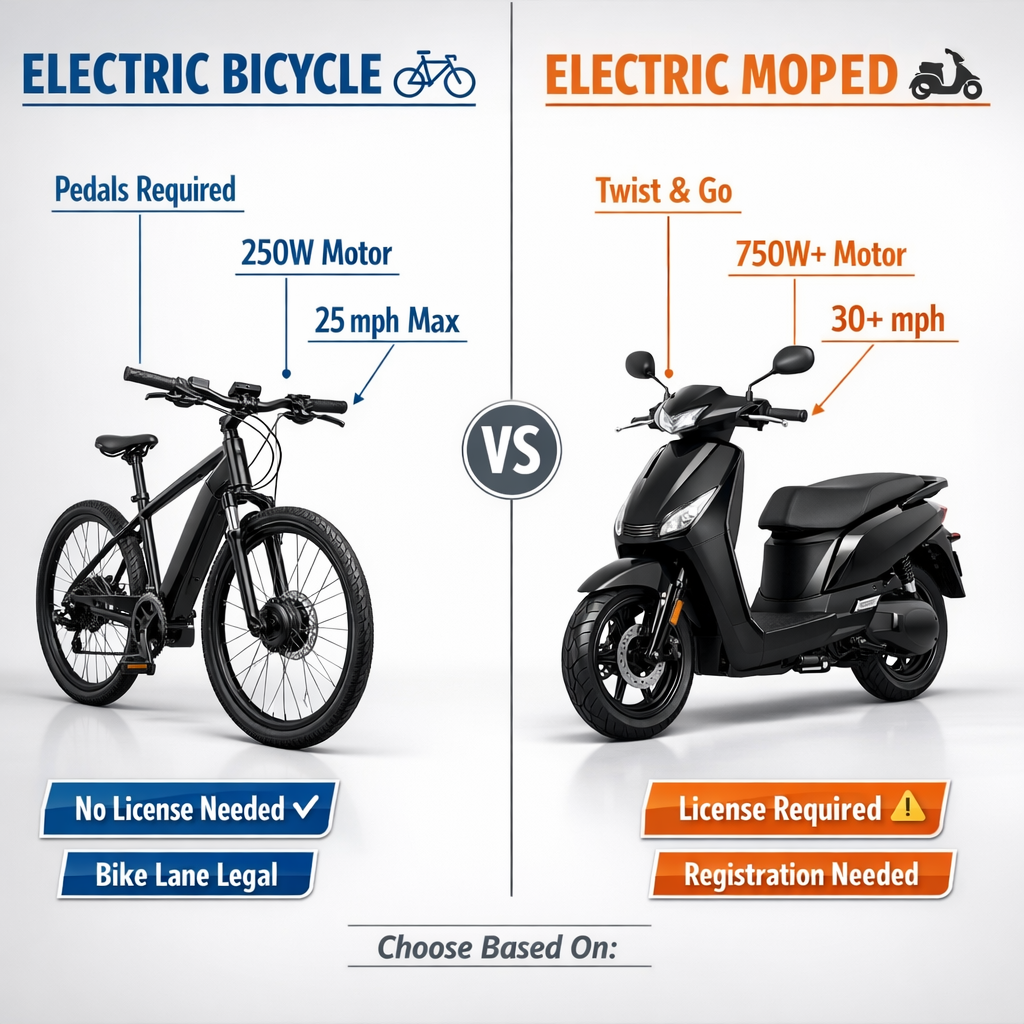
In an e-bike vs moped comparison, both options promise an easier way to move through town without relying on a full-size car. The right choice depends less on one headline spec and more on how you actually commute: where you park, whether you need pedals, which lanes or paths you can use, and how much registration or insurance friction you are willing to accept.
If you are still comparing complete bikes, start with our e-bike buying tips guide. If your biggest concern is charging or apartment storage, our removable battery guide is the better follow-up.
Fast decision rule
| What matters | E-bike | Moped |
|---|---|---|
| Best fit | Shorter urban trips, bike-lane-heavy routes, apartment or office storage | Road-focused commuting, scooter-style riding, less interest in pedaling |
| Ownership friction | Usually lighter legal and parking burden | Often more paperwork, more road-only rules, and more parking constraints |
| Storage | Easier to bring inside or secure at bike racks | More like small-motorcycle parking and storage expectations |
| Ride feel | Pedal-capable, lighter, and usually easier to maneuver at low speed | More scooter-like, heavier, and less centered on pedaling |
| Why people choose it | Convenience, lower hassle, fitness option, mixed-use urban flexibility | More powered feel, less interest in pedaling, road-commute focus |
An e-bike usually makes the most sense when the commute feels partly like cycling and partly like transportation. You still get electric help, but the platform stays closer to a bicycle. That matters when you need to roll into a bike room, use a rack outside work, or move the bike through gates, elevators, or apartment hallways.
A moped usually fits riders who want a more scooter-like experience and are less concerned with pedals, indoor storage, or bike-lane compatibility. If your route is more road-focused and you want the daily feel of a small motor vehicle rather than an assisted bicycle, a moped can be the cleaner fit.
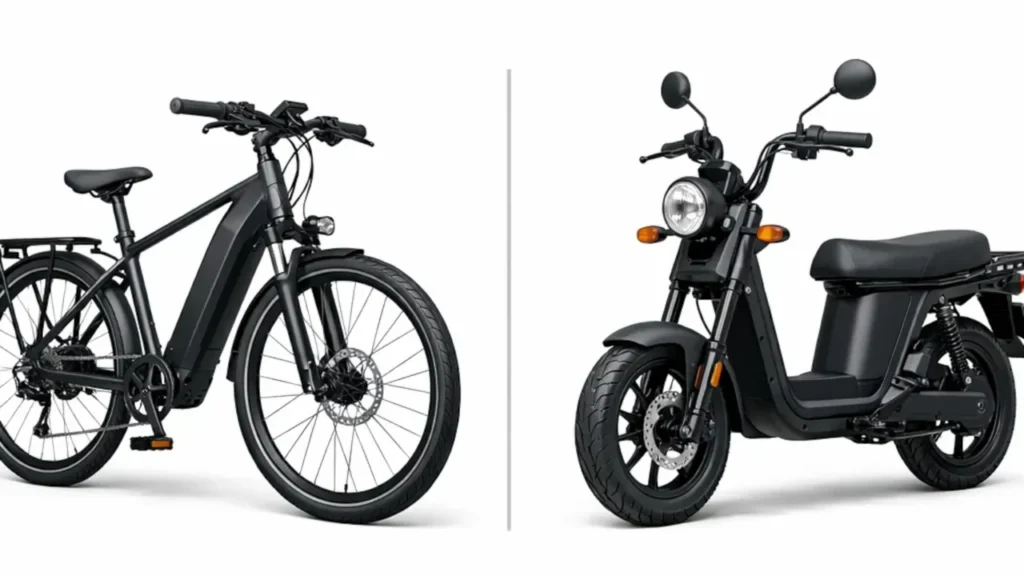
This is often the deciding factor. E-bike rules and moped rules are not interchangeable, and both can change by state or city. As a broad U.S. commuter rule of thumb checked on 2026-03-22, e-bikes often face lighter regulation than mopeds, while mopeds more often bring road-use, registration, licensing, or insurance requirements depending on where you live.
PeopleForBikes' federal e-bike overview is a useful starting point for understanding the U.S. class framework, but it does not replace state or city rules. Commuters should confirm the exact answer with their own DMV or local transportation agency before buying around a legal assumption.
Do not buy on assumptions. The best commuter option on paper can become the wrong one if your city treats access, licensing, or parking very differently than you expected.
Even when sticker prices overlap, the ownership experience often does not. E-bikes usually ask for less paperwork and less parking stress, while mopeds often come with more road-going obligations and a storage routine that feels closer to scooter ownership. That difference can matter more than the purchase price once the commute becomes part of daily life.
For many riders, the real question is not which one is technically cheaper. It is which one creates fewer recurring hassles around storage, parking, maintenance expectations, and the rules attached to daily use.
Commuters feel the difference here almost immediately. E-bikes are usually easier to lock at bike racks, move into work, or store in tighter living situations. If you need a cleaner battery routine or you leave the bike in a shared area, our guide to storing an e-bike outside covers the practical side of weather, locks, and battery handling.
Mopeds can still work well, but they usually demand a parking plan that behaves more like motor-vehicle storage than bicycle storage. If your commute begins and ends in tight urban spaces, that difference is hard to ignore.
E-bikes usually feel more nimble and more forgiving when the ride includes bike infrastructure, crowded curb cuts, or repeated stops. If you are still comparing e-bike setups, our electric bike motors explained guide helps separate motor type questions from the larger e-bike-vs-moped decision.
Mopeds make more sense when pedaling is not part of the value proposition and you want the overall feel of a small road machine. That can be the right answer, but it is a different ownership category in practice.
Choose an e-bike if:
Choose a moped if:
For many city commuters, an e-bike is the easier everyday tool because it blends electric assistance with lighter storage, simpler ownership, and better compatibility with urban bike infrastructure where local rules allow. A moped can still be the better choice when the commute is road-focused and the rider wants a more scooter-like experience, but it usually comes with more friction outside the ride itself.
The best choice is the one that matches your real route, parking situation, and local rules rather than the one that sounds stronger on paper.
We may earn a commission when you buy through our links.