Quick answer
This hub vs mid-drive electric bike motor guide is built for shoppers who already know they want an e-bike and now need to decide which drive system fits their terrain, budget, and riding style. Rather than covering every motor spec from scratch, this page stays focused on the buying decision: which setup makes more sense for the way you actually ride.
Best fit at a glance
| Factor | Hub Motor | Mid-Drive Motor |
|---|---|---|
| Best for | Flat-to-moderate terrain, simpler commuter builds, budget-conscious shoppers | Hills, mixed terrain, riders who want stronger pedal integration |
| Ride feel | More push-or-pull sensation depending on wheel placement | More centered and bike-like under power |
| Handling | More wheel weight, especially noticeable on front-hub builds | Weight stays low and centered around the bottom bracket |
| Maintenance tradeoff | Simple day-to-day ownership, but wheel-level repairs can be more involved | Better climbing behavior, but drivetrain wear matters more because power runs through the chain and gears |
| Typical buyer question | Do I want a practical, lower-cost e-bike for regular routes? | Do I want better climbing feel and more balanced performance? |
Hub motors sit inside the wheel hub and drive the wheel directly. They remain a common choice for commuter, city, and value-focused e-bikes because the system is comparatively simple and usually less expensive than a mid-drive setup.
Front hub motors pull the bike forward. They are most common on lower-cost e-bikes and some conversion kits. That placement can help offset a battery mounted toward the rear, but it can also make steering feel less natural than a centered motor layout.
Rear hub motors push the bike forward and usually feel more planted than front-hub systems. They are often the better hub choice for riders who want straightforward acceleration and better traction on imperfect pavement or mild hills.
For a look at how broad current hub options still are, Bafang's official product catalog includes both rear-hub and mid-drive systems across commuter, city, and fat-tire use cases (official Bafang catalog).
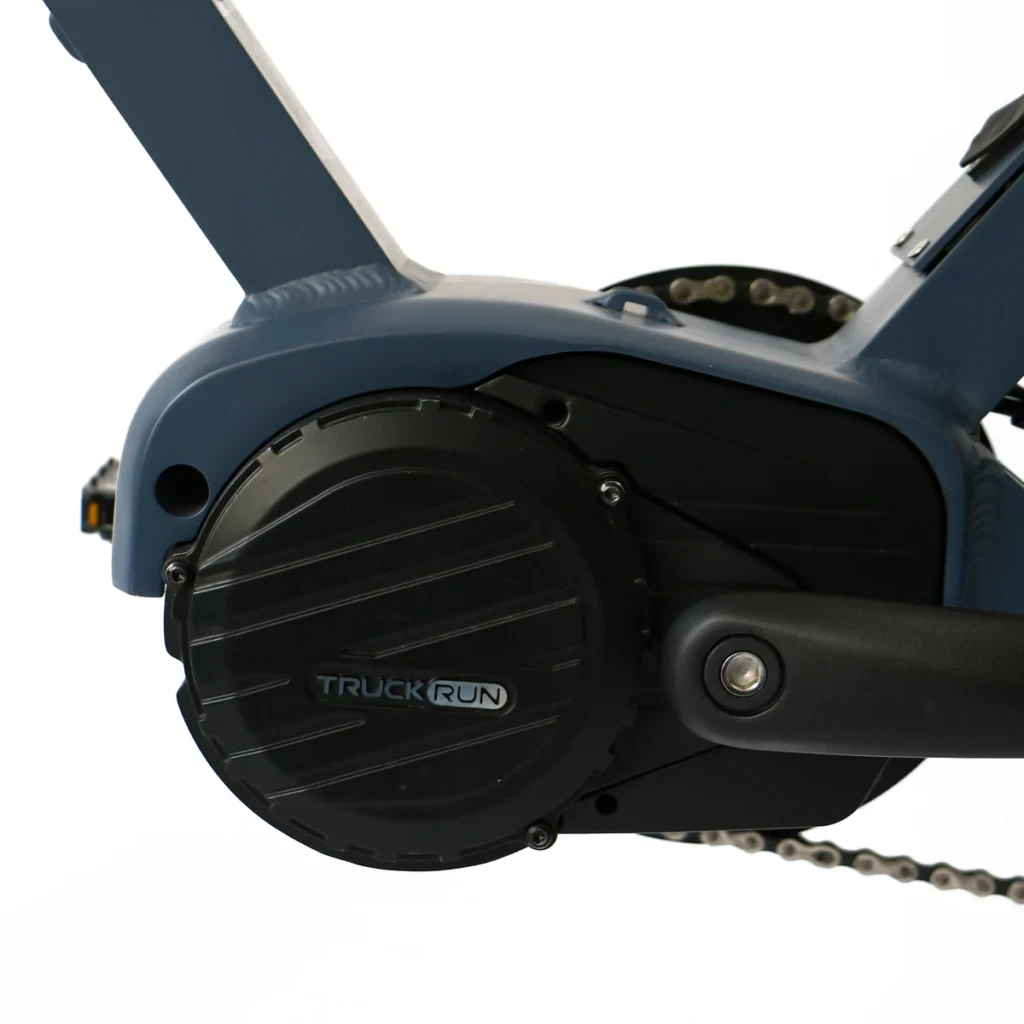
Mid-drive motors mount at the bottom bracket, where your pedals connect. That central placement keeps weight low and balanced, and it allows the motor to work through the bike's gears instead of driving the wheel directly.
That drivetrain integration is a big reason mid-drives are popular with riders who tackle hills, mixed terrain, or more technical riding. Shimano's STEPS drive-unit documentation and Bosch's Performance Line CX materials both emphasize torque delivery, climbing support, and sustained performance in this style of setup (official Shimano STEPS drive-unit overview) and (official Bosch Performance Line CX page).
Mid-drive systems often feel more efficient on hills because they can use the bike's gears to stay in a stronger working range. That does not automatically make every mid-drive e-bike the best choice for every rider, but it is a meaningful advantage if your routes include frequent climbing or changing terrain.
Hub motors still make plenty of sense for flatter commutes and more predictable riding. If your usual rides are paved, moderate, and budget-sensitive, a good hub motor can be the better value even if it is not the most performance-oriented option on paper.
Mid-drives keep mass centered and low, which is why they tend to feel more natural when cornering, standing on the pedals, or maneuvering the bike at slower speeds. That centered weight placement is one of the main reasons experienced riders often prefer them.
Hub motors add weight at the wheel. Front hubs influence steering the most, while rear hubs usually feel steadier. Neither is automatically bad, but the ride character is different enough that a test ride matters.
Hub motors are appealing because daily ownership is simple. The motor is self-contained, and many riders can go a long time with very little attention beyond normal bike care.
Mid-drives ask more from the drivetrain because the motor's power runs through the chain, cassette, and gearing. That can mean faster wear on those parts, especially for riders who climb hard, shift poorly under load, or put on a lot of miles.
Pick a hub motor if: you ride mostly flat terrain, want a simpler ownership experience, prefer a lower upfront cost, or mainly need a practical commuter or casual recreation bike.
Pick a mid-drive if: you climb steep hills regularly, want stronger pedal feel, care more about centered handling, or expect your e-bike to see mixed terrain and longer decision-heavy rides.
If you are narrowing choices across the whole bike and not just the motor, pair this page with our e-bike buying tips guide so you do not over-focus on one component.
Bosch is a major reference point for premium mid-drive systems, especially for riders who care about climbing support, software integration, and established dealer networks (official Bosch Performance Line CX page).
Shimano continues to be a recognizable option for riders who want a well-known drivetrain brand with an integrated e-bike system (official Shimano STEPS drive-unit overview).
Bafang remains highly relevant because its official lineup spans both hub-drive and mid-drive formats, making it a common reference brand when shoppers compare value-oriented systems and conversion-style builds (official Bafang catalog).
Both hub motors and mid-drive motors can be the right choice. The better answer depends on your terrain, your expectations, your maintenance tolerance, and how much you want the bike to feel like a traditional bicycle under power.
If you can, test ride both styles before you commit. A short ride will usually tell you more than another hour spent comparing spec sheets.
* We may earn a commission when you buy through our links